mirror of
https://github.com/minio/minio.git
synced 2026-02-05 02:10:14 -05:00
Compare commits
10 Commits
key-versio
...
RELEASE.20
| Author | SHA1 | Date | |
|---|---|---|---|

|
d1331ecc5c | ||
|
|
774e9c8e3a | ||
|
|
614a8cf7ad | ||
|
|
e32e8d1922 | ||
|
|
8c59a41668 | ||
|
|
29a2ffef5d | ||
|
|
c836c454cc | ||
|
|
0f7300058b | ||
|
|
c5300ec279 | ||
|
|
3d8d12ba1b |
@@ -1,17 +0,0 @@
|
||||
.git
|
||||
.github
|
||||
default.etcd
|
||||
*.gz
|
||||
*.tar.gz
|
||||
*.bzip2
|
||||
*.zip
|
||||
browser/node_modules
|
||||
node_modules
|
||||
docs/debugging/s3-verify/s3-verify
|
||||
docs/debugging/xl-meta/xl-meta
|
||||
docs/debugging/s3-check-md5/s3-check-md5
|
||||
docs/debugging/hash-set/hash-set
|
||||
docs/debugging/healing-bin/healing-bin
|
||||
docs/debugging/inspect/inspect
|
||||
docs/debugging/pprofgoparser/pprofgoparser
|
||||
docs/debugging/reorder-disks/reorder-disks
|
||||
50
.github/ISSUE_TEMPLATE.md
vendored
50
.github/ISSUE_TEMPLATE.md
vendored
@@ -1,51 +1,13 @@
|
||||
---
|
||||
name: Bug report
|
||||
about: Create a report to help us improve
|
||||
title: ''
|
||||
labels: community, triage
|
||||
assignees: ''
|
||||
## Expected behaviour
|
||||
|
||||
---
|
||||
## Actual behaviour
|
||||
|
||||
## NOTE
|
||||
All GitHub issues are addressed on a best-effort basis at MinIO's sole discretion. There are no Service Level Agreements (SLA) or Objectives (SLO). Remember our [Code of Conduct](https://github.com/minio/minio/blob/master/code_of_conduct.md) when engaging with MinIO Engineers and the larger community.
|
||||
## Steps to reproduce the behaviour
|
||||
|
||||
For urgent issues (e.g. production down, etc.), subscribe to [SUBNET](https://min.io/pricing?jmp=github) for direct to engineering support.
|
||||
|
||||
<!--- Provide a general summary of the issue in the Title above -->
|
||||
## Minio version
|
||||
- (paste output of `minio version`)
|
||||
|
||||
## Expected Behavior
|
||||
<!--- If you're describing a bug, tell us what should happen -->
|
||||
<!--- If you're suggesting a change/improvement, tell us how it should work -->
|
||||
## System information
|
||||
|
||||
## Current Behavior
|
||||
<!--- If describing a bug, tell us what happens instead of the expected behavior -->
|
||||
<!--- If suggesting a change/improvement, explain the difference from current behavior -->
|
||||
|
||||
## Possible Solution
|
||||
<!--- Not obligatory, but suggest a fix/reason for the bug, -->
|
||||
<!--- or ideas how to implement the addition or change -->
|
||||
|
||||
## Steps to Reproduce (for bugs)
|
||||
<!--- Provide a link to a live example, or an unambiguous set of steps to -->
|
||||
<!--- reproduce this bug. Include code to reproduce, if relevant -->
|
||||
<!--- and make sure you have followed https://github.com/minio/minio/tree/release/docs/debugging to capture relevant logs -->
|
||||
|
||||
1.
|
||||
2.
|
||||
3.
|
||||
4.
|
||||
|
||||
## Context
|
||||
<!--- How has this issue affected you? What are you trying to accomplish? -->
|
||||
<!--- Providing context helps us come up with a solution that is most useful in the real world -->
|
||||
|
||||
## Regression
|
||||
<!-- Is this issue a regression? (Yes / No) -->
|
||||
<!-- If Yes, optionally please include minio version or commit id or PR# that caused this regression, if you have these details. -->
|
||||
|
||||
## Your Environment
|
||||
<!--- Include as many relevant details about the environment you experienced the bug in -->
|
||||
* Version used (`minio --version`):
|
||||
* Server setup and configuration:
|
||||
* Operating System and version (`uname -a`):
|
||||
|
||||
49
.github/ISSUE_TEMPLATE/bug_report.md
vendored
49
.github/ISSUE_TEMPLATE/bug_report.md
vendored
@@ -1,49 +0,0 @@
|
||||
---
|
||||
name: Bug report
|
||||
about: Create a report to help us improve
|
||||
title: ''
|
||||
labels: community, triage
|
||||
assignees: ''
|
||||
|
||||
---
|
||||
|
||||
## NOTE
|
||||
If this case is urgent, please subscribe to [Subnet](https://min.io/pricing) so that our 24/7 support team may help you faster.
|
||||
|
||||
<!--- Provide a general summary of the issue in the Title above -->
|
||||
|
||||
## Expected Behavior
|
||||
<!--- If you're describing a bug, tell us what should happen -->
|
||||
<!--- If you're suggesting a change/improvement, tell us how it should work -->
|
||||
|
||||
## Current Behavior
|
||||
<!--- If describing a bug, tell us what happens instead of the expected behavior -->
|
||||
<!--- If suggesting a change/improvement, explain the difference from current behavior -->
|
||||
|
||||
## Possible Solution
|
||||
<!--- Not obligatory, but suggest a fix/reason for the bug, -->
|
||||
<!--- or ideas how to implement the addition or change -->
|
||||
|
||||
## Steps to Reproduce (for bugs)
|
||||
<!--- Provide a link to a live example, or an unambiguous set of steps to -->
|
||||
<!--- reproduce this bug. Include code to reproduce, if relevant -->
|
||||
<!--- and make sure you have followed https://github.com/minio/minio/tree/release/docs/debugging to capture relevant logs -->
|
||||
|
||||
1.
|
||||
2.
|
||||
3.
|
||||
4.
|
||||
|
||||
## Context
|
||||
<!--- How has this issue affected you? What are you trying to accomplish? -->
|
||||
<!--- Providing context helps us come up with a solution that is most useful in the real world -->
|
||||
|
||||
## Regression
|
||||
<!-- Is this issue a regression? (Yes / No) -->
|
||||
<!-- If Yes, optionally please include minio version or commit id or PR# that caused this regression, if you have these details. -->
|
||||
|
||||
## Your Environment
|
||||
<!--- Include as many relevant details about the environment you experienced the bug in -->
|
||||
* Version used (`minio --version`):
|
||||
* Server setup and configuration:
|
||||
* Operating System and version (`uname -a`):
|
||||
8
.github/ISSUE_TEMPLATE/config.yml
vendored
8
.github/ISSUE_TEMPLATE/config.yml
vendored
@@ -1,8 +0,0 @@
|
||||
blank_issues_enabled: false
|
||||
contact_links:
|
||||
- name: MinIO Community Support
|
||||
url: https://slack.min.io
|
||||
about: Join here for Community Support
|
||||
- name: MinIO SUBNET Support
|
||||
url: https://min.io/pricing
|
||||
about: Join here for Enterprise Support
|
||||
20
.github/ISSUE_TEMPLATE/feature_request.md
vendored
20
.github/ISSUE_TEMPLATE/feature_request.md
vendored
@@ -1,20 +0,0 @@
|
||||
---
|
||||
name: Feature request
|
||||
about: Suggest an idea for this project
|
||||
title: ''
|
||||
labels: community, triage
|
||||
assignees: ''
|
||||
|
||||
---
|
||||
|
||||
**Is your feature request related to a problem? Please describe.**
|
||||
A clear and concise description of what the problem is. Ex. I'm always frustrated when [...]
|
||||
|
||||
**Describe the solution you'd like**
|
||||
A clear and concise description of what you want to happen.
|
||||
|
||||
**Describe alternatives you've considered**
|
||||
A clear and concise description of any alternative solutions or features you've considered.
|
||||
|
||||
**Additional context**
|
||||
Add any other context or screenshots about the feature request here.
|
||||
26
.github/PULL_REQUEST_TEMPLATE.md
vendored
26
.github/PULL_REQUEST_TEMPLATE.md
vendored
@@ -1,26 +0,0 @@
|
||||
## Community Contribution License
|
||||
All community contributions in this pull request are licensed to the project maintainers
|
||||
under the terms of the [Apache 2 license](https://www.apache.org/licenses/LICENSE-2.0).
|
||||
By creating this pull request I represent that I have the right to license the
|
||||
contributions to the project maintainers under the Apache 2 license.
|
||||
|
||||
## Description
|
||||
|
||||
|
||||
## Motivation and Context
|
||||
|
||||
|
||||
## How to test this PR?
|
||||
|
||||
|
||||
## Types of changes
|
||||
- [ ] Bug fix (non-breaking change which fixes an issue)
|
||||
- [ ] New feature (non-breaking change which adds functionality)
|
||||
- [ ] Optimization (provides speedup with no functional changes)
|
||||
- [ ] Breaking change (fix or feature that would cause existing functionality to change)
|
||||
|
||||
## Checklist:
|
||||
- [ ] Fixes a regression (If yes, please add `commit-id` or `PR #` here)
|
||||
- [ ] Unit tests added/updated
|
||||
- [ ] Internal documentation updated
|
||||
- [ ] Create a documentation update request [here](https://github.com/minio/docs/issues/new?label=doc-change,title=Doc+Updated+Needed+For+PR+github.com%2fminio%2fminio%2fpull%2fNNNNN)
|
||||
1
.github/logo.svg
vendored
1
.github/logo.svg
vendored

@@ -1 +0,0 @@
|
||||
<svg data-name="Layer 1" xmlns="http://www.w3.org/2000/svg" viewBox="0 0 162.612 24.465"><path d="M52.751.414h9.108v23.63h-9.108zM41.711.74l-18.488 9.92a.919.919 0 0 1-.856 0L3.879.74A2.808 2.808 0 0 0 2.558.414h-.023A2.4 2.4 0 0 0 0 2.641v21.376h9.1V13.842a.918.918 0 0 1 1.385-.682l10.361 5.568a3.634 3.634 0 0 0 3.336.028l10.933-5.634a.917.917 0 0 1 1.371.69v10.205h9.1V2.641A2.4 2.4 0 0 0 43.055.414h-.023a2.808 2.808 0 0 0-1.321.326zm65.564-.326h-9.237v10.755a.913.913 0 0 1-1.338.706L72.762.675a2.824 2.824 0 0 0-1.191-.261h-.016a2.4 2.4 0 0 0-2.535 2.227v21.377h9.163V13.275a.914.914 0 0 1 1.337-.707l24.032 11.2a2.813 2.813 0 0 0 1.188.26 2.4 2.4 0 0 0 2.535-2.227zm7.161 23.63V.414h4.191v23.63zm28.856.421c-11.274 0-19.272-4.7-19.272-12.232C124.02 4.741 132.066 0 143.292 0s19.32 4.7 19.32 12.233-7.902 12.232-19.32 12.232zm0-21.333c-8.383 0-14.84 3.217-14.84 9.1 0 5.926 6.457 9.1 14.84 9.1s14.887-3.174 14.887-9.1c0-5.883-6.504-9.1-14.887-9.1z" fill="#c72c48"/></svg>
|
||||
|
Before Width: | Height: | Size: 978 B |
60
.github/stale.yml
vendored
60
.github/stale.yml
vendored
@@ -1,60 +0,0 @@
|
||||
# Configuration for probot-stale - https://github.com/probot/stale
|
||||
|
||||
# Number of days of inactivity before an Issue or Pull Request becomes stale
|
||||
daysUntilStale: 30
|
||||
|
||||
# Number of days of inactivity before an Issue or Pull Request with the stale label is closed.
|
||||
# Set to false to disable. If disabled, issues still need to be closed manually, but will remain marked as stale.
|
||||
daysUntilClose: 15
|
||||
|
||||
# Only issues or pull requests with all of these labels are check if stale. Defaults to `[]` (disabled)
|
||||
onlyLabels: []
|
||||
|
||||
# Issues or Pull Requests with these labels will never be considered stale. Set to `[]` to disable
|
||||
exemptLabels:
|
||||
- "security"
|
||||
- "pending discussion"
|
||||
- "do-not-close"
|
||||
|
||||
# Set to true to ignore issues in a project (defaults to false)
|
||||
exemptProjects: false
|
||||
|
||||
# Set to true to ignore issues in a milestone (defaults to false)
|
||||
exemptMilestones: false
|
||||
|
||||
# Set to true to ignore issues with an assignee (defaults to false)
|
||||
exemptAssignees: false
|
||||
|
||||
# Label to use when marking as stale
|
||||
staleLabel: stale
|
||||
|
||||
# Comment to post when marking as stale. Set to `false` to disable
|
||||
markComment: >-
|
||||
This issue has been automatically marked as stale because it has not had
|
||||
recent activity. It will be closed after 15 days if no further activity
|
||||
occurs. Thank you for your contributions.
|
||||
# Comment to post when removing the stale label.
|
||||
# unmarkComment: >
|
||||
# Your comment here.
|
||||
|
||||
# Comment to post when closing a stale Issue or Pull Request.
|
||||
# closeComment: >
|
||||
# Your comment here.
|
||||
|
||||
# Limit the number of actions per hour, from 1-30. Default is 30
|
||||
limitPerRun: 1
|
||||
|
||||
# Limit to only `issues` or `pulls`
|
||||
# only: issues
|
||||
|
||||
# Optionally, specify configuration settings that are specific to just 'issues' or 'pulls':
|
||||
# pulls:
|
||||
# daysUntilStale: 30
|
||||
# markComment: >
|
||||
# This pull request has been automatically marked as stale because it has not had
|
||||
# recent activity. It will be closed if no further activity occurs. Thank you
|
||||
# for your contributions.
|
||||
|
||||
# issues:
|
||||
# exemptLabels:
|
||||
# - confirmed
|
||||
14
.github/workflows/depsreview.yaml
vendored
14
.github/workflows/depsreview.yaml
vendored
@@ -1,14 +0,0 @@
|
||||
name: 'Dependency Review'
|
||||
on: [pull_request]
|
||||
|
||||
permissions:
|
||||
contents: read
|
||||
|
||||
jobs:
|
||||
dependency-review:
|
||||
runs-on: ubuntu-latest
|
||||
steps:
|
||||
- name: 'Checkout Repository'
|
||||
uses: actions/checkout@v4
|
||||
- name: 'Dependency Review'
|
||||
uses: actions/dependency-review-action@v4
|
||||
39
.github/workflows/go-cross.yml
vendored
39
.github/workflows/go-cross.yml
vendored
@@ -1,39 +0,0 @@
|
||||
name: Crosscompile
|
||||
|
||||
on:
|
||||
pull_request:
|
||||
branches:
|
||||
- master
|
||||
|
||||
# This ensures that previous jobs for the PR are canceled when the PR is
|
||||
# updated.
|
||||
concurrency:
|
||||
group: ${{ github.workflow }}-${{ github.head_ref }}
|
||||
cancel-in-progress: true
|
||||
|
||||
permissions:
|
||||
contents: read
|
||||
|
||||
jobs:
|
||||
build:
|
||||
name: Build Tests with Go ${{ matrix.go-version }} on ${{ matrix.os }}
|
||||
runs-on: ${{ matrix.os }}
|
||||
strategy:
|
||||
matrix:
|
||||
go-version: [1.24.x]
|
||||
os: [ubuntu-latest]
|
||||
steps:
|
||||
- uses: actions/checkout@v4
|
||||
- uses: actions/setup-go@v5
|
||||
with:
|
||||
go-version: ${{ matrix.go-version }}
|
||||
check-latest: true
|
||||
- name: Build on ${{ matrix.os }}
|
||||
if: matrix.os == 'ubuntu-latest'
|
||||
env:
|
||||
CGO_ENABLED: 0
|
||||
GO111MODULE: on
|
||||
run: |
|
||||
sudo sysctl net.ipv6.conf.all.disable_ipv6=0
|
||||
sudo sysctl net.ipv6.conf.default.disable_ipv6=0
|
||||
make crosscompile
|
||||
59
.github/workflows/go-fips.yml
vendored
59
.github/workflows/go-fips.yml
vendored
@@ -1,59 +0,0 @@
|
||||
name: FIPS Build Test
|
||||
|
||||
on:
|
||||
pull_request:
|
||||
branches:
|
||||
- master
|
||||
|
||||
# This ensures that previous jobs for the PR are canceled when the PR is
|
||||
# updated.
|
||||
concurrency:
|
||||
group: ${{ github.workflow }}-${{ github.head_ref }}
|
||||
cancel-in-progress: true
|
||||
|
||||
permissions:
|
||||
contents: read
|
||||
|
||||
jobs:
|
||||
build:
|
||||
name: Go BoringCrypto ${{ matrix.go-version }} on ${{ matrix.os }}
|
||||
runs-on: ${{ matrix.os }}
|
||||
strategy:
|
||||
matrix:
|
||||
go-version: [1.24.x]
|
||||
os: [ubuntu-latest]
|
||||
steps:
|
||||
- uses: actions/checkout@v4
|
||||
- uses: actions/setup-go@v5
|
||||
with:
|
||||
go-version: ${{ matrix.go-version }}
|
||||
|
||||
- name: Set up Docker Buildx
|
||||
uses: docker/setup-buildx-action@v2
|
||||
|
||||
- name: Setup dockerfile for build test
|
||||
run: |
|
||||
GO_VERSION=$(go version | cut -d ' ' -f 3 | sed 's/go//')
|
||||
echo Detected go version $GO_VERSION
|
||||
cat > Dockerfile.fips.test <<EOF
|
||||
FROM golang:${GO_VERSION}
|
||||
COPY . /minio
|
||||
WORKDIR /minio
|
||||
ENV GOEXPERIMENT=boringcrypto
|
||||
RUN make
|
||||
EOF
|
||||
|
||||
- name: Build
|
||||
uses: docker/build-push-action@v3
|
||||
with:
|
||||
context: .
|
||||
file: Dockerfile.fips.test
|
||||
push: false
|
||||
load: true
|
||||
tags: minio/fips-test:latest
|
||||
|
||||
# This should fail if grep returns non-zero exit
|
||||
- name: Test binary
|
||||
run: |
|
||||
docker run --rm minio/fips-test:latest ./minio --version
|
||||
docker run --rm -i minio/fips-test:latest /bin/bash -c 'go tool nm ./minio | grep FIPS | grep -q FIPS'
|
||||
44
.github/workflows/go-healing.yml
vendored
44
.github/workflows/go-healing.yml
vendored
@@ -1,44 +0,0 @@
|
||||
name: Healing Functional Tests
|
||||
|
||||
on:
|
||||
pull_request:
|
||||
branches:
|
||||
- master
|
||||
|
||||
# This ensures that previous jobs for the PR are canceled when the PR is
|
||||
# updated.
|
||||
concurrency:
|
||||
group: ${{ github.workflow }}-${{ github.head_ref }}
|
||||
cancel-in-progress: true
|
||||
|
||||
permissions:
|
||||
contents: read
|
||||
|
||||
jobs:
|
||||
build:
|
||||
name: Go ${{ matrix.go-version }} on ${{ matrix.os }}
|
||||
runs-on: ${{ matrix.os }}
|
||||
strategy:
|
||||
matrix:
|
||||
go-version: [1.24.x]
|
||||
os: [ubuntu-latest]
|
||||
steps:
|
||||
- uses: actions/checkout@v4
|
||||
- uses: actions/setup-go@v5
|
||||
with:
|
||||
go-version: ${{ matrix.go-version }}
|
||||
check-latest: true
|
||||
- name: Build on ${{ matrix.os }}
|
||||
if: matrix.os == 'ubuntu-latest'
|
||||
env:
|
||||
CGO_ENABLED: 0
|
||||
GO111MODULE: on
|
||||
MINIO_KMS_SECRET_KEY: "my-minio-key:oyArl7zlPECEduNbB1KXgdzDn2Bdpvvw0l8VO51HQnY="
|
||||
MINIO_KMS_AUTO_ENCRYPTION: on
|
||||
run: |
|
||||
sudo sysctl net.ipv6.conf.all.disable_ipv6=0
|
||||
sudo sysctl net.ipv6.conf.default.disable_ipv6=0
|
||||
make verify-healing
|
||||
make verify-healing-inconsistent-versions
|
||||
make verify-healing-with-root-disks
|
||||
make verify-healing-with-rewrite
|
||||
42
.github/workflows/go-lint.yml
vendored
42
.github/workflows/go-lint.yml
vendored
@@ -1,42 +0,0 @@
|
||||
name: Linters and Tests
|
||||
|
||||
on:
|
||||
pull_request:
|
||||
branches:
|
||||
- master
|
||||
|
||||
# This ensures that previous jobs for the PR are canceled when the PR is
|
||||
# updated.
|
||||
concurrency:
|
||||
group: ${{ github.workflow }}-${{ github.head_ref }}
|
||||
cancel-in-progress: true
|
||||
|
||||
permissions:
|
||||
contents: read
|
||||
|
||||
jobs:
|
||||
build:
|
||||
name: Go ${{ matrix.go-version }} on ${{ matrix.os }}
|
||||
runs-on: ${{ matrix.os }}
|
||||
strategy:
|
||||
matrix:
|
||||
go-version: [1.24.x]
|
||||
os: [ubuntu-latest]
|
||||
steps:
|
||||
- uses: actions/checkout@v4
|
||||
- uses: actions/setup-go@v5
|
||||
with:
|
||||
go-version: ${{ matrix.go-version }}
|
||||
check-latest: true
|
||||
- name: Build on ${{ matrix.os }}
|
||||
if: matrix.os == 'ubuntu-latest'
|
||||
env:
|
||||
CGO_ENABLED: 0
|
||||
GO111MODULE: on
|
||||
run: |
|
||||
sudo apt install jq -y
|
||||
sudo sysctl net.ipv6.conf.all.disable_ipv6=0
|
||||
sudo sysctl net.ipv6.conf.default.disable_ipv6=0
|
||||
make
|
||||
make test
|
||||
make test-race
|
||||
39
.github/workflows/go-resiliency.yml
vendored
39
.github/workflows/go-resiliency.yml
vendored
@@ -1,39 +0,0 @@
|
||||
name: Resiliency Functional Tests
|
||||
|
||||
on:
|
||||
pull_request:
|
||||
branches:
|
||||
- master
|
||||
|
||||
# This ensures that previous jobs for the PR are canceled when the PR is
|
||||
# updated.
|
||||
concurrency:
|
||||
group: ${{ github.workflow }}-${{ github.head_ref }}
|
||||
cancel-in-progress: true
|
||||
|
||||
permissions:
|
||||
contents: read
|
||||
|
||||
jobs:
|
||||
build:
|
||||
name: Go ${{ matrix.go-version }} on ${{ matrix.os }}
|
||||
runs-on: ${{ matrix.os }}
|
||||
strategy:
|
||||
matrix:
|
||||
go-version: [1.24.x]
|
||||
os: [ubuntu-latest]
|
||||
steps:
|
||||
- uses: actions/checkout@v4
|
||||
- uses: actions/setup-go@v5
|
||||
with:
|
||||
go-version: ${{ matrix.go-version }}
|
||||
check-latest: true
|
||||
- name: Build on ${{ matrix.os }}
|
||||
if: matrix.os == 'ubuntu-latest'
|
||||
env:
|
||||
CGO_ENABLED: 0
|
||||
GO111MODULE: on
|
||||
run: |
|
||||
sudo sysctl net.ipv6.conf.all.disable_ipv6=0
|
||||
sudo sysctl net.ipv6.conf.default.disable_ipv6=0
|
||||
make test-resiliency
|
||||
42
.github/workflows/go.yml
vendored
42
.github/workflows/go.yml
vendored
@@ -1,42 +0,0 @@
|
||||
name: Functional Tests
|
||||
|
||||
on:
|
||||
pull_request:
|
||||
branches:
|
||||
- master
|
||||
|
||||
# This ensures that previous jobs for the PR are canceled when the PR is
|
||||
# updated.
|
||||
concurrency:
|
||||
group: ${{ github.workflow }}-${{ github.head_ref }}
|
||||
cancel-in-progress: true
|
||||
|
||||
permissions:
|
||||
contents: read
|
||||
|
||||
jobs:
|
||||
build:
|
||||
name: Go ${{ matrix.go-version }} on ${{ matrix.os }} - healing
|
||||
runs-on: ${{ matrix.os }}
|
||||
strategy:
|
||||
matrix:
|
||||
go-version: [1.24.x]
|
||||
os: [ubuntu-latest]
|
||||
steps:
|
||||
- uses: actions/checkout@v4
|
||||
- uses: actions/setup-go@v5
|
||||
with:
|
||||
go-version: ${{ matrix.go-version }}
|
||||
check-latest: true
|
||||
- name: Build on ${{ matrix.os }}
|
||||
if: matrix.os == 'ubuntu-latest'
|
||||
env:
|
||||
CGO_ENABLED: 0
|
||||
GO111MODULE: on
|
||||
MINIO_KMS_SECRET_KEY: "my-minio-key:OSMM+vkKUTCvQs9YL/CVMIMt43HFhkUpqJxTmGl6rYw="
|
||||
MINIO_KMS_AUTO_ENCRYPTION: on
|
||||
run: |
|
||||
sudo sysctl net.ipv6.conf.all.disable_ipv6=0
|
||||
sudo sysctl net.ipv6.conf.default.disable_ipv6=0
|
||||
make verify
|
||||
make test-timeout
|
||||
30
.github/workflows/helm-lint.yml
vendored
30
.github/workflows/helm-lint.yml
vendored
@@ -1,30 +0,0 @@
|
||||
name: Helm Chart linting
|
||||
|
||||
on:
|
||||
pull_request:
|
||||
branches:
|
||||
- master
|
||||
|
||||
# This ensures that previous jobs for the PR are canceled when the PR is
|
||||
# updated.
|
||||
concurrency:
|
||||
group: ${{ github.workflow }}-${{ github.head_ref }}
|
||||
cancel-in-progress: true
|
||||
|
||||
permissions:
|
||||
contents: read
|
||||
|
||||
jobs:
|
||||
release:
|
||||
runs-on: ubuntu-latest
|
||||
steps:
|
||||
- name: Checkout
|
||||
uses: actions/checkout@v4
|
||||
|
||||
- name: Install Helm
|
||||
uses: azure/setup-helm@v4
|
||||
|
||||
- name: Run helm lint
|
||||
run: |
|
||||
cd helm/minio
|
||||
helm lint .
|
||||
161
.github/workflows/iam-integrations.yaml
vendored
161
.github/workflows/iam-integrations.yaml
vendored
@@ -1,161 +0,0 @@
|
||||
name: IAM integration
|
||||
|
||||
on:
|
||||
pull_request:
|
||||
branches:
|
||||
- master
|
||||
|
||||
# This ensures that previous jobs for the PR are canceled when the PR is
|
||||
# updated.
|
||||
concurrency:
|
||||
group: ${{ github.workflow }}-${{ github.head_ref }}
|
||||
cancel-in-progress: true
|
||||
|
||||
permissions:
|
||||
contents: read
|
||||
|
||||
jobs:
|
||||
iam-matrix-test:
|
||||
name: "[Go=${{ matrix.go-version }}|ldap=${{ matrix.ldap }}|etcd=${{ matrix.etcd }}|openid=${{ matrix.openid }}]"
|
||||
runs-on: ubuntu-latest
|
||||
|
||||
services:
|
||||
openldap:
|
||||
image: quay.io/minio/openldap
|
||||
ports:
|
||||
- "389:389"
|
||||
- "636:636"
|
||||
env:
|
||||
LDAP_ORGANIZATION: "MinIO Inc"
|
||||
LDAP_DOMAIN: "min.io"
|
||||
LDAP_ADMIN_PASSWORD: "admin"
|
||||
etcd:
|
||||
image: "quay.io/coreos/etcd:v3.5.1"
|
||||
env:
|
||||
ETCD_LISTEN_CLIENT_URLS: "http://0.0.0.0:2379"
|
||||
ETCD_ADVERTISE_CLIENT_URLS: "http://0.0.0.0:2379"
|
||||
ports:
|
||||
- "2379:2379"
|
||||
options: >-
|
||||
--health-cmd "etcdctl endpoint health"
|
||||
--health-interval 10s
|
||||
--health-timeout 5s
|
||||
--health-retries 5
|
||||
openid:
|
||||
image: quay.io/minio/dex
|
||||
ports:
|
||||
- "5556:5556"
|
||||
env:
|
||||
DEX_LDAP_SERVER: "openldap:389"
|
||||
openid2:
|
||||
image: quay.io/minio/dex
|
||||
ports:
|
||||
- "5557:5557"
|
||||
env:
|
||||
DEX_LDAP_SERVER: "openldap:389"
|
||||
DEX_ISSUER: "http://127.0.0.1:5557/dex"
|
||||
DEX_WEB_HTTP: "0.0.0.0:5557"
|
||||
|
||||
strategy:
|
||||
# When ldap, etcd or openid vars are empty below, those external servers
|
||||
# are turned off - i.e. if ldap="", then ldap server is not enabled for
|
||||
# the tests.
|
||||
matrix:
|
||||
go-version: [1.24.x]
|
||||
ldap: ["", "localhost:389"]
|
||||
etcd: ["", "http://localhost:2379"]
|
||||
openid: ["", "http://127.0.0.1:5556/dex"]
|
||||
exclude:
|
||||
# exclude combos where all are empty.
|
||||
- ldap: ""
|
||||
etcd: ""
|
||||
openid: ""
|
||||
# exclude combos where both ldap and openid IDPs are specified.
|
||||
- ldap: "localhost:389"
|
||||
openid: "http://127.0.0.1:5556/dex"
|
||||
|
||||
steps:
|
||||
- uses: actions/checkout@v4
|
||||
- uses: actions/setup-go@v5
|
||||
with:
|
||||
go-version: ${{ matrix.go-version }}
|
||||
check-latest: true
|
||||
- name: Test LDAP/OpenID/Etcd combo
|
||||
env:
|
||||
_MINIO_LDAP_TEST_SERVER: ${{ matrix.ldap }}
|
||||
_MINIO_ETCD_TEST_SERVER: ${{ matrix.etcd }}
|
||||
_MINIO_OPENID_TEST_SERVER: ${{ matrix.openid }}
|
||||
run: |
|
||||
sudo sysctl net.ipv6.conf.all.disable_ipv6=0
|
||||
sudo sysctl net.ipv6.conf.default.disable_ipv6=0
|
||||
make test-iam
|
||||
- name: Test with multiple OpenID providers
|
||||
if: matrix.openid == 'http://127.0.0.1:5556/dex'
|
||||
env:
|
||||
_MINIO_LDAP_TEST_SERVER: ${{ matrix.ldap }}
|
||||
_MINIO_ETCD_TEST_SERVER: ${{ matrix.etcd }}
|
||||
_MINIO_OPENID_TEST_SERVER: ${{ matrix.openid }}
|
||||
_MINIO_OPENID_TEST_SERVER_2: "http://127.0.0.1:5557/dex"
|
||||
run: |
|
||||
sudo sysctl net.ipv6.conf.all.disable_ipv6=0
|
||||
sudo sysctl net.ipv6.conf.default.disable_ipv6=0
|
||||
make test-iam
|
||||
- name: Test with Access Management Plugin enabled
|
||||
env:
|
||||
_MINIO_LDAP_TEST_SERVER: ${{ matrix.ldap }}
|
||||
_MINIO_ETCD_TEST_SERVER: ${{ matrix.etcd }}
|
||||
_MINIO_OPENID_TEST_SERVER: ${{ matrix.openid }}
|
||||
_MINIO_POLICY_PLUGIN_TEST_ENDPOINT: "http://127.0.0.1:8080"
|
||||
run: |
|
||||
sudo sysctl net.ipv6.conf.all.disable_ipv6=0
|
||||
sudo sysctl net.ipv6.conf.default.disable_ipv6=0
|
||||
go run docs/iam/access-manager-plugin.go &
|
||||
make test-iam
|
||||
- name: Test MinIO Old Version data to IAM import current version
|
||||
if: matrix.ldap == 'ldaphost:389'
|
||||
env:
|
||||
_MINIO_LDAP_TEST_SERVER: ${{ matrix.ldap }}
|
||||
run: |
|
||||
make test-iam-ldap-upgrade-import
|
||||
- name: Test LDAP for automatic site replication
|
||||
if: matrix.ldap == 'localhost:389'
|
||||
run: |
|
||||
make test-site-replication-ldap
|
||||
- name: Test OIDC for automatic site replication
|
||||
if: matrix.openid == 'http://127.0.0.1:5556/dex'
|
||||
run: |
|
||||
make test-site-replication-oidc
|
||||
iam-import-with-missing-entities:
|
||||
name: Test IAM import in new cluster with missing entities
|
||||
runs-on: ubuntu-latest
|
||||
steps:
|
||||
- uses: actions/checkout@v4
|
||||
- uses: actions/setup-go@v5
|
||||
with:
|
||||
go-version: ${{ matrix.go-version }}
|
||||
check-latest: true
|
||||
- name: Checkout minio-iam-testing
|
||||
uses: actions/checkout@v4
|
||||
with:
|
||||
repository: minio/minio-iam-testing
|
||||
path: minio-iam-testing
|
||||
- name: Test import of IAM artifacts when in fresh cluster there are missing groups etc
|
||||
run: |
|
||||
make test-iam-import-with-missing-entities
|
||||
iam-import-with-openid:
|
||||
name: Test IAM import in new cluster with opendid configurations
|
||||
runs-on: ubuntu-latest
|
||||
steps:
|
||||
- uses: actions/checkout@v4
|
||||
- uses: actions/setup-go@v5
|
||||
with:
|
||||
go-version: ${{ matrix.go-version }}
|
||||
check-latest: true
|
||||
- name: Checkout minio-iam-testing
|
||||
uses: actions/checkout@v4
|
||||
with:
|
||||
repository: minio/minio-iam-testing
|
||||
path: minio-iam-testing
|
||||
- name: Test import of IAM artifacts when in fresh cluster with openid configurations
|
||||
run: |
|
||||
make test-iam-import-with-openid
|
||||
18
.github/workflows/issues.yaml
vendored
18
.github/workflows/issues.yaml
vendored
@@ -1,18 +0,0 @@
|
||||
# @format
|
||||
|
||||
name: Issue Workflow
|
||||
|
||||
on:
|
||||
issues:
|
||||
types:
|
||||
- opened
|
||||
|
||||
jobs:
|
||||
add-to-project:
|
||||
name: Add issue to project
|
||||
runs-on: ubuntu-latest
|
||||
steps:
|
||||
- uses: actions/add-to-project@v0.5.0
|
||||
with:
|
||||
project-url: https://github.com/orgs/miniohq/projects/2
|
||||
github-token: ${{ secrets.BOT_PAT }}
|
||||
24
.github/workflows/lock.yml
vendored
24
.github/workflows/lock.yml
vendored
@@ -1,24 +0,0 @@
|
||||
name: 'Lock Threads'
|
||||
|
||||
on:
|
||||
schedule:
|
||||
- cron: '0 0 * * *'
|
||||
workflow_dispatch:
|
||||
|
||||
permissions:
|
||||
issues: write
|
||||
|
||||
concurrency:
|
||||
group: lock
|
||||
|
||||
jobs:
|
||||
action:
|
||||
runs-on: ubuntu-latest
|
||||
steps:
|
||||
- uses: dessant/lock-threads@v3
|
||||
with:
|
||||
github-token: ${{ github.token }}
|
||||
issue-inactive-days: '365'
|
||||
exclude-any-issue-labels: 'do-not-close'
|
||||
issue-lock-reason: 'resolved'
|
||||
log-output: true
|
||||
81
.github/workflows/mint.yml
vendored
81
.github/workflows/mint.yml
vendored
@@ -1,81 +0,0 @@
|
||||
name: Mint Tests
|
||||
|
||||
on:
|
||||
pull_request:
|
||||
branches:
|
||||
- master
|
||||
|
||||
# This ensures that previous jobs for the PR are canceled when the PR is
|
||||
# updated.
|
||||
concurrency:
|
||||
group: ${{ github.workflow }}-${{ github.head_ref }}
|
||||
cancel-in-progress: true
|
||||
|
||||
permissions:
|
||||
contents: read
|
||||
|
||||
jobs:
|
||||
mint-test:
|
||||
runs-on: mint
|
||||
timeout-minutes: 120
|
||||
steps:
|
||||
- name: cleanup #https://github.com/actions/checkout/issues/273
|
||||
run: |
|
||||
sudo -S rm -rf ${GITHUB_WORKSPACE}
|
||||
mkdir ${GITHUB_WORKSPACE}
|
||||
- name: checkout-step
|
||||
uses: actions/checkout@v4
|
||||
|
||||
- name: setup-go-step
|
||||
uses: actions/setup-go@v5
|
||||
with:
|
||||
go-version: 1.24.x
|
||||
|
||||
- name: github sha short
|
||||
id: vars
|
||||
run: echo "sha_short=$(git rev-parse --short HEAD)" >> $GITHUB_OUTPUT
|
||||
|
||||
- name: build-minio
|
||||
run: |
|
||||
TAG="quay.io/minio/minio:${{ steps.vars.outputs.sha_short }}" make docker
|
||||
|
||||
- name: multipart uploads test
|
||||
run: |
|
||||
${GITHUB_WORKSPACE}/.github/workflows/multipart/migrate.sh "${{ steps.vars.outputs.sha_short }}"
|
||||
|
||||
- name: compress and encrypt
|
||||
run: |
|
||||
${GITHUB_WORKSPACE}/.github/workflows/run-mint.sh "compress-encrypt" "minio" "minio123" "${{ steps.vars.outputs.sha_short }}"
|
||||
|
||||
- name: multiple pools
|
||||
run: |
|
||||
${GITHUB_WORKSPACE}/.github/workflows/run-mint.sh "pools" "minio" "minio123" "${{ steps.vars.outputs.sha_short }}"
|
||||
|
||||
- name: standalone erasure
|
||||
run: |
|
||||
${GITHUB_WORKSPACE}/.github/workflows/run-mint.sh "erasure" "minio" "minio123" "${{ steps.vars.outputs.sha_short }}"
|
||||
|
||||
# FIXME: renable this back when we have a valid way to add deadlines for PUT()s (internode CreateFile)
|
||||
# - name: resiliency
|
||||
# run: |
|
||||
# ${GITHUB_WORKSPACE}/.github/workflows/run-mint.sh "resiliency" "minio" "minio123" "${{ steps.vars.outputs.sha_short }}"
|
||||
|
||||
- name: The job must cleanup
|
||||
if: ${{ always() }}
|
||||
run: |
|
||||
export JOB_NAME=${{ steps.vars.outputs.sha_short }}
|
||||
for mode in $(echo compress-encrypt pools erasure); do
|
||||
docker-compose -f ${GITHUB_WORKSPACE}/.github/workflows/mint/minio-${mode}.yaml down || true
|
||||
docker-compose -f ${GITHUB_WORKSPACE}/.github/workflows/mint/minio-${mode}.yaml rm || true
|
||||
done
|
||||
|
||||
docker-compose -f ${GITHUB_WORKSPACE}/.github/workflows/multipart/docker-compose-site1.yaml rm -s -f || true
|
||||
docker-compose -f ${GITHUB_WORKSPACE}/.github/workflows/multipart/docker-compose-site2.yaml rm -s -f || true
|
||||
for volume in $(docker volume ls -q | grep minio); do
|
||||
docker volume rm ${volume} || true
|
||||
done
|
||||
|
||||
docker rmi -f quay.io/minio/minio:${{ steps.vars.outputs.sha_short }}
|
||||
docker system prune -f || true
|
||||
docker volume prune -f || true
|
||||
docker volume rm $(docker volume ls -q -f dangling=true) || true
|
||||
@@ -1,80 +0,0 @@
|
||||
version: '3.7'
|
||||
|
||||
# Settings and configurations that are common for all containers
|
||||
x-minio-common: &minio-common
|
||||
image: quay.io/minio/minio:${JOB_NAME}
|
||||
command: server --console-address ":9001" http://minio{1...4}/cdata{1...2}
|
||||
expose:
|
||||
- "9000"
|
||||
- "9001"
|
||||
environment:
|
||||
MINIO_CI_CD: "on"
|
||||
MINIO_ROOT_USER: "minio"
|
||||
MINIO_ROOT_PASSWORD: "minio123"
|
||||
MINIO_COMPRESSION_ENABLE: "on"
|
||||
MINIO_COMPRESSION_MIME_TYPES: "*"
|
||||
MINIO_COMPRESSION_ALLOW_ENCRYPTION: "on"
|
||||
MINIO_KMS_SECRET_KEY: "my-minio-key:OSMM+vkKUTCvQs9YL/CVMIMt43HFhkUpqJxTmGl6rYw="
|
||||
healthcheck:
|
||||
test: ["CMD", "mc", "ready", "local"]
|
||||
interval: 5s
|
||||
timeout: 5s
|
||||
retries: 5
|
||||
|
||||
# starts 4 docker containers running minio server instances.
|
||||
# using nginx reverse proxy, load balancing, you can access
|
||||
# it through port 9000.
|
||||
services:
|
||||
minio1:
|
||||
<<: *minio-common
|
||||
hostname: minio1
|
||||
volumes:
|
||||
- cdata1-1:/cdata1
|
||||
- cdata1-2:/cdata2
|
||||
|
||||
minio2:
|
||||
<<: *minio-common
|
||||
hostname: minio2
|
||||
volumes:
|
||||
- cdata2-1:/cdata1
|
||||
- cdata2-2:/cdata2
|
||||
|
||||
minio3:
|
||||
<<: *minio-common
|
||||
hostname: minio3
|
||||
volumes:
|
||||
- cdata3-1:/cdata1
|
||||
- cdata3-2:/cdata2
|
||||
|
||||
minio4:
|
||||
<<: *minio-common
|
||||
hostname: minio4
|
||||
volumes:
|
||||
- cdata4-1:/cdata1
|
||||
- cdata4-2:/cdata2
|
||||
|
||||
nginx:
|
||||
image: nginx:1.19.2-alpine
|
||||
hostname: nginx
|
||||
volumes:
|
||||
- ./nginx-4-node.conf:/etc/nginx/nginx.conf:ro
|
||||
ports:
|
||||
- "9000:9000"
|
||||
- "9001:9001"
|
||||
depends_on:
|
||||
- minio1
|
||||
- minio2
|
||||
- minio3
|
||||
- minio4
|
||||
|
||||
## By default this config uses default local driver,
|
||||
## For custom volumes replace with volume driver configuration.
|
||||
volumes:
|
||||
cdata1-1:
|
||||
cdata1-2:
|
||||
cdata2-1:
|
||||
cdata2-2:
|
||||
cdata3-1:
|
||||
cdata3-2:
|
||||
cdata4-1:
|
||||
cdata4-2:
|
||||
51
.github/workflows/mint/minio-erasure.yaml
vendored
51
.github/workflows/mint/minio-erasure.yaml
vendored
@@ -1,51 +0,0 @@
|
||||
version: '3.7'
|
||||
|
||||
# Settings and configurations that are common for all containers
|
||||
x-minio-common: &minio-common
|
||||
image: quay.io/minio/minio:${JOB_NAME}
|
||||
command: server --console-address ":9001" edata{1...4}
|
||||
expose:
|
||||
- "9000"
|
||||
- "9001"
|
||||
environment:
|
||||
MINIO_CI_CD: "on"
|
||||
MINIO_ROOT_USER: "minio"
|
||||
MINIO_ROOT_PASSWORD: "minio123"
|
||||
MINIO_KMS_SECRET_KEY: "my-minio-key:OSMM+vkKUTCvQs9YL/CVMIMt43HFhkUpqJxTmGl6rYw="
|
||||
healthcheck:
|
||||
test: ["CMD", "mc", "ready", "local"]
|
||||
interval: 5s
|
||||
timeout: 5s
|
||||
retries: 5
|
||||
|
||||
# starts 4 docker containers running minio server instances.
|
||||
# using nginx reverse proxy, load balancing, you can access
|
||||
# it through port 9000.
|
||||
services:
|
||||
minio1:
|
||||
<<: *minio-common
|
||||
hostname: minio1
|
||||
volumes:
|
||||
- edata1-1:/edata1
|
||||
- edata1-2:/edata2
|
||||
- edata1-3:/edata3
|
||||
- edata1-4:/edata4
|
||||
|
||||
nginx:
|
||||
image: nginx:1.19.2-alpine
|
||||
hostname: nginx
|
||||
volumes:
|
||||
- ./nginx-1-node.conf:/etc/nginx/nginx.conf:ro
|
||||
ports:
|
||||
- "9000:9000"
|
||||
- "9001:9001"
|
||||
depends_on:
|
||||
- minio1
|
||||
|
||||
## By default this config uses default local driver,
|
||||
## For custom volumes replace with volume driver configuration.
|
||||
volumes:
|
||||
edata1-1:
|
||||
edata1-2:
|
||||
edata1-3:
|
||||
edata1-4:
|
||||
117
.github/workflows/mint/minio-pools.yaml
vendored
117
.github/workflows/mint/minio-pools.yaml
vendored
@@ -1,117 +0,0 @@
|
||||
version: '3.7'
|
||||
|
||||
# Settings and configurations that are common for all containers
|
||||
x-minio-common: &minio-common
|
||||
image: quay.io/minio/minio:${JOB_NAME}
|
||||
command: server --console-address ":9001" http://minio{1...4}/pdata{1...2} http://minio{5...8}/pdata{1...2}
|
||||
expose:
|
||||
- "9000"
|
||||
- "9001"
|
||||
environment:
|
||||
MINIO_CI_CD: "on"
|
||||
MINIO_ROOT_USER: "minio"
|
||||
MINIO_ROOT_PASSWORD: "minio123"
|
||||
MINIO_KMS_SECRET_KEY: "my-minio-key:OSMM+vkKUTCvQs9YL/CVMIMt43HFhkUpqJxTmGl6rYw="
|
||||
healthcheck:
|
||||
test: ["CMD", "mc", "ready", "local"]
|
||||
interval: 5s
|
||||
timeout: 5s
|
||||
retries: 5
|
||||
|
||||
# starts 4 docker containers running minio server instances.
|
||||
# using nginx reverse proxy, load balancing, you can access
|
||||
# it through port 9000.
|
||||
services:
|
||||
minio1:
|
||||
<<: *minio-common
|
||||
hostname: minio1
|
||||
volumes:
|
||||
- pdata1-1:/pdata1
|
||||
- pdata1-2:/pdata2
|
||||
|
||||
minio2:
|
||||
<<: *minio-common
|
||||
hostname: minio2
|
||||
volumes:
|
||||
- pdata2-1:/pdata1
|
||||
- pdata2-2:/pdata2
|
||||
|
||||
minio3:
|
||||
<<: *minio-common
|
||||
hostname: minio3
|
||||
volumes:
|
||||
- pdata3-1:/pdata1
|
||||
- pdata3-2:/pdata2
|
||||
|
||||
minio4:
|
||||
<<: *minio-common
|
||||
hostname: minio4
|
||||
volumes:
|
||||
- pdata4-1:/pdata1
|
||||
- pdata4-2:/pdata2
|
||||
|
||||
minio5:
|
||||
<<: *minio-common
|
||||
hostname: minio5
|
||||
volumes:
|
||||
- pdata5-1:/pdata1
|
||||
- pdata5-2:/pdata2
|
||||
|
||||
minio6:
|
||||
<<: *minio-common
|
||||
hostname: minio6
|
||||
volumes:
|
||||
- pdata6-1:/pdata1
|
||||
- pdata6-2:/pdata2
|
||||
|
||||
minio7:
|
||||
<<: *minio-common
|
||||
hostname: minio7
|
||||
volumes:
|
||||
- pdata7-1:/pdata1
|
||||
- pdata7-2:/pdata2
|
||||
|
||||
minio8:
|
||||
<<: *minio-common
|
||||
hostname: minio8
|
||||
volumes:
|
||||
- pdata8-1:/pdata1
|
||||
- pdata8-2:/pdata2
|
||||
|
||||
nginx:
|
||||
image: nginx:1.19.2-alpine
|
||||
hostname: nginx
|
||||
volumes:
|
||||
- ./nginx-8-node.conf:/etc/nginx/nginx.conf:ro
|
||||
ports:
|
||||
- "9000:9000"
|
||||
- "9001:9001"
|
||||
depends_on:
|
||||
- minio1
|
||||
- minio2
|
||||
- minio3
|
||||
- minio4
|
||||
- minio5
|
||||
- minio6
|
||||
- minio7
|
||||
- minio8
|
||||
|
||||
## By default this config uses default local driver,
|
||||
## For custom volumes replace with volume driver configuration.
|
||||
volumes:
|
||||
pdata1-1:
|
||||
pdata1-2:
|
||||
pdata2-1:
|
||||
pdata2-2:
|
||||
pdata3-1:
|
||||
pdata3-2:
|
||||
pdata4-1:
|
||||
pdata4-2:
|
||||
pdata5-1:
|
||||
pdata5-2:
|
||||
pdata6-1:
|
||||
pdata6-2:
|
||||
pdata7-1:
|
||||
pdata7-2:
|
||||
pdata8-1:
|
||||
pdata8-2:
|
||||
78
.github/workflows/mint/minio-resiliency.yaml
vendored
78
.github/workflows/mint/minio-resiliency.yaml
vendored
@@ -1,78 +0,0 @@
|
||||
version: '3.7'
|
||||
|
||||
# Settings and configurations that are common for all containers
|
||||
x-minio-common: &minio-common
|
||||
image: quay.io/minio/minio:${JOB_NAME}
|
||||
command: server --console-address ":9001" http://minio{1...4}/rdata{1...2}
|
||||
expose:
|
||||
- "9000"
|
||||
- "9001"
|
||||
environment:
|
||||
MINIO_CI_CD: "on"
|
||||
MINIO_ROOT_USER: "minio"
|
||||
MINIO_ROOT_PASSWORD: "minio123"
|
||||
MINIO_KMS_SECRET_KEY: "my-minio-key:OSMM+vkKUTCvQs9YL/CVMIMt43HFhkUpqJxTmGl6rYw="
|
||||
MINIO_DRIVE_MAX_TIMEOUT: "5s"
|
||||
healthcheck:
|
||||
test: ["CMD", "mc", "ready", "local"]
|
||||
interval: 5s
|
||||
timeout: 5s
|
||||
retries: 5
|
||||
|
||||
# starts 4 docker containers running minio server instances.
|
||||
# using nginx reverse proxy, load balancing, you can access
|
||||
# it through port 9000.
|
||||
services:
|
||||
minio1:
|
||||
<<: *minio-common
|
||||
hostname: minio1
|
||||
volumes:
|
||||
- rdata1-1:/rdata1
|
||||
- rdata1-2:/rdata2
|
||||
|
||||
minio2:
|
||||
<<: *minio-common
|
||||
hostname: minio2
|
||||
volumes:
|
||||
- rdata2-1:/rdata1
|
||||
- rdata2-2:/rdata2
|
||||
|
||||
minio3:
|
||||
<<: *minio-common
|
||||
hostname: minio3
|
||||
volumes:
|
||||
- rdata3-1:/rdata1
|
||||
- rdata3-2:/rdata2
|
||||
|
||||
minio4:
|
||||
<<: *minio-common
|
||||
hostname: minio4
|
||||
volumes:
|
||||
- rdata4-1:/rdata1
|
||||
- rdata4-2:/rdata2
|
||||
|
||||
nginx:
|
||||
image: nginx:1.19.2-alpine
|
||||
hostname: nginx
|
||||
volumes:
|
||||
- ./nginx-4-node.conf:/etc/nginx/nginx.conf:ro
|
||||
ports:
|
||||
- "9000:9000"
|
||||
- "9001:9001"
|
||||
depends_on:
|
||||
- minio1
|
||||
- minio2
|
||||
- minio3
|
||||
- minio4
|
||||
|
||||
## By default this config uses default local driver,
|
||||
## For custom volumes replace with volume driver configuration.
|
||||
volumes:
|
||||
rdata1-1:
|
||||
rdata1-2:
|
||||
rdata2-1:
|
||||
rdata2-2:
|
||||
rdata3-1:
|
||||
rdata3-2:
|
||||
rdata4-1:
|
||||
rdata4-2:
|
||||
100
.github/workflows/mint/nginx-1-node.conf
vendored
100
.github/workflows/mint/nginx-1-node.conf
vendored
@@ -1,100 +0,0 @@
|
||||
user nginx;
|
||||
worker_processes auto;
|
||||
|
||||
error_log /var/log/nginx/error.log warn;
|
||||
pid /var/run/nginx.pid;
|
||||
|
||||
events {
|
||||
worker_connections 4096;
|
||||
}
|
||||
|
||||
http {
|
||||
include /etc/nginx/mime.types;
|
||||
default_type application/octet-stream;
|
||||
|
||||
log_format main '$remote_addr - $remote_user [$time_local] "$request" '
|
||||
'$status $body_bytes_sent "$http_referer" '
|
||||
'"$http_user_agent" "$http_x_forwarded_for"';
|
||||
|
||||
access_log /var/log/nginx/access.log main;
|
||||
sendfile on;
|
||||
keepalive_timeout 65;
|
||||
|
||||
# include /etc/nginx/conf.d/*.conf;
|
||||
|
||||
upstream minio {
|
||||
server minio1:9000;
|
||||
}
|
||||
|
||||
upstream console {
|
||||
ip_hash;
|
||||
server minio1:9001;
|
||||
}
|
||||
|
||||
server {
|
||||
listen 9000;
|
||||
listen [::]:9000;
|
||||
server_name localhost;
|
||||
|
||||
# To allow special characters in headers
|
||||
ignore_invalid_headers off;
|
||||
# Allow any size file to be uploaded.
|
||||
# Set to a value such as 1000m; to restrict file size to a specific value
|
||||
client_max_body_size 0;
|
||||
# To disable buffering
|
||||
proxy_buffering off;
|
||||
proxy_request_buffering off;
|
||||
|
||||
location / {
|
||||
proxy_set_header Host $http_host;
|
||||
proxy_set_header X-Real-IP $remote_addr;
|
||||
proxy_set_header X-Forwarded-For $proxy_add_x_forwarded_for;
|
||||
proxy_set_header X-Forwarded-Proto $scheme;
|
||||
|
||||
proxy_connect_timeout 300;
|
||||
# Default is HTTP/1, keepalive is only enabled in HTTP/1.1
|
||||
proxy_http_version 1.1;
|
||||
proxy_set_header Connection "";
|
||||
chunked_transfer_encoding off;
|
||||
|
||||
proxy_pass http://minio;
|
||||
}
|
||||
}
|
||||
|
||||
server {
|
||||
listen 9001;
|
||||
listen [::]:9001;
|
||||
server_name localhost;
|
||||
|
||||
# To allow special characters in headers
|
||||
ignore_invalid_headers off;
|
||||
# Allow any size file to be uploaded.
|
||||
# Set to a value such as 1000m; to restrict file size to a specific value
|
||||
client_max_body_size 0;
|
||||
# To disable buffering
|
||||
proxy_buffering off;
|
||||
proxy_request_buffering off;
|
||||
|
||||
location / {
|
||||
proxy_set_header Host $http_host;
|
||||
proxy_set_header X-Real-IP $remote_addr;
|
||||
proxy_set_header X-Forwarded-For $proxy_add_x_forwarded_for;
|
||||
proxy_set_header X-Forwarded-Proto $scheme;
|
||||
proxy_set_header X-NginX-Proxy true;
|
||||
|
||||
# This is necessary to pass the correct IP to be hashed
|
||||
real_ip_header X-Real-IP;
|
||||
|
||||
proxy_connect_timeout 300;
|
||||
|
||||
# To support websocket
|
||||
proxy_http_version 1.1;
|
||||
proxy_set_header Upgrade $http_upgrade;
|
||||
proxy_set_header Connection "upgrade";
|
||||
|
||||
chunked_transfer_encoding off;
|
||||
|
||||
proxy_pass http://console;
|
||||
}
|
||||
}
|
||||
}
|
||||
105
.github/workflows/mint/nginx-4-node.conf
vendored
105
.github/workflows/mint/nginx-4-node.conf
vendored
@@ -1,105 +0,0 @@
|
||||
user nginx;
|
||||
worker_processes auto;
|
||||
|
||||
error_log /var/log/nginx/error.log warn;
|
||||
pid /var/run/nginx.pid;
|
||||
|
||||
events {
|
||||
worker_connections 4096;
|
||||
}
|
||||
|
||||
http {
|
||||
include /etc/nginx/mime.types;
|
||||
default_type application/octet-stream;
|
||||
|
||||
log_format main '$remote_addr - $remote_user [$time_local] "$request" '
|
||||
'$status $body_bytes_sent "$http_referer" '
|
||||
'"$http_user_agent" "$http_x_forwarded_for"';
|
||||
|
||||
access_log /var/log/nginx/access.log main;
|
||||
sendfile on;
|
||||
keepalive_timeout 65;
|
||||
|
||||
# include /etc/nginx/conf.d/*.conf;
|
||||
|
||||
upstream minio {
|
||||
server minio1:9000 max_fails=1 fail_timeout=10s;
|
||||
server minio2:9000 max_fails=1 fail_timeout=10s;
|
||||
server minio3:9000 max_fails=1 fail_timeout=10s;
|
||||
}
|
||||
|
||||
upstream console {
|
||||
ip_hash;
|
||||
server minio1:9001;
|
||||
server minio2:9001;
|
||||
server minio3:9001;
|
||||
server minio4:9001;
|
||||
}
|
||||
|
||||
server {
|
||||
listen 9000;
|
||||
listen [::]:9000;
|
||||
server_name localhost;
|
||||
|
||||
# To allow special characters in headers
|
||||
ignore_invalid_headers off;
|
||||
# Allow any size file to be uploaded.
|
||||
# Set to a value such as 1000m; to restrict file size to a specific value
|
||||
client_max_body_size 0;
|
||||
# To disable buffering
|
||||
proxy_buffering off;
|
||||
proxy_request_buffering off;
|
||||
|
||||
location / {
|
||||
proxy_set_header Host $http_host;
|
||||
proxy_set_header X-Real-IP $remote_addr;
|
||||
proxy_set_header X-Forwarded-For $proxy_add_x_forwarded_for;
|
||||
proxy_set_header X-Forwarded-Proto $scheme;
|
||||
|
||||
proxy_connect_timeout 300;
|
||||
# Default is HTTP/1, keepalive is only enabled in HTTP/1.1
|
||||
proxy_http_version 1.1;
|
||||
proxy_set_header Connection "";
|
||||
chunked_transfer_encoding off;
|
||||
|
||||
proxy_pass http://minio;
|
||||
}
|
||||
}
|
||||
|
||||
server {
|
||||
listen 9001;
|
||||
listen [::]:9001;
|
||||
server_name localhost;
|
||||
|
||||
# To allow special characters in headers
|
||||
ignore_invalid_headers off;
|
||||
# Allow any size file to be uploaded.
|
||||
# Set to a value such as 1000m; to restrict file size to a specific value
|
||||
client_max_body_size 0;
|
||||
# To disable buffering
|
||||
proxy_buffering off;
|
||||
proxy_request_buffering off;
|
||||
|
||||
location / {
|
||||
proxy_set_header Host $http_host;
|
||||
proxy_set_header X-Real-IP $remote_addr;
|
||||
proxy_set_header X-Forwarded-For $proxy_add_x_forwarded_for;
|
||||
proxy_set_header X-Forwarded-Proto $scheme;
|
||||
proxy_set_header X-NginX-Proxy true;
|
||||
|
||||
# This is necessary to pass the correct IP to be hashed
|
||||
real_ip_header X-Real-IP;
|
||||
|
||||
proxy_connect_timeout 300;
|
||||
|
||||
# To support websocket
|
||||
proxy_http_version 1.1;
|
||||
proxy_set_header Upgrade $http_upgrade;
|
||||
proxy_set_header Connection "upgrade";
|
||||
|
||||
chunked_transfer_encoding off;
|
||||
|
||||
proxy_pass http://console;
|
||||
}
|
||||
}
|
||||
}
|
||||
114
.github/workflows/mint/nginx-8-node.conf
vendored
114
.github/workflows/mint/nginx-8-node.conf
vendored
@@ -1,114 +0,0 @@
|
||||
user nginx;
|
||||
worker_processes auto;
|
||||
|
||||
error_log /var/log/nginx/error.log warn;
|
||||
pid /var/run/nginx.pid;
|
||||
|
||||
events {
|
||||
worker_connections 4096;
|
||||
}
|
||||
|
||||
http {
|
||||
include /etc/nginx/mime.types;
|
||||
default_type application/octet-stream;
|
||||
|
||||
log_format main '$remote_addr - $remote_user [$time_local] "$request" '
|
||||
'$status $body_bytes_sent "$http_referer" '
|
||||
'"$http_user_agent" "$http_x_forwarded_for"';
|
||||
|
||||
access_log /var/log/nginx/access.log main;
|
||||
sendfile on;
|
||||
keepalive_timeout 65;
|
||||
|
||||
# include /etc/nginx/conf.d/*.conf;
|
||||
|
||||
upstream minio {
|
||||
server minio1:9000 max_fails=1 fail_timeout=10s;
|
||||
server minio2:9000 max_fails=1 fail_timeout=10s;
|
||||
server minio3:9000 max_fails=1 fail_timeout=10s;
|
||||
server minio4:9000 max_fails=1 fail_timeout=10s;
|
||||
server minio5:9000 max_fails=1 fail_timeout=10s;
|
||||
server minio6:9000 max_fails=1 fail_timeout=10s;
|
||||
server minio7:9000 max_fails=1 fail_timeout=10s;
|
||||
server minio8:9000 max_fails=1 fail_timeout=10s;
|
||||
}
|
||||
|
||||
upstream console {
|
||||
ip_hash;
|
||||
server minio1:9001;
|
||||
server minio2:9001;
|
||||
server minio3:9001;
|
||||
server minio4:9001;
|
||||
server minio5:9001;
|
||||
server minio6:9001;
|
||||
server minio7:9001;
|
||||
server minio8:9001;
|
||||
}
|
||||
|
||||
server {
|
||||
listen 9000;
|
||||
listen [::]:9000;
|
||||
server_name localhost;
|
||||
|
||||
# To allow special characters in headers
|
||||
ignore_invalid_headers off;
|
||||
# Allow any size file to be uploaded.
|
||||
# Set to a value such as 1000m; to restrict file size to a specific value
|
||||
client_max_body_size 0;
|
||||
# To disable buffering
|
||||
proxy_buffering off;
|
||||
proxy_request_buffering off;
|
||||
|
||||
location / {
|
||||
proxy_set_header Host $http_host;
|
||||
proxy_set_header X-Real-IP $remote_addr;
|
||||
proxy_set_header X-Forwarded-For $proxy_add_x_forwarded_for;
|
||||
proxy_set_header X-Forwarded-Proto $scheme;
|
||||
|
||||
proxy_connect_timeout 300;
|
||||
# Default is HTTP/1, keepalive is only enabled in HTTP/1.1
|
||||
proxy_http_version 1.1;
|
||||
proxy_set_header Connection "";
|
||||
chunked_transfer_encoding off;
|
||||
|
||||
proxy_pass http://minio;
|
||||
}
|
||||
}
|
||||
|
||||
server {
|
||||
listen 9001;
|
||||
listen [::]:9001;
|
||||
server_name localhost;
|
||||
|
||||
# To allow special characters in headers
|
||||
ignore_invalid_headers off;
|
||||
# Allow any size file to be uploaded.
|
||||
# Set to a value such as 1000m; to restrict file size to a specific value
|
||||
client_max_body_size 0;
|
||||
# To disable buffering
|
||||
proxy_buffering off;
|
||||
proxy_request_buffering off;
|
||||
|
||||
location / {
|
||||
proxy_set_header Host $http_host;
|
||||
proxy_set_header X-Real-IP $remote_addr;
|
||||
proxy_set_header X-Forwarded-For $proxy_add_x_forwarded_for;
|
||||
proxy_set_header X-Forwarded-Proto $scheme;
|
||||
proxy_set_header X-NginX-Proxy true;
|
||||
|
||||
# This is necessary to pass the correct IP to be hashed
|
||||
real_ip_header X-Real-IP;
|
||||
|
||||
proxy_connect_timeout 300;
|
||||
|
||||
# To support websocket
|
||||
proxy_http_version 1.1;
|
||||
proxy_set_header Upgrade $http_upgrade;
|
||||
proxy_set_header Connection "upgrade";
|
||||
|
||||
chunked_transfer_encoding off;
|
||||
|
||||
proxy_pass http://console;
|
||||
}
|
||||
}
|
||||
}
|
||||
106
.github/workflows/mint/nginx.conf
vendored
106
.github/workflows/mint/nginx.conf
vendored
@@ -1,106 +0,0 @@
|
||||
user nginx;
|
||||
worker_processes auto;
|
||||
|
||||
error_log /var/log/nginx/error.log warn;
|
||||
pid /var/run/nginx.pid;
|
||||
|
||||
events {
|
||||
worker_connections 4096;
|
||||
}
|
||||
|
||||
http {
|
||||
include /etc/nginx/mime.types;
|
||||
default_type application/octet-stream;
|
||||
|
||||
log_format main '$remote_addr - $remote_user [$time_local] "$request" '
|
||||
'$status $body_bytes_sent "$http_referer" '
|
||||
'"$http_user_agent" "$http_x_forwarded_for"';
|
||||
|
||||
access_log /var/log/nginx/access.log main;
|
||||
sendfile on;
|
||||
keepalive_timeout 65;
|
||||
|
||||
# include /etc/nginx/conf.d/*.conf;
|
||||
|
||||
upstream minio {
|
||||
server minio1:9000 max_fails=1 fail_timeout=10s;
|
||||
server minio2:9000 max_fails=1 fail_timeout=10s;
|
||||
server minio3:9000 max_fails=1 fail_timeout=10s;
|
||||
server minio4:9000 max_fails=1 fail_timeout=10s;
|
||||
}
|
||||
|
||||
upstream console {
|
||||
ip_hash;
|
||||
server minio1:9001;
|
||||
server minio2:9001;
|
||||
server minio3:9001;
|
||||
server minio4:9001;
|
||||
}
|
||||
|
||||
server {
|
||||
listen 9000;
|
||||
listen [::]:9000;
|
||||
server_name localhost;
|
||||
|
||||
# To allow special characters in headers
|
||||
ignore_invalid_headers off;
|
||||
# Allow any size file to be uploaded.
|
||||
# Set to a value such as 1000m; to restrict file size to a specific value
|
||||
client_max_body_size 0;
|
||||
# To disable buffering
|
||||
proxy_buffering off;
|
||||
proxy_request_buffering off;
|
||||
|
||||
location / {
|
||||
proxy_set_header Host $http_host;
|
||||
proxy_set_header X-Real-IP $remote_addr;
|
||||
proxy_set_header X-Forwarded-For $proxy_add_x_forwarded_for;
|
||||
proxy_set_header X-Forwarded-Proto $scheme;
|
||||
|
||||
proxy_connect_timeout 300;
|
||||
# Default is HTTP/1, keepalive is only enabled in HTTP/1.1
|
||||
proxy_http_version 1.1;
|
||||
proxy_set_header Connection "";
|
||||
chunked_transfer_encoding off;
|
||||
|
||||
proxy_pass http://minio;
|
||||
}
|
||||
}
|
||||
|
||||
server {
|
||||
listen 9001;
|
||||
listen [::]:9001;
|
||||
server_name localhost;
|
||||
|
||||
# To allow special characters in headers
|
||||
ignore_invalid_headers off;
|
||||
# Allow any size file to be uploaded.
|
||||
# Set to a value such as 1000m; to restrict file size to a specific value
|
||||
client_max_body_size 0;
|
||||
# To disable buffering
|
||||
proxy_buffering off;
|
||||
proxy_request_buffering off;
|
||||
|
||||
location / {
|
||||
proxy_set_header Host $http_host;
|
||||
proxy_set_header X-Real-IP $remote_addr;
|
||||
proxy_set_header X-Forwarded-For $proxy_add_x_forwarded_for;
|
||||
proxy_set_header X-Forwarded-Proto $scheme;
|
||||
proxy_set_header X-NginX-Proxy true;
|
||||
|
||||
# This is necessary to pass the correct IP to be hashed
|
||||
real_ip_header X-Real-IP;
|
||||
|
||||
proxy_connect_timeout 300;
|
||||
|
||||
# To support websocket
|
||||
proxy_http_version 1.1;
|
||||
proxy_set_header Upgrade $http_upgrade;
|
||||
proxy_set_header Connection "upgrade";
|
||||
|
||||
chunked_transfer_encoding off;
|
||||
|
||||
proxy_pass http://console;
|
||||
}
|
||||
}
|
||||
}
|
||||
@@ -1,66 +0,0 @@
|
||||
version: '3.7'
|
||||
|
||||
# Settings and configurations that are common for all containers
|
||||
x-minio-common: &minio-common
|
||||
image: quay.io/minio/minio:${RELEASE}
|
||||
command: server http://site1-minio{1...4}/data{1...2}
|
||||
environment:
|
||||
- MINIO_PROMETHEUS_AUTH_TYPE=public
|
||||
- CI=true
|
||||
|
||||
# starts 4 docker containers running minio server instances.
|
||||
# using nginx reverse proxy, load balancing, you can access
|
||||
# it through port 9000.
|
||||
services:
|
||||
site1-minio1:
|
||||
<<: *minio-common
|
||||
hostname: site1-minio1
|
||||
volumes:
|
||||
- site1-data1-1:/data1
|
||||
- site1-data1-2:/data2
|
||||
|
||||
site1-minio2:
|
||||
<<: *minio-common
|
||||
hostname: site1-minio2
|
||||
volumes:
|
||||
- site1-data2-1:/data1
|
||||
- site1-data2-2:/data2
|
||||
|
||||
site1-minio3:
|
||||
<<: *minio-common
|
||||
hostname: site1-minio3
|
||||
volumes:
|
||||
- site1-data3-1:/data1
|
||||
- site1-data3-2:/data2
|
||||
|
||||
site1-minio4:
|
||||
<<: *minio-common
|
||||
hostname: site1-minio4
|
||||
volumes:
|
||||
- site1-data4-1:/data1
|
||||
- site1-data4-2:/data2
|
||||
|
||||
site1-nginx:
|
||||
image: nginx:1.19.2-alpine
|
||||
hostname: site1-nginx
|
||||
volumes:
|
||||
- ./nginx-site1.conf:/etc/nginx/nginx.conf:ro
|
||||
ports:
|
||||
- "9001:9001"
|
||||
depends_on:
|
||||
- site1-minio1
|
||||
- site1-minio2
|
||||
- site1-minio3
|
||||
- site1-minio4
|
||||
|
||||
## By default this config uses default local driver,
|
||||
## For custom volumes replace with volume driver configuration.
|
||||
volumes:
|
||||
site1-data1-1:
|
||||
site1-data1-2:
|
||||
site1-data2-1:
|
||||
site1-data2-2:
|
||||
site1-data3-1:
|
||||
site1-data3-2:
|
||||
site1-data4-1:
|
||||
site1-data4-2:
|
||||
@@ -1,66 +0,0 @@
|
||||
version: '3.7'
|
||||
|
||||
# Settings and configurations that are common for all containers
|
||||
x-minio-common: &minio-common
|
||||
image: quay.io/minio/minio:${RELEASE}
|
||||
command: server http://site2-minio{1...4}/data{1...2}
|
||||
environment:
|
||||
- MINIO_PROMETHEUS_AUTH_TYPE=public
|
||||
- CI=true
|
||||
|
||||
# starts 4 docker containers running minio server instances.
|
||||
# using nginx reverse proxy, load balancing, you can access
|
||||
# it through port 9000.
|
||||
services:
|
||||
site2-minio1:
|
||||
<<: *minio-common
|
||||
hostname: site2-minio1
|
||||
volumes:
|
||||
- site2-data1-1:/data1
|
||||
- site2-data1-2:/data2
|
||||
|
||||
site2-minio2:
|
||||
<<: *minio-common
|
||||
hostname: site2-minio2
|
||||
volumes:
|
||||
- site2-data2-1:/data1
|
||||
- site2-data2-2:/data2
|
||||
|
||||
site2-minio3:
|
||||
<<: *minio-common
|
||||
hostname: site2-minio3
|
||||
volumes:
|
||||
- site2-data3-1:/data1
|
||||
- site2-data3-2:/data2
|
||||
|
||||
site2-minio4:
|
||||
<<: *minio-common
|
||||
hostname: site2-minio4
|
||||
volumes:
|
||||
- site2-data4-1:/data1
|
||||
- site2-data4-2:/data2
|
||||
|
||||
site2-nginx:
|
||||
image: nginx:1.19.2-alpine
|
||||
hostname: site2-nginx
|
||||
volumes:
|
||||
- ./nginx-site2.conf:/etc/nginx/nginx.conf:ro
|
||||
ports:
|
||||
- "9002:9002"
|
||||
depends_on:
|
||||
- site2-minio1
|
||||
- site2-minio2
|
||||
- site2-minio3
|
||||
- site2-minio4
|
||||
|
||||
## By default this config uses default local driver,
|
||||
## For custom volumes replace with volume driver configuration.
|
||||
volumes:
|
||||
site2-data1-1:
|
||||
site2-data1-2:
|
||||
site2-data2-1:
|
||||
site2-data2-2:
|
||||
site2-data3-1:
|
||||
site2-data3-2:
|
||||
site2-data4-1:
|
||||
site2-data4-2:
|
||||
147
.github/workflows/multipart/migrate.sh
vendored
147
.github/workflows/multipart/migrate.sh
vendored
@@ -1,147 +0,0 @@
|
||||
#!/bin/bash
|
||||
|
||||
set -x
|
||||
|
||||
## change working directory
|
||||
cd .github/workflows/multipart/
|
||||
|
||||
function cleanup() {
|
||||
docker-compose -f docker-compose-site1.yaml rm -s -f || true
|
||||
docker-compose -f docker-compose-site2.yaml rm -s -f || true
|
||||
for volume in $(docker volume ls -q | grep minio); do
|
||||
docker volume rm ${volume} || true
|
||||
done
|
||||
|
||||
docker system prune -f || true
|
||||
docker volume prune -f || true
|
||||
docker volume rm $(docker volume ls -q -f dangling=true) || true
|
||||
}
|
||||
|
||||
cleanup
|
||||
|
||||
if [ ! -f ./mc ]; then
|
||||
wget --quiet -O mc https://dl.minio.io/client/mc/release/linux-amd64/mc &&
|
||||
chmod +x mc
|
||||
fi
|
||||
|
||||
export RELEASE=RELEASE.2023-08-29T23-07-35Z
|
||||
|
||||
docker-compose -f docker-compose-site1.yaml up -d
|
||||
docker-compose -f docker-compose-site2.yaml up -d
|
||||
|
||||
sleep 30s
|
||||
|
||||
./mc alias set site1 http://site1-nginx:9001 minioadmin minioadmin --api s3v4
|
||||
./mc alias set site2 http://site2-nginx:9002 minioadmin minioadmin --api s3v4
|
||||
|
||||
./mc ready site1/
|
||||
./mc ready site2/
|
||||
|
||||
./mc admin replicate add site1 site2
|
||||
./mc mb site1/testbucket/
|
||||
./mc cp -r --quiet /usr/bin site1/testbucket/
|
||||
|
||||
sleep 5
|
||||
|
||||
./s3-check-md5 -h
|
||||
|
||||
failed_count_site1=$(./s3-check-md5 -versions -access-key minioadmin -secret-key minioadmin -endpoint http://site1-nginx:9001 -bucket testbucket 2>&1 | grep FAILED | wc -l)
|
||||
failed_count_site2=$(./s3-check-md5 -versions -access-key minioadmin -secret-key minioadmin -endpoint http://site2-nginx:9002 -bucket testbucket 2>&1 | grep FAILED | wc -l)
|
||||
|
||||
if [ $failed_count_site1 -ne 0 ]; then
|
||||
echo "failed with multipart on site1 uploads"
|
||||
exit 1
|
||||
fi
|
||||
|
||||
if [ $failed_count_site2 -ne 0 ]; then
|
||||
echo "failed with multipart on site2 uploads"
|
||||
exit 1
|
||||
fi
|
||||
|
||||
./mc cp -r --quiet /usr/bin site1/testbucket/
|
||||
|
||||
sleep 5
|
||||
|
||||
failed_count_site1=$(./s3-check-md5 -versions -access-key minioadmin -secret-key minioadmin -endpoint http://site1-nginx:9001 -bucket testbucket 2>&1 | grep FAILED | wc -l)
|
||||
failed_count_site2=$(./s3-check-md5 -versions -access-key minioadmin -secret-key minioadmin -endpoint http://site2-nginx:9002 -bucket testbucket 2>&1 | grep FAILED | wc -l)
|
||||
|
||||
## we do not need to fail here, since we are going to test
|
||||
## upgrading to master, healing and being able to recover
|
||||
## the last version.
|
||||
if [ $failed_count_site1 -ne 0 ]; then
|
||||
echo "failed with multipart on site1 uploads ${failed_count_site1}"
|
||||
fi
|
||||
|
||||
if [ $failed_count_site2 -ne 0 ]; then
|
||||
echo "failed with multipart on site2 uploads ${failed_count_site2}"
|
||||
fi
|
||||
|
||||
export RELEASE=${1}
|
||||
|
||||
docker-compose -f docker-compose-site1.yaml up -d
|
||||
docker-compose -f docker-compose-site2.yaml up -d
|
||||
|
||||
./mc ready site1/
|
||||
./mc ready site2/
|
||||
|
||||
for i in $(seq 1 10); do
|
||||
# mc admin heal -r --remove when used against a LB endpoint
|
||||
# behaves flaky, let this run 10 times before giving up
|
||||
./mc admin heal -r --remove --json site1/ 2>&1 >/dev/null
|
||||
./mc admin heal -r --remove --json site2/ 2>&1 >/dev/null
|
||||
done
|
||||
|
||||
failed_count_site1=$(./s3-check-md5 -versions -access-key minioadmin -secret-key minioadmin -endpoint http://site1-nginx:9001 -bucket testbucket 2>&1 | grep FAILED | wc -l)
|
||||
failed_count_site2=$(./s3-check-md5 -versions -access-key minioadmin -secret-key minioadmin -endpoint http://site2-nginx:9002 -bucket testbucket 2>&1 | grep FAILED | wc -l)
|
||||
|
||||
if [ $failed_count_site1 -ne 0 ]; then
|
||||
echo "failed with multipart on site1 uploads"
|
||||
exit 1
|
||||
fi
|
||||
|
||||
if [ $failed_count_site2 -ne 0 ]; then
|
||||
echo "failed with multipart on site2 uploads"
|
||||
exit 1
|
||||
fi
|
||||
|
||||
# Add user group test
|
||||
./mc admin user add site1 site-replication-issue-user site-replication-issue-password
|
||||
./mc admin group add site1 site-replication-issue-group site-replication-issue-user
|
||||
|
||||
max_wait_attempts=30
|
||||
wait_interval=5
|
||||
|
||||
attempt=1
|
||||
while true; do
|
||||
diff <(./mc admin group info site1 site-replication-issue-group) <(./mc admin group info site2 site-replication-issue-group)
|
||||
|
||||
if [[ $? -eq 0 ]]; then
|
||||
echo "Outputs are consistent."
|
||||
break
|
||||
fi
|
||||
|
||||
remaining_attempts=$((max_wait_attempts - attempt))
|
||||
if ((attempt >= max_wait_attempts)); then
|
||||
echo "Outputs remain inconsistent after $max_wait_attempts attempts. Exiting with error."
|
||||
exit 1
|
||||
else
|
||||
echo "Outputs are inconsistent. Waiting for $wait_interval seconds (attempt $attempt/$max_wait_attempts)."
|
||||
sleep $wait_interval
|
||||
fi
|
||||
|
||||
((attempt++))
|
||||
done
|
||||
|
||||
status=$(./mc admin group info site1 site-replication-issue-group --json | jq .groupStatus | tr -d '"')
|
||||
|
||||
if [[ $status == "enabled" ]]; then
|
||||
echo "Success"
|
||||
else
|
||||
echo "Expected status: enabled, actual status: $status"
|
||||
exit 1
|
||||
fi
|
||||
|
||||
cleanup
|
||||
|
||||
## change working directory
|
||||
cd ../../../
|
||||
61
.github/workflows/multipart/nginx-site1.conf
vendored
61
.github/workflows/multipart/nginx-site1.conf
vendored
@@ -1,61 +0,0 @@
|
||||
user nginx;
|
||||
worker_processes auto;
|
||||
|
||||
error_log /var/log/nginx/error.log warn;
|
||||
pid /var/run/nginx.pid;
|
||||
|
||||
events {
|
||||
worker_connections 4096;
|
||||
}
|
||||
|
||||
http {
|
||||
include /etc/nginx/mime.types;
|
||||
default_type application/octet-stream;
|
||||
|
||||
log_format main '$remote_addr - $remote_user [$time_local] "$request" '
|
||||
'$status $body_bytes_sent "$http_referer" '
|
||||
'"$http_user_agent" "$http_x_forwarded_for"';
|
||||
|
||||
access_log /var/log/nginx/access.log main;
|
||||
sendfile on;
|
||||
keepalive_timeout 65;
|
||||
|
||||
# include /etc/nginx/conf.d/*.conf;
|
||||
|
||||
upstream minio {
|
||||
server site1-minio1:9000;
|
||||
server site1-minio2:9000;
|
||||
server site1-minio3:9000;
|
||||
server site1-minio4:9000;
|
||||
}
|
||||
|
||||
server {
|
||||
listen 9001;
|
||||
listen [::]:9001;
|
||||
server_name localhost;
|
||||
|
||||
# To allow special characters in headers
|
||||
ignore_invalid_headers off;
|
||||
# Allow any size file to be uploaded.
|
||||
# Set to a value such as 1000m; to restrict file size to a specific value
|
||||
client_max_body_size 0;
|
||||
# To disable buffering
|
||||
proxy_buffering off;
|
||||
proxy_request_buffering off;
|
||||
|
||||
location / {
|
||||
proxy_set_header Host $http_host;
|
||||
proxy_set_header X-Real-IP $remote_addr;
|
||||
proxy_set_header X-Forwarded-For $proxy_add_x_forwarded_for;
|
||||
proxy_set_header X-Forwarded-Proto $scheme;
|
||||
|
||||
proxy_connect_timeout 300;
|
||||
# Default is HTTP/1, keepalive is only enabled in HTTP/1.1
|
||||
proxy_http_version 1.1;
|
||||
proxy_set_header Connection "";
|
||||
chunked_transfer_encoding off;
|
||||
|
||||
proxy_pass http://minio;
|
||||
}
|
||||
}
|
||||
}
|
||||
61
.github/workflows/multipart/nginx-site2.conf
vendored
61
.github/workflows/multipart/nginx-site2.conf
vendored
@@ -1,61 +0,0 @@
|
||||
user nginx;
|
||||
worker_processes auto;
|
||||
|
||||
error_log /var/log/nginx/error.log warn;
|
||||
pid /var/run/nginx.pid;
|
||||
|
||||
events {
|
||||
worker_connections 4096;
|
||||
}
|
||||
|
||||
http {
|
||||
include /etc/nginx/mime.types;
|
||||
default_type application/octet-stream;
|
||||
|
||||
log_format main '$remote_addr - $remote_user [$time_local] "$request" '
|
||||
'$status $body_bytes_sent "$http_referer" '
|
||||
'"$http_user_agent" "$http_x_forwarded_for"';
|
||||
|
||||
access_log /var/log/nginx/access.log main;
|
||||
sendfile on;
|
||||
keepalive_timeout 65;
|
||||
|
||||
# include /etc/nginx/conf.d/*.conf;
|
||||
|
||||
upstream minio {
|
||||
server site2-minio1:9000;
|
||||
server site2-minio2:9000;
|
||||
server site2-minio3:9000;
|
||||
server site2-minio4:9000;
|
||||
}
|
||||
|
||||
server {
|
||||
listen 9002;
|
||||
listen [::]:9002;
|
||||
server_name localhost;
|
||||
|
||||
# To allow special characters in headers
|
||||
ignore_invalid_headers off;
|
||||
# Allow any size file to be uploaded.
|
||||
# Set to a value such as 1000m; to restrict file size to a specific value
|
||||
client_max_body_size 0;
|
||||
# To disable buffering
|
||||
proxy_buffering off;
|
||||
proxy_request_buffering off;
|
||||
|
||||
location / {
|
||||
proxy_set_header Host $http_host;
|
||||
proxy_set_header X-Real-IP $remote_addr;
|
||||
proxy_set_header X-Forwarded-For $proxy_add_x_forwarded_for;
|
||||
proxy_set_header X-Forwarded-Proto $scheme;
|
||||
|
||||
proxy_connect_timeout 300;
|
||||
# Default is HTTP/1, keepalive is only enabled in HTTP/1.1
|
||||
proxy_http_version 1.1;
|
||||
proxy_set_header Connection "";
|
||||
chunked_transfer_encoding off;
|
||||
|
||||
proxy_pass http://minio;
|
||||
}
|
||||
}
|
||||
}
|
||||
79
.github/workflows/replication.yaml
vendored
79
.github/workflows/replication.yaml
vendored
@@ -1,79 +0,0 @@
|
||||
name: MinIO advanced tests
|
||||
|
||||
on:
|
||||
pull_request:
|
||||
branches:
|
||||
- master
|
||||
|
||||
# This ensures that previous jobs for the PR are canceled when the PR is
|
||||
# updated.
|
||||
concurrency:
|
||||
group: ${{ github.workflow }}-${{ github.head_ref }}
|
||||
cancel-in-progress: true
|
||||
|
||||
permissions:
|
||||
contents: read
|
||||
|
||||
jobs:
|
||||
replication-test:
|
||||
name: Advanced Tests with Go ${{ matrix.go-version }}
|
||||
runs-on: ubuntu-latest
|
||||
|
||||
strategy:
|
||||
matrix:
|
||||
go-version: [1.24.x]
|
||||
|
||||
steps:
|
||||
- uses: actions/checkout@v4
|
||||
- uses: actions/setup-go@v5
|
||||
with:
|
||||
go-version: ${{ matrix.go-version }}
|
||||
check-latest: true
|
||||
- name: Test Decom
|
||||
run: |
|
||||
sudo sysctl net.ipv6.conf.all.disable_ipv6=0
|
||||
sudo sysctl net.ipv6.conf.default.disable_ipv6=0
|
||||
make test-decom
|
||||
|
||||
- name: Test ILM
|
||||
run: |
|
||||
sudo sysctl net.ipv6.conf.all.disable_ipv6=0
|
||||
sudo sysctl net.ipv6.conf.default.disable_ipv6=0
|
||||
make test-ilm
|
||||
make test-ilm-transition
|
||||
|
||||
- name: Test PBAC
|
||||
run: |
|
||||
sudo sysctl net.ipv6.conf.all.disable_ipv6=0
|
||||
sudo sysctl net.ipv6.conf.default.disable_ipv6=0
|
||||
make test-pbac
|
||||
|
||||
- name: Test Config File
|
||||
run: |
|
||||
sudo sysctl net.ipv6.conf.all.disable_ipv6=0
|
||||
sudo sysctl net.ipv6.conf.default.disable_ipv6=0
|
||||
make test-configfile
|
||||
|
||||
- name: Test Replication
|
||||
run: |
|
||||
sudo sysctl net.ipv6.conf.all.disable_ipv6=0
|
||||
sudo sysctl net.ipv6.conf.default.disable_ipv6=0
|
||||
make test-replication
|
||||
|
||||
- name: Test MinIO IDP for automatic site replication
|
||||
run: |
|
||||
sudo sysctl net.ipv6.conf.all.disable_ipv6=0
|
||||
sudo sysctl net.ipv6.conf.default.disable_ipv6=0
|
||||
make test-site-replication-minio
|
||||
|
||||
- name: Test Versioning
|
||||
run: |
|
||||
sudo sysctl net.ipv6.conf.all.disable_ipv6=0
|
||||
sudo sysctl net.ipv6.conf.default.disable_ipv6=0
|
||||
make test-versioning
|
||||
|
||||
- name: Test Multipart upload with failures
|
||||
run: |
|
||||
sudo sysctl net.ipv6.conf.all.disable_ipv6=0
|
||||
sudo sysctl net.ipv6.conf.default.disable_ipv6=0
|
||||
make test-multipart
|
||||
34
.github/workflows/root-disable.yml
vendored
34
.github/workflows/root-disable.yml
vendored
@@ -1,34 +0,0 @@
|
||||
name: Root lockdown tests
|
||||
|
||||
on:
|
||||
pull_request:
|
||||
branches:
|
||||
- master
|
||||
|
||||
# This ensures that previous jobs for the PR are canceled when the PR is
|
||||
# updated.
|
||||
concurrency:
|
||||
group: ${{ github.workflow }}-${{ github.head_ref }}
|
||||
cancel-in-progress: true
|
||||
|
||||
permissions:
|
||||
contents: read
|
||||
|
||||
jobs:
|
||||
build:
|
||||
name: Go ${{ matrix.go-version }} on ${{ matrix.os }}
|
||||
runs-on: ${{ matrix.os }}
|
||||
strategy:
|
||||
matrix:
|
||||
go-version: [1.24.x]
|
||||
os: [ubuntu-latest]
|
||||
|
||||
steps:
|
||||
- uses: actions/checkout@v4
|
||||
- uses: actions/setup-go@v5
|
||||
with:
|
||||
go-version: ${{ matrix.go-version }}
|
||||
check-latest: true
|
||||
- name: Start root lockdown tests
|
||||
run: |
|
||||
make test-root-disable
|
||||
9
.github/workflows/root.cert
vendored
9
.github/workflows/root.cert
vendored
@@ -1,9 +0,0 @@
|
||||
-----BEGIN CERTIFICATE-----
|
||||
MIIBKDCB26ADAgECAhB6vebGMUfKnmBKyqoApRSOMAUGAytlcDAbMRkwFwYDVQQD
|
||||
DBByb290QHBsYXkubWluLmlvMB4XDTIwMDQzMDE1MjIyNVoXDTI1MDQyOTE1MjIy
|
||||
NVowGzEZMBcGA1UEAwwQcm9vdEBwbGF5Lm1pbi5pbzAqMAUGAytlcAMhALzn735W
|
||||
fmSH/ghKs+4iPWziZMmWdiWr/sqvqeW+WwSxozUwMzAOBgNVHQ8BAf8EBAMCB4Aw
|
||||
EwYDVR0lBAwwCgYIKwYBBQUHAwIwDAYDVR0TAQH/BAIwADAFBgMrZXADQQDZOrGK
|
||||
b2ATkDlu2pTcP3LyhSBDpYh7V4TvjRkBTRgjkacCzwFLm+mh+7US8V4dBpIDsJ4u
|
||||
uWoF0y6vbLVGIlkG
|
||||
-----END CERTIFICATE-----
|
||||
3
.github/workflows/root.key
vendored
3
.github/workflows/root.key
vendored
@@ -1,3 +0,0 @@
|
||||
-----BEGIN PRIVATE KEY-----
|
||||
MC4CAQAwBQYDK2VwBCIEID9E7FSYWrMD+VjhI6q545cYT9YOyFxZb7UnjEepYDRc
|
||||
-----END PRIVATE KEY-----
|
||||
64
.github/workflows/run-mint.sh
vendored
64
.github/workflows/run-mint.sh
vendored
@@ -1,64 +0,0 @@
|
||||
#!/bin/bash
|
||||
|
||||
set -ex
|
||||
|
||||
export MODE="$1"
|
||||
export ACCESS_KEY="$2"
|
||||
export SECRET_KEY="$3"
|
||||
export JOB_NAME="$4"
|
||||
export MINT_MODE="full"
|
||||
|
||||
docker system prune -f || true
|
||||
docker volume prune -f || true
|
||||
docker volume rm $(docker volume ls -f dangling=true) || true
|
||||
|
||||
## change working directory
|
||||
cd .github/workflows/mint
|
||||
|
||||
## always pull latest
|
||||
docker pull docker.io/minio/mint:edge
|
||||
|
||||
docker-compose -f minio-${MODE}.yaml up -d
|
||||
sleep 1m
|
||||
|
||||
docker system prune -f || true
|
||||
docker volume prune -f || true
|
||||
docker volume rm $(docker volume ls -q -f dangling=true) || true
|
||||
|
||||
# Stop two nodes, one of each pool, to check that all S3 calls work while quorum is still there
|
||||
[ "${MODE}" == "pools" ] && docker-compose -f minio-${MODE}.yaml stop minio2
|
||||
[ "${MODE}" == "pools" ] && docker-compose -f minio-${MODE}.yaml stop minio6
|
||||
|
||||
# Pause one node, to check that all S3 calls work while one node goes wrong
|
||||
[ "${MODE}" == "resiliency" ] && docker-compose -f minio-${MODE}.yaml pause minio4
|
||||
|
||||
docker run --rm --net=mint_default \
|
||||
--name="mint-${MODE}-${JOB_NAME}" \
|
||||
-e SERVER_ENDPOINT="nginx:9000" \
|
||||
-e ACCESS_KEY="${ACCESS_KEY}" \
|
||||
-e SECRET_KEY="${SECRET_KEY}" \
|
||||
-e ENABLE_HTTPS=0 \
|
||||
-e MINT_MODE="${MINT_MODE}" \
|
||||
docker.io/minio/mint:edge
|
||||
|
||||
# FIXME: enable this after fixing aws-sdk-java-v2 tests
|
||||
# # unpause the node, to check that all S3 calls work while one node goes wrong
|
||||
# [ "${MODE}" == "resiliency" ] && docker-compose -f minio-${MODE}.yaml unpause minio4
|
||||
# [ "${MODE}" == "resiliency" ] && docker run --rm --net=mint_default \
|
||||
# --name="mint-${MODE}-${JOB_NAME}" \
|
||||
# -e SERVER_ENDPOINT="nginx:9000" \
|
||||
# -e ACCESS_KEY="${ACCESS_KEY}" \
|
||||
# -e SECRET_KEY="${SECRET_KEY}" \
|
||||
# -e ENABLE_HTTPS=0 \
|
||||
# -e MINT_MODE="${MINT_MODE}" \
|
||||
# docker.io/minio/mint:edge
|
||||
|
||||
docker-compose -f minio-${MODE}.yaml down || true
|
||||
sleep 10s
|
||||
|
||||
docker system prune -f || true
|
||||
docker volume prune -f || true
|
||||
docker volume rm $(docker volume ls -q -f dangling=true) || true
|
||||
|
||||
## change working directory
|
||||
cd ../../../
|
||||
22
.github/workflows/shfmt.yml
vendored
22
.github/workflows/shfmt.yml
vendored
@@ -1,22 +0,0 @@
|
||||
name: Shell formatting checks
|
||||
|
||||
on:
|
||||
pull_request:
|
||||
branches:
|
||||
- master
|
||||
|
||||
permissions:
|
||||
contents: read
|
||||
|
||||
jobs:
|
||||
build:
|
||||
name: runner / shfmt
|
||||
runs-on: ubuntu-latest
|
||||
steps:
|
||||
- uses: actions/checkout@v4
|
||||
- uses: luizm/action-sh-checker@master
|
||||
env:
|
||||
GITHUB_TOKEN: ${{ secrets.GITHUB_TOKEN }}
|
||||
SHFMT_OPTS: "-s"
|
||||
with:
|
||||
sh_checker_shellcheck_disable: true # disable for now
|
||||
15
.github/workflows/typos.yml
vendored
15
.github/workflows/typos.yml
vendored
@@ -1,15 +0,0 @@
|
||||
---
|
||||
name: Spelling
|
||||
on: [pull_request]
|
||||
|
||||
jobs:
|
||||
run:
|
||||
name: Spell Check with Typos
|
||||
runs-on: ubuntu-latest
|
||||
steps:
|
||||
- name: Checkout Actions Repository
|
||||
uses: actions/checkout@v4
|
||||
|
||||
- name: Check spelling of repo
|
||||
uses: crate-ci/typos@master
|
||||
|
||||
34
.github/workflows/upgrade-ci-cd.yaml
vendored
34
.github/workflows/upgrade-ci-cd.yaml
vendored
@@ -1,34 +0,0 @@
|
||||
name: Upgrade old version tests
|
||||
|
||||
on:
|
||||
pull_request:
|
||||
branches:
|
||||
- master
|
||||
|
||||
# This ensures that previous jobs for the PR are canceled when the PR is
|
||||
# updated.
|
||||
concurrency:
|
||||
group: ${{ github.workflow }}-${{ github.head_ref }}
|
||||
cancel-in-progress: true
|
||||
|
||||
permissions:
|
||||
contents: read
|
||||
|
||||
jobs:
|
||||
build:
|
||||
name: Go ${{ matrix.go-version }} on ${{ matrix.os }}
|
||||
runs-on: ${{ matrix.os }}
|
||||
strategy:
|
||||
matrix:
|
||||
go-version: [1.24.x]
|
||||
os: [ubuntu-latest]
|
||||
|
||||
steps:
|
||||
- uses: actions/checkout@v4
|
||||
- uses: actions/setup-go@v5
|
||||
with:
|
||||
go-version: ${{ matrix.go-version }}
|
||||
check-latest: true
|
||||
- name: Start upgrade tests
|
||||
run: |
|
||||
make test-upgrade
|
||||
31
.github/workflows/vulncheck.yml
vendored
31
.github/workflows/vulncheck.yml
vendored
@@ -1,31 +0,0 @@
|
||||
name: VulnCheck
|
||||
on:
|
||||
pull_request:
|
||||
branches:
|
||||
- master
|
||||
|
||||
push:
|
||||
branches:
|
||||
- master
|
||||
|
||||
permissions:
|
||||
contents: read # to fetch code (actions/checkout)
|
||||
|
||||
jobs:
|
||||
vulncheck:
|
||||
name: Analysis
|
||||
runs-on: ubuntu-latest
|
||||
steps:
|
||||
- name: Check out code into the Go module directory
|
||||
uses: actions/checkout@v4
|
||||
- name: Set up Go
|
||||
uses: actions/setup-go@v5
|
||||
with:
|
||||
go-version: 1.24.x
|
||||
cached: false
|
||||
- name: Get official govulncheck
|
||||
run: go install golang.org/x/vuln/cmd/govulncheck@latest
|
||||
shell: bash
|
||||
- name: Run govulncheck
|
||||
run: govulncheck -show verbose ./...
|
||||
shell: bash
|
||||
45
.gitignore
vendored
45
.gitignore
vendored
@@ -9,47 +9,10 @@ site/
|
||||
/.idea/
|
||||
/Minio.iml
|
||||
**/access.log
|
||||
vendor/
|
||||
build
|
||||
vendor/**/*.js
|
||||
vendor/**/*.json
|
||||
release
|
||||
.DS_Store
|
||||
*.syso
|
||||
coverage.txt
|
||||
.vscode/
|
||||
*.tar.bz2
|
||||
parts/
|
||||
prime/
|
||||
stage/
|
||||
.sia_temp/
|
||||
config.json
|
||||
node_modules/
|
||||
mc.*
|
||||
s3-check-md5*
|
||||
xl-meta*
|
||||
healing-*
|
||||
inspect*.zip
|
||||
200M*
|
||||
hash-set
|
||||
minio.RELEASE*
|
||||
mc
|
||||
nancy
|
||||
inspects/*
|
||||
.bin/
|
||||
*.gz
|
||||
docs/debugging/s3-verify/s3-verify
|
||||
docs/debugging/xl-meta/xl-meta
|
||||
docs/debugging/s3-check-md5/s3-check-md5
|
||||
docs/debugging/hash-set/hash-set
|
||||
docs/debugging/healing-bin/healing-bin
|
||||
docs/debugging/inspect/inspect
|
||||
docs/debugging/pprofgoparser/pprofgoparser
|
||||
docs/debugging/reorder-disks/reorder-disks
|
||||
docs/debugging/populate-hard-links/populate-hardlinks
|
||||
docs/debugging/xattr/xattr
|
||||
hash-set
|
||||
healing-bin
|
||||
inspect
|
||||
pprofgoparser
|
||||
reorder-disks
|
||||
s3-check-md5
|
||||
s3-verify
|
||||
xattr
|
||||
xl-meta
|
||||
|
||||
@@ -1,64 +0,0 @@
|
||||
version: "2"
|
||||
linters:
|
||||
default: none
|
||||
enable:
|
||||
- durationcheck
|
||||
- forcetypeassert
|
||||
- gocritic
|
||||
- gomodguard
|
||||
- govet
|
||||
- ineffassign
|
||||
- misspell
|
||||
- revive
|
||||
- staticcheck
|
||||
- unconvert
|
||||
- unused
|
||||
- usetesting
|
||||
- whitespace
|
||||
settings:
|
||||
misspell:
|
||||
locale: US
|
||||
staticcheck:
|
||||
checks:
|
||||
- all
|
||||
- -SA1008
|
||||
- -SA1019
|
||||
- -SA4000
|
||||
- -SA9004
|
||||
- -ST1000
|
||||
- -ST1005
|
||||
- -ST1016
|
||||
- -U1000
|
||||
exclusions:
|
||||
generated: lax
|
||||
rules:
|
||||
- linters:
|
||||
- forcetypeassert
|
||||
path: _test\.go
|
||||
- path: (.+)\.go$
|
||||
text: 'empty-block:'
|
||||
- path: (.+)\.go$
|
||||
text: 'unused-parameter:'
|
||||
- path: (.+)\.go$
|
||||
text: 'dot-imports:'
|
||||
- path: (.+)\.go$
|
||||
text: should have a package comment
|
||||
- path: (.+)\.go$
|
||||
text: error strings should not be capitalized or end with punctuation or a newline
|
||||
paths:
|
||||
- third_party$
|
||||
- builtin$
|
||||
- examples$
|
||||
issues:
|
||||
max-issues-per-linter: 100
|
||||
max-same-issues: 100
|
||||
formatters:
|
||||
enable:
|
||||
- gofumpt
|
||||
- goimports
|
||||
exclusions:
|
||||
generated: lax
|
||||
paths:
|
||||
- third_party$
|
||||
- builtin$
|
||||
- examples$
|
||||
14
.mailmap
14
.mailmap
@@ -6,13 +6,13 @@
|
||||
#
|
||||
# For explanation on this file format: man git-shortlog
|
||||
|
||||
Anand Babu (AB) Periasamy <ab@min.io> Anand Babu (AB) Periasamy <abperiasamy@users.noreply.github.com>
|
||||
Anand Babu (AB) Periasamy <ab@min.io> <ab@unlocksmith.org>
|
||||
Anand Babu (AB) Periasamy <ab@minio.io> Anand Babu (AB) Periasamy <abperiasamy@users.noreply.github.com>
|
||||
Anand Babu (AB) Periasamy <ab@minio.io> <ab@unlocksmith.org>
|
||||
Anis Elleuch <vadmeste@gmail.com>
|
||||
Frederick F. Kautz IV <fkautz@min.io> <fkautz@alumni.cmu.edu>
|
||||
Harshavardhana <harsha@min.io> <harsha@harshavardhana.net>
|
||||
Harshavardhana <harsha@min.io> <badger@gitter.im>
|
||||
Harshavardhana <harsha@min.io>
|
||||
Krishna Srinivas <krishna@min.io> <krishna.srinivas@gmail.com>
|
||||
Frederick F. Kautz IV <fkautz@minio.io> <fkautz@alumni.cmu.edu>
|
||||
Harshavardhana <harsha@minio.io> <harsha@harshavardhana.net>
|
||||
Harshavardhana <harsha@minio.io> <badger@gitter.im>
|
||||
Harshavardhana <harsha@minio.io>
|
||||
Krishna Srinivas <krishna@minio.io> <krishna.srinivas@gmail.com>
|
||||
Matthew Farrellee <matt@cs.wisc.edu>
|
||||
Nate Rosenblum <flander@gmail.com>
|
||||
4
.mention-bot
Normal file
4
.mention-bot
Normal file
@@ -0,0 +1,4 @@
|
||||
{
|
||||
"numFilesToCheck": 10,
|
||||
"requiredOrgs": ["minio"]
|
||||
}
|
||||
26
.travis.yml
Normal file
26
.travis.yml
Normal file
@@ -0,0 +1,26 @@
|
||||
go_import_path: github.com/minio/minio
|
||||
sudo: required
|
||||
|
||||
dist: trusty
|
||||
|
||||
language: go
|
||||
|
||||
os:
|
||||
- linux
|
||||
- osx
|
||||
|
||||
osx_image: xcode7.2
|
||||
|
||||
env:
|
||||
- ARCH=x86_64
|
||||
- ARCH=i686
|
||||
|
||||
script:
|
||||
- make test GOFLAGS="-race"
|
||||
- make coverage
|
||||
|
||||
after_success:
|
||||
- bash <(curl -s https://codecov.io/bash)
|
||||
|
||||
go:
|
||||
- 1.7.1
|
||||
45
.typos.toml
45
.typos.toml
@@ -1,45 +0,0 @@
|
||||
[files]
|
||||
extend-exclude = [".git/", "docs/", "CREDITS", "go.mod", "go.sum"]
|
||||
ignore-hidden = false
|
||||
|
||||
[default]
|
||||
extend-ignore-re = [
|
||||
"Patrick Collison",
|
||||
"Copyright 2014 Unknwon",
|
||||
"[0-9A-Za-z/+=]{64}",
|
||||
"ZXJuZXQxDjAMBgNVBA-some-junk-Q4wDAYDVQQLEwVNaW5pbzEOMAwGA1UEAxMF",
|
||||
"eyJmb28iOiJiYXIifQ",
|
||||
"eyJ0eXAiOiJKV1QiLCJhbGciOiJSUzI1NiJ9.*",
|
||||
"MIIDBTCCAe2gAwIBAgIQWHw7h.*",
|
||||
'http\.Header\{"X-Amz-Server-Side-Encryptio":',
|
||||
"ZoEoZdLlzVbOlT9rbhD7ZN7TLyiYXSAlB79uGEge",
|
||||
"ERRO:",
|
||||
"(?Rm)^.*(#|//)\\s*spellchecker:disable-line$", # ignore line
|
||||
]
|
||||
|
||||
[default.extend-words]
|
||||
"encrypter" = "encrypter"
|
||||
"kms" = "kms"
|
||||
"requestor" = "requestor"
|
||||
|
||||
[default.extend-identifiers]
|
||||
"HashiCorp" = "HashiCorp"
|
||||
|
||||
[type.go.extend-identifiers]
|
||||
"bui" = "bui"
|
||||
"dm2nd" = "dm2nd"
|
||||
"ot" = "ot"
|
||||
"ParseND" = "ParseND"
|
||||
"ParseNDStream" = "ParseNDStream"
|
||||
"pn" = "pn"
|
||||
"TestGetPartialObjectMisAligned" = "TestGetPartialObjectMisAligned"
|
||||
"thr" = "thr"
|
||||
"toi" = "toi"
|
||||
|
||||
[type.go]
|
||||
extend-ignore-identifiers-re = [
|
||||
# Variants of `typ` used to mean `type` in golang as it is otherwise a
|
||||
# keyword - some of these (like typ1 -> type1) can be fixed, but probably
|
||||
# not worth the effort.
|
||||
"[tT]yp[0-9]*",
|
||||
]
|
||||
@@ -1,7 +0,0 @@
|
||||
# AGPLv3 Compliance
|
||||
|
||||
We have designed MinIO as an Open Source software for the Open Source software community. This requires applications to consider whether their usage of MinIO is in compliance with the GNU AGPLv3 [license](https://github.com/minio/minio/blob/master/LICENSE).
|
||||
|
||||
MinIO cannot make the determination as to whether your application's usage of MinIO is in compliance with the AGPLv3 license requirements. You should instead rely on your own legal counsel or licensing specialists to audit and ensure your application is in compliance with the licenses of MinIO and all other open-source projects with which your application integrates or interacts. We understand that AGPLv3 licensing is complex and nuanced. It is for that reason we strongly encourage using experts in licensing to make any such determinations around compliance instead of relying on apocryphal or anecdotal advice.
|
||||
|
||||
[MinIO Commercial Licensing](https://min.io/pricing) is the best option for applications that trigger AGPLv3 obligations (e.g. open sourcing your application). Applications using MinIO - or any other OSS-licensed code - without validating their usage do so at their own risk.
|
||||
119
CONTRIBUTING.md
119
CONTRIBUTING.md
@@ -1,82 +1,71 @@
|
||||
# MinIO Contribution Guide [](https://slack.min.io) [](https://hub.docker.com/r/minio/minio/)
|
||||
### Install Golang
|
||||
|
||||
``MinIO`` community welcomes your contribution. To make the process as seamless as possible, we recommend you read this contribution guide.
|
||||
|
||||
## Development Workflow
|
||||
|
||||
Start by forking the MinIO GitHub repository, make changes in a branch and then send a pull request. We encourage pull requests to discuss code changes. Here are the steps in details:
|
||||
|
||||
### Setup your MinIO GitHub Repository
|
||||
|
||||
Fork [MinIO upstream](https://github.com/minio/minio/fork) source repository to your own personal repository. Copy the URL of your MinIO fork (you will need it for the `git clone` command below).
|
||||
If you do not have a working Golang environment setup please follow [Golang Installation Guide](./INSTALLGO.md).
|
||||
|
||||
### Setup your Minio Github Repository
|
||||
Fork [Minio upstream](https://github.com/minio/minio/fork) source repository to your own personal repository. Copy the URL for minio from your personal github repo (you will need it for the `git clone` command below).
|
||||
```sh
|
||||
git clone https://github.com/minio/minio
|
||||
cd minio
|
||||
go install -v
|
||||
ls $(go env GOPATH)/bin/minio
|
||||
$ mkdir -p $GOPATH/src/github.com/minio
|
||||
$ cd $GOPATH/src/github.com/minio
|
||||
$ git clone <paste saved URL for personal forked minio repo>
|
||||
$ cd minio
|
||||
```
|
||||
|
||||
### Set up git remote as ``upstream``
|
||||
### Compiling Minio from source
|
||||
Minio uses ``Makefile`` to wrap around some of redundant checks done through command line.
|
||||
|
||||
```sh
|
||||
$ cd minio
|
||||
$ make
|
||||
Checking if proper environment variables are set.. Done
|
||||
...
|
||||
Checking dependencies for Minio.. Done
|
||||
Installed govet
|
||||
Building Libraries
|
||||
...
|
||||
...
|
||||
```
|
||||
|
||||
### Setting up git remote as ``upstream``
|
||||
```sh
|
||||
$ cd $GOPATH/src/github.com/minio/minio
|
||||
$ git remote add upstream https://github.com/minio/minio
|
||||
$ git fetch upstream
|
||||
$ git merge upstream/master
|
||||
...
|
||||
...
|
||||
$ make
|
||||
Checking if proper environment variables are set.. Done
|
||||
...
|
||||
Checking dependencies for Minio.. Done
|
||||
Installed govet
|
||||
Building Libraries
|
||||
...
|
||||
```
|
||||
|
||||
### Create your feature branch
|
||||
### Developer Guidelines
|
||||
``Minio`` community welcomes your contribution. To make the process as seamless as possible, we ask for the following:
|
||||
* Go ahead and fork the project and make your changes. We encourage pull requests to discuss code changes.
|
||||
- Fork it
|
||||
- Create your feature branch (git checkout -b my-new-feature)
|
||||
- Commit your changes (git commit -am 'Add some feature')
|
||||
- Push to the branch (git push origin my-new-feature)
|
||||
- Create new Pull Request
|
||||
|
||||
Before making code changes, make sure you create a separate branch for these changes
|
||||
* If you have additional dependencies for ``Minio``, ``Minio`` manages its dependencies using [govendor](https://github.com/kardianos/govendor)
|
||||
- Run `go get foo/bar`
|
||||
- Edit your code to import foo/bar
|
||||
- Run `make pkg-add PKG=foo/bar` from top-level directory
|
||||
|
||||
```
|
||||
git checkout -b my-new-feature
|
||||
```
|
||||
* If you have dependencies for ``Minio`` which needs to be removed
|
||||
- Edit your code to not import foo/bar
|
||||
- Run `make pkg-remove PKG=foo/bar` from top-level directory
|
||||
|
||||
### Test MinIO server changes
|
||||
* When you're ready to create a pull request, be sure to:
|
||||
- Have test cases for the new code. If you have questions about how to do it, please ask in your pull request.
|
||||
- Run `make verifiers`
|
||||
- Squash your commits into a single commit. `git rebase -i`. It's okay to force update your pull request.
|
||||
- Make sure `go test -race ./...` and `go build` completes.
|
||||
|
||||
After your code changes, make sure
|
||||
|
||||
- To add test cases for the new code. If you have questions about how to do it, please ask on our [Slack](https://slack.min.io) channel.
|
||||
- To run `make verifiers`
|
||||
- To squash your commits into a single commit. `git rebase -i`. It's okay to force update your pull request.
|
||||
- To run `make test` and `make build` completes.
|
||||
|
||||
### Commit changes
|
||||
|
||||
After verification, commit your changes. This is a [great post](https://chris.beams.io/posts/git-commit/) on how to write useful commit messages
|
||||
|
||||
```
|
||||
git commit -am 'Add some feature'
|
||||
```
|
||||
|
||||
### Push to the branch
|
||||
|
||||
Push your locally committed changes to the remote origin (your fork)
|
||||
|
||||
```
|
||||
git push origin my-new-feature
|
||||
```
|
||||
|
||||
### Create a Pull Request
|
||||
|
||||
Pull requests can be created via GitHub. Refer to [this document](https://help.github.com/articles/creating-a-pull-request/) for detailed steps on how to create a pull request. After a Pull Request gets peer reviewed and approved, it will be merged.
|
||||
|
||||
## FAQs
|
||||
|
||||
### How does ``MinIO`` manage dependencies?
|
||||
|
||||
``MinIO`` uses `go mod` to manage its dependencies.
|
||||
|
||||
- Run `go get foo/bar` in the source folder to add the dependency to `go.mod` file.
|
||||
|
||||
To remove a dependency
|
||||
|
||||
- Edit your code and remove the import reference.
|
||||
- Run `go mod tidy` in the source folder to remove dependency from `go.mod` file.
|
||||
|
||||
### What are the coding guidelines for MinIO?
|
||||
|
||||
``MinIO`` is fully conformant with Golang style. Refer: [Effective Go](https://github.com/golang/go/wiki/CodeReviewComments) article from Golang project. If you observe offending code, please feel free to send a pull request or ping us on [Slack](https://slack.min.io).
|
||||
* Read [Effective Go](https://github.com/golang/go/wiki/CodeReviewComments) article from Golang project
|
||||
- `Minio` project is fully conformant with Golang style
|
||||
- if you happen to observe offending code, please feel free to send a pull request
|
||||
|
||||
23
Dockerfile
23
Dockerfile
@@ -1,12 +1,17 @@
|
||||
FROM minio/minio:latest
|
||||
FROM golang:1.7-alpine
|
||||
|
||||
RUN chmod -R 777 /usr/bin
|
||||
WORKDIR /go/src/app
|
||||
|
||||
COPY ./minio /usr/bin/minio
|
||||
COPY dockerscripts/docker-entrypoint.sh /usr/bin/docker-entrypoint.sh
|
||||
COPY . /go/src/app
|
||||
RUN \
|
||||
apk add --no-cache git && \
|
||||
go-wrapper download && \
|
||||
go-wrapper install -ldflags "-X github.com/minio/minio/cmd.Version=2016-10-14T04:00:39Z -X github.com/minio/minio/cmd.ReleaseTag=RELEASE.2016-10-14T04-00-39Z -X github.com/minio/minio/cmd.CommitID=8c59a4166865e65192e91986e8bee329851bbf7c" && \
|
||||
mkdir -p /export/docker && \
|
||||
cp /go/src/app/docs/Docker.md /export/docker/ && \
|
||||
rm -rf /go/pkg /go/src && \
|
||||
apk del git
|
||||
|
||||
ENTRYPOINT ["/usr/bin/docker-entrypoint.sh"]
|
||||
|
||||
VOLUME ["/data"]
|
||||
|
||||
CMD ["minio"]
|
||||
EXPOSE 9000
|
||||
ENTRYPOINT ["go-wrapper", "run"]
|
||||
VOLUME ["/export"]
|
||||
|
||||
@@ -1,3 +0,0 @@
|
||||
FROM minio/minio:edge
|
||||
|
||||
CMD ["minio", "server", "/data"]
|
||||
@@ -1,71 +0,0 @@
|
||||
FROM golang:1.24-alpine as build
|
||||
|
||||
ARG TARGETARCH
|
||||
ARG RELEASE
|
||||
|
||||
ENV GOPATH=/go
|
||||
ENV CGO_ENABLED=0
|
||||
|
||||
# Install curl and minisign
|
||||
RUN apk add -U --no-cache ca-certificates && \
|
||||
apk add -U --no-cache curl && \
|
||||
go install aead.dev/minisign/cmd/minisign@v0.2.1
|
||||
|
||||
# Download minio binary and signature files
|
||||
RUN curl -s -q https://dl.min.io/server/minio/hotfixes/linux-${TARGETARCH}/archive/minio.${RELEASE} -o /go/bin/minio && \
|
||||
curl -s -q https://dl.min.io/server/minio/hotfixes/linux-${TARGETARCH}/archive/minio.${RELEASE}.minisig -o /go/bin/minio.minisig && \
|
||||
curl -s -q https://dl.min.io/server/minio/hotfixes/linux-${TARGETARCH}/archive/minio.${RELEASE}.sha256sum -o /go/bin/minio.sha256sum && \
|
||||
chmod +x /go/bin/minio
|
||||
|
||||
# Download mc binary and signature files
|
||||
RUN curl -s -q https://dl.min.io/client/mc/release/linux-${TARGETARCH}/mc -o /go/bin/mc && \
|
||||
curl -s -q https://dl.min.io/client/mc/release/linux-${TARGETARCH}/mc.minisig -o /go/bin/mc.minisig && \
|
||||
curl -s -q https://dl.min.io/client/mc/release/linux-${TARGETARCH}/mc.sha256sum -o /go/bin/mc.sha256sum && \
|
||||
chmod +x /go/bin/mc
|
||||
|
||||
RUN if [ "$TARGETARCH" = "amd64" ]; then \
|
||||
curl -L -s -q https://github.com/moparisthebest/static-curl/releases/latest/download/curl-${TARGETARCH} -o /go/bin/curl; \
|
||||
chmod +x /go/bin/curl; \
|
||||
fi
|
||||
|
||||
# Verify binary signature using public key "RWTx5Zr1tiHQLwG9keckT0c45M3AGeHD6IvimQHpyRywVWGbP1aVSGavRUN"
|
||||
RUN minisign -Vqm /go/bin/minio -x /go/bin/minio.minisig -P RWTx5Zr1tiHQLwG9keckT0c45M3AGeHD6IvimQHpyRywVWGbP1aVSGav && \
|
||||
minisign -Vqm /go/bin/mc -x /go/bin/mc.minisig -P RWTx5Zr1tiHQLwG9keckT0c45M3AGeHD6IvimQHpyRywVWGbP1aVSGav
|
||||
|
||||
FROM registry.access.redhat.com/ubi9/ubi-micro:latest
|
||||
|
||||
ARG RELEASE
|
||||
|
||||
LABEL name="MinIO" \
|
||||
vendor="MinIO Inc <dev@min.io>" \
|
||||
maintainer="MinIO Inc <dev@min.io>" \
|
||||
version="${RELEASE}" \
|
||||
release="${RELEASE}" \
|
||||
summary="MinIO is a High Performance Object Storage, API compatible with Amazon S3 cloud storage service." \
|
||||
description="MinIO object storage is fundamentally different. Designed for performance and the S3 API, it is 100% open-source. MinIO is ideal for large, private cloud environments with stringent security requirements and delivers mission-critical availability across a diverse range of workloads."
|
||||
|
||||
ENV MINIO_ACCESS_KEY_FILE=access_key \
|
||||
MINIO_SECRET_KEY_FILE=secret_key \
|
||||
MINIO_ROOT_USER_FILE=access_key \
|
||||
MINIO_ROOT_PASSWORD_FILE=secret_key \
|
||||
MINIO_KMS_SECRET_KEY_FILE=kms_master_key \
|
||||
MINIO_UPDATE_MINISIGN_PUBKEY="RWTx5Zr1tiHQLwG9keckT0c45M3AGeHD6IvimQHpyRywVWGbP1aVSGav" \
|
||||
MINIO_CONFIG_ENV_FILE=config.env \
|
||||
MC_CONFIG_DIR=/tmp/.mc
|
||||
|
||||
RUN chmod -R 777 /usr/bin
|
||||
|
||||
COPY --from=build /etc/ssl/certs/ca-certificates.crt /etc/ssl/certs/
|
||||
COPY --from=build /go/bin/minio* /usr/bin/
|
||||
COPY --from=build /go/bin/mc* /usr/bin/
|
||||
COPY --from=build /go/bin/cur* /usr/bin/
|
||||
|
||||
COPY CREDITS /licenses/CREDITS
|
||||
COPY LICENSE /licenses/LICENSE
|
||||
COPY dockerscripts/docker-entrypoint.sh /usr/bin/docker-entrypoint.sh
|
||||
|
||||
EXPOSE 9000
|
||||
VOLUME ["/data"]
|
||||
|
||||
ENTRYPOINT ["/usr/bin/docker-entrypoint.sh"]
|
||||
CMD ["minio"]
|
||||
@@ -1,73 +0,0 @@
|
||||
FROM golang:1.24-alpine AS build
|
||||
|
||||
ARG TARGETARCH
|
||||
ARG RELEASE
|
||||
|
||||
ENV GOPATH=/go
|
||||
ENV CGO_ENABLED=0
|
||||
|
||||
WORKDIR /build
|
||||
|
||||
# Install curl and minisign
|
||||
RUN apk add -U --no-cache ca-certificates && \
|
||||
apk add -U --no-cache curl && \
|
||||
apk add -U --no-cache bash && \
|
||||
go install aead.dev/minisign/cmd/minisign@v0.2.1
|
||||
|
||||
# Download minio binary and signature files
|
||||
RUN curl -s -q https://dl.min.io/server/minio/release/linux-${TARGETARCH}/archive/minio.${RELEASE} -o /go/bin/minio && \
|
||||
curl -s -q https://dl.min.io/server/minio/release/linux-${TARGETARCH}/archive/minio.${RELEASE}.minisig -o /go/bin/minio.minisig && \
|
||||
curl -s -q https://dl.min.io/server/minio/release/linux-${TARGETARCH}/archive/minio.${RELEASE}.sha256sum -o /go/bin/minio.sha256sum && \
|
||||
chmod +x /go/bin/minio
|
||||
|
||||
# Download mc binary and signature files
|
||||
RUN curl -s -q https://dl.min.io/client/mc/release/linux-${TARGETARCH}/mc -o /go/bin/mc && \
|
||||
curl -s -q https://dl.min.io/client/mc/release/linux-${TARGETARCH}/mc.minisig -o /go/bin/mc.minisig && \
|
||||
curl -s -q https://dl.min.io/client/mc/release/linux-${TARGETARCH}/mc.sha256sum -o /go/bin/mc.sha256sum && \
|
||||
chmod +x /go/bin/mc
|
||||
|
||||
# Verify binary signature using public key "RWTx5Zr1tiHQLwG9keckT0c45M3AGeHD6IvimQHpyRywVWGbP1aVSGavRUN"
|
||||
RUN minisign -Vqm /go/bin/minio -x /go/bin/minio.minisig -P RWTx5Zr1tiHQLwG9keckT0c45M3AGeHD6IvimQHpyRywVWGbP1aVSGav && \
|
||||
minisign -Vqm /go/bin/mc -x /go/bin/mc.minisig -P RWTx5Zr1tiHQLwG9keckT0c45M3AGeHD6IvimQHpyRywVWGbP1aVSGav
|
||||
|
||||
COPY dockerscripts/download-static-curl.sh /build/download-static-curl
|
||||
RUN chmod +x /build/download-static-curl && \
|
||||
/build/download-static-curl
|
||||
|
||||
FROM registry.access.redhat.com/ubi9/ubi-micro:latest
|
||||
|
||||
ARG RELEASE
|
||||
|
||||
LABEL name="MinIO" \
|
||||
vendor="MinIO Inc <dev@min.io>" \
|
||||
maintainer="MinIO Inc <dev@min.io>" \
|
||||
version="${RELEASE}" \
|
||||
release="${RELEASE}" \
|
||||
summary="MinIO is a High Performance Object Storage, API compatible with Amazon S3 cloud storage service." \
|
||||
description="MinIO object storage is fundamentally different. Designed for performance and the S3 API, it is 100% open-source. MinIO is ideal for large, private cloud environments with stringent security requirements and delivers mission-critical availability across a diverse range of workloads."
|
||||
|
||||
ENV MINIO_ACCESS_KEY_FILE=access_key \
|
||||
MINIO_SECRET_KEY_FILE=secret_key \
|
||||
MINIO_ROOT_USER_FILE=access_key \
|
||||
MINIO_ROOT_PASSWORD_FILE=secret_key \
|
||||
MINIO_KMS_SECRET_KEY_FILE=kms_master_key \
|
||||
MINIO_UPDATE_MINISIGN_PUBKEY="RWTx5Zr1tiHQLwG9keckT0c45M3AGeHD6IvimQHpyRywVWGbP1aVSGav" \
|
||||
MINIO_CONFIG_ENV_FILE=config.env \
|
||||
MC_CONFIG_DIR=/tmp/.mc
|
||||
|
||||
RUN chmod -R 777 /usr/bin
|
||||
|
||||
COPY --from=build /etc/ssl/certs/ca-certificates.crt /etc/ssl/certs/
|
||||
COPY --from=build /go/bin/minio* /usr/bin/
|
||||
COPY --from=build /go/bin/mc* /usr/bin/
|
||||
COPY --from=build /go/bin/curl* /usr/bin/
|
||||
|
||||
COPY CREDITS /licenses/CREDITS
|
||||
COPY LICENSE /licenses/LICENSE
|
||||
COPY dockerscripts/docker-entrypoint.sh /usr/bin/docker-entrypoint.sh
|
||||
|
||||
EXPOSE 9000
|
||||
VOLUME ["/data"]
|
||||
|
||||
ENTRYPOINT ["/usr/bin/docker-entrypoint.sh"]
|
||||
CMD ["minio"]
|
||||
@@ -1,71 +0,0 @@
|
||||
FROM golang:1.24-alpine AS build
|
||||
|
||||
ARG TARGETARCH
|
||||
ARG RELEASE
|
||||
|
||||
ENV GOPATH=/go
|
||||
ENV CGO_ENABLED=0
|
||||
|
||||
# Install curl and minisign
|
||||
RUN apk add -U --no-cache ca-certificates && \
|
||||
apk add -U --no-cache curl && \
|
||||
go install aead.dev/minisign/cmd/minisign@v0.2.1
|
||||
|
||||
# Download minio binary and signature files
|
||||
RUN curl -s -q https://dl.min.io/server/minio/release/linux-${TARGETARCH}/archive/minio.${RELEASE} -o /go/bin/minio && \
|
||||
curl -s -q https://dl.min.io/server/minio/release/linux-${TARGETARCH}/archive/minio.${RELEASE}.minisig -o /go/bin/minio.minisig && \
|
||||
curl -s -q https://dl.min.io/server/minio/release/linux-${TARGETARCH}/archive/minio.${RELEASE}.sha256sum -o /go/bin/minio.sha256sum && \
|
||||
chmod +x /go/bin/minio
|
||||
|
||||
# Download mc binary and signature files
|
||||
RUN curl -s -q https://dl.min.io/client/mc/release/linux-${TARGETARCH}/mc -o /go/bin/mc && \
|
||||
curl -s -q https://dl.min.io/client/mc/release/linux-${TARGETARCH}/mc.minisig -o /go/bin/mc.minisig && \
|
||||
curl -s -q https://dl.min.io/client/mc/release/linux-${TARGETARCH}/mc.sha256sum -o /go/bin/mc.sha256sum && \
|
||||
chmod +x /go/bin/mc
|
||||
|
||||
RUN if [ "$TARGETARCH" = "amd64" ]; then \
|
||||
curl -L -s -q https://github.com/moparisthebest/static-curl/releases/latest/download/curl-${TARGETARCH} -o /go/bin/curl; \
|
||||
chmod +x /go/bin/curl; \
|
||||
fi
|
||||
|
||||
# Verify binary signature using public key "RWTx5Zr1tiHQLwG9keckT0c45M3AGeHD6IvimQHpyRywVWGbP1aVSGavRUN"
|
||||
RUN minisign -Vqm /go/bin/minio -x /go/bin/minio.minisig -P RWTx5Zr1tiHQLwG9keckT0c45M3AGeHD6IvimQHpyRywVWGbP1aVSGav && \
|
||||
minisign -Vqm /go/bin/mc -x /go/bin/mc.minisig -P RWTx5Zr1tiHQLwG9keckT0c45M3AGeHD6IvimQHpyRywVWGbP1aVSGav
|
||||
|
||||
FROM registry.access.redhat.com/ubi8/ubi-micro:latest
|
||||
|
||||
ARG RELEASE
|
||||
|
||||
LABEL name="MinIO" \
|
||||
vendor="MinIO Inc <dev@min.io>" \
|
||||
maintainer="MinIO Inc <dev@min.io>" \
|
||||
version="${RELEASE}" \
|
||||
release="${RELEASE}" \
|
||||
summary="MinIO is a High Performance Object Storage, API compatible with Amazon S3 cloud storage service." \
|
||||
description="MinIO object storage is fundamentally different. Designed for performance and the S3 API, it is 100% open-source. MinIO is ideal for large, private cloud environments with stringent security requirements and delivers mission-critical availability across a diverse range of workloads."
|
||||
|
||||
ENV MINIO_ACCESS_KEY_FILE=access_key \
|
||||
MINIO_SECRET_KEY_FILE=secret_key \
|
||||
MINIO_ROOT_USER_FILE=access_key \
|
||||
MINIO_ROOT_PASSWORD_FILE=secret_key \
|
||||
MINIO_KMS_SECRET_KEY_FILE=kms_master_key \
|
||||
MINIO_UPDATE_MINISIGN_PUBKEY="RWTx5Zr1tiHQLwG9keckT0c45M3AGeHD6IvimQHpyRywVWGbP1aVSGav" \
|
||||
MINIO_CONFIG_ENV_FILE=config.env \
|
||||
MC_CONFIG_DIR=/tmp/.mc
|
||||
|
||||
RUN chmod -R 777 /usr/bin
|
||||
|
||||
COPY --from=build /etc/ssl/certs/ca-certificates.crt /etc/ssl/certs/
|
||||
COPY --from=build /go/bin/minio* /usr/bin/
|
||||
COPY --from=build /go/bin/mc* /usr/bin/
|
||||
COPY --from=build /go/bin/cur* /usr/bin/
|
||||
|
||||
COPY CREDITS /licenses/CREDITS
|
||||
COPY LICENSE /licenses/LICENSE
|
||||
COPY dockerscripts/docker-entrypoint.sh /usr/bin/docker-entrypoint.sh
|
||||
|
||||
EXPOSE 9000
|
||||
VOLUME ["/data"]
|
||||
|
||||
ENTRYPOINT ["/usr/bin/docker-entrypoint.sh"]
|
||||
CMD ["minio"]
|
||||
@@ -1,5 +0,0 @@
|
||||
FROM scratch
|
||||
|
||||
COPY minio /minio
|
||||
|
||||
CMD ["/minio"]
|
||||
863
LICENSE
863
LICENSE
@@ -1,661 +1,202 @@
|
||||
GNU AFFERO GENERAL PUBLIC LICENSE
|
||||
Version 3, 19 November 2007
|
||||
|
||||
Copyright (C) 2007 Free Software Foundation, Inc. <https://fsf.org/>
|
||||
Everyone is permitted to copy and distribute verbatim copies
|
||||
of this license document, but changing it is not allowed.
|
||||
|
||||
Preamble
|
||||
|
||||
The GNU Affero General Public License is a free, copyleft license for
|
||||
software and other kinds of works, specifically designed to ensure
|
||||
cooperation with the community in the case of network server software.
|
||||
|
||||
The licenses for most software and other practical works are designed
|
||||
to take away your freedom to share and change the works. By contrast,
|
||||
our General Public Licenses are intended to guarantee your freedom to
|
||||
share and change all versions of a program--to make sure it remains free
|
||||
software for all its users.
|
||||
|
||||
When we speak of free software, we are referring to freedom, not
|
||||
price. Our General Public Licenses are designed to make sure that you
|
||||
have the freedom to distribute copies of free software (and charge for
|
||||
them if you wish), that you receive source code or can get it if you
|
||||
want it, that you can change the software or use pieces of it in new
|
||||
free programs, and that you know you can do these things.
|
||||
|
||||
Developers that use our General Public Licenses protect your rights
|
||||
with two steps: (1) assert copyright on the software, and (2) offer
|
||||
you this License which gives you legal permission to copy, distribute
|
||||
and/or modify the software.
|
||||
|
||||
A secondary benefit of defending all users' freedom is that
|
||||
improvements made in alternate versions of the program, if they
|
||||
receive widespread use, become available for other developers to
|
||||
incorporate. Many developers of free software are heartened and
|
||||
encouraged by the resulting cooperation. However, in the case of
|
||||
software used on network servers, this result may fail to come about.
|
||||
The GNU General Public License permits making a modified version and
|
||||
letting the public access it on a server without ever releasing its
|
||||
source code to the public.
|
||||
|
||||
The GNU Affero General Public License is designed specifically to
|
||||
ensure that, in such cases, the modified source code becomes available
|
||||
to the community. It requires the operator of a network server to
|
||||
provide the source code of the modified version running there to the
|
||||
users of that server. Therefore, public use of a modified version, on
|
||||
a publicly accessible server, gives the public access to the source
|
||||
code of the modified version.
|
||||
|
||||
An older license, called the Affero General Public License and
|
||||
published by Affero, was designed to accomplish similar goals. This is
|
||||
a different license, not a version of the Affero GPL, but Affero has
|
||||
released a new version of the Affero GPL which permits relicensing under
|
||||
this license.
|
||||
|
||||
The precise terms and conditions for copying, distribution and
|
||||
modification follow.
|
||||
|
||||
TERMS AND CONDITIONS
|
||||
|
||||
0. Definitions.
|
||||
|
||||
"This License" refers to version 3 of the GNU Affero General Public License.
|
||||
|
||||
"Copyright" also means copyright-like laws that apply to other kinds of
|
||||
works, such as semiconductor masks.
|
||||
|
||||
"The Program" refers to any copyrightable work licensed under this
|
||||
License. Each licensee is addressed as "you". "Licensees" and
|
||||
"recipients" may be individuals or organizations.
|
||||
|
||||
To "modify" a work means to copy from or adapt all or part of the work
|
||||
in a fashion requiring copyright permission, other than the making of an
|
||||
exact copy. The resulting work is called a "modified version" of the
|
||||
earlier work or a work "based on" the earlier work.
|
||||
|
||||
A "covered work" means either the unmodified Program or a work based
|
||||
on the Program.
|
||||
|
||||
To "propagate" a work means to do anything with it that, without
|
||||
permission, would make you directly or secondarily liable for
|
||||
infringement under applicable copyright law, except executing it on a
|
||||
computer or modifying a private copy. Propagation includes copying,
|
||||
distribution (with or without modification), making available to the
|
||||
public, and in some countries other activities as well.
|
||||
|
||||
To "convey" a work means any kind of propagation that enables other
|
||||
parties to make or receive copies. Mere interaction with a user through
|
||||
a computer network, with no transfer of a copy, is not conveying.
|
||||
|
||||
An interactive user interface displays "Appropriate Legal Notices"
|
||||
to the extent that it includes a convenient and prominently visible
|
||||
feature that (1) displays an appropriate copyright notice, and (2)
|
||||
tells the user that there is no warranty for the work (except to the
|
||||
extent that warranties are provided), that licensees may convey the
|
||||
work under this License, and how to view a copy of this License. If
|
||||
the interface presents a list of user commands or options, such as a
|
||||
menu, a prominent item in the list meets this criterion.
|
||||
|
||||
1. Source Code.
|
||||
|
||||
The "source code" for a work means the preferred form of the work
|
||||
for making modifications to it. "Object code" means any non-source
|
||||
form of a work.
|
||||
|
||||
A "Standard Interface" means an interface that either is an official
|
||||
standard defined by a recognized standards body, or, in the case of
|
||||
interfaces specified for a particular programming language, one that
|
||||
is widely used among developers working in that language.
|
||||
|
||||
The "System Libraries" of an executable work include anything, other
|
||||
than the work as a whole, that (a) is included in the normal form of
|
||||
packaging a Major Component, but which is not part of that Major
|
||||
Component, and (b) serves only to enable use of the work with that
|
||||
Major Component, or to implement a Standard Interface for which an
|
||||
implementation is available to the public in source code form. A
|
||||
"Major Component", in this context, means a major essential component
|
||||
(kernel, window system, and so on) of the specific operating system
|
||||
(if any) on which the executable work runs, or a compiler used to
|
||||
produce the work, or an object code interpreter used to run it.
|
||||
|
||||
The "Corresponding Source" for a work in object code form means all
|
||||
the source code needed to generate, install, and (for an executable
|
||||
work) run the object code and to modify the work, including scripts to
|
||||
control those activities. However, it does not include the work's
|
||||
System Libraries, or general-purpose tools or generally available free
|
||||
programs which are used unmodified in performing those activities but
|
||||
which are not part of the work. For example, Corresponding Source
|
||||
includes interface definition files associated with source files for
|
||||
the work, and the source code for shared libraries and dynamically
|
||||
linked subprograms that the work is specifically designed to require,
|
||||
such as by intimate data communication or control flow between those
|
||||
subprograms and other parts of the work.
|
||||
|
||||
The Corresponding Source need not include anything that users
|
||||
can regenerate automatically from other parts of the Corresponding
|
||||
Source.
|
||||
|
||||
The Corresponding Source for a work in source code form is that
|
||||
same work.
|
||||
|
||||
2. Basic Permissions.
|
||||
|
||||
All rights granted under this License are granted for the term of
|
||||
copyright on the Program, and are irrevocable provided the stated
|
||||
conditions are met. This License explicitly affirms your unlimited
|
||||
permission to run the unmodified Program. The output from running a
|
||||
covered work is covered by this License only if the output, given its
|
||||
content, constitutes a covered work. This License acknowledges your
|
||||
rights of fair use or other equivalent, as provided by copyright law.
|
||||
|
||||
You may make, run and propagate covered works that you do not
|
||||
convey, without conditions so long as your license otherwise remains
|
||||
in force. You may convey covered works to others for the sole purpose
|
||||
of having them make modifications exclusively for you, or provide you
|
||||
with facilities for running those works, provided that you comply with
|
||||
the terms of this License in conveying all material for which you do
|
||||
not control copyright. Those thus making or running the covered works
|
||||
for you must do so exclusively on your behalf, under your direction
|
||||
and control, on terms that prohibit them from making any copies of
|
||||
your copyrighted material outside their relationship with you.
|
||||
|
||||
Conveying under any other circumstances is permitted solely under
|
||||
the conditions stated below. Sublicensing is not allowed; section 10
|
||||
makes it unnecessary.
|
||||
|
||||
3. Protecting Users' Legal Rights From Anti-Circumvention Law.
|
||||
|
||||
No covered work shall be deemed part of an effective technological
|
||||
measure under any applicable law fulfilling obligations under article
|
||||
11 of the WIPO copyright treaty adopted on 20 December 1996, or
|
||||
similar laws prohibiting or restricting circumvention of such
|
||||
measures.
|
||||
|
||||
When you convey a covered work, you waive any legal power to forbid
|
||||
circumvention of technological measures to the extent such circumvention
|
||||
is effected by exercising rights under this License with respect to
|
||||
the covered work, and you disclaim any intention to limit operation or
|
||||
modification of the work as a means of enforcing, against the work's
|
||||
users, your or third parties' legal rights to forbid circumvention of
|
||||
technological measures.
|
||||
|
||||
4. Conveying Verbatim Copies.
|
||||
|
||||
You may convey verbatim copies of the Program's source code as you
|
||||
receive it, in any medium, provided that you conspicuously and
|
||||
appropriately publish on each copy an appropriate copyright notice;
|
||||
keep intact all notices stating that this License and any
|
||||
non-permissive terms added in accord with section 7 apply to the code;
|
||||
keep intact all notices of the absence of any warranty; and give all
|
||||
recipients a copy of this License along with the Program.
|
||||
|
||||
You may charge any price or no price for each copy that you convey,
|
||||
and you may offer support or warranty protection for a fee.
|
||||
|
||||
5. Conveying Modified Source Versions.
|
||||
|
||||
You may convey a work based on the Program, or the modifications to
|
||||
produce it from the Program, in the form of source code under the
|
||||
terms of section 4, provided that you also meet all of these conditions:
|
||||
|
||||
a) The work must carry prominent notices stating that you modified
|
||||
it, and giving a relevant date.
|
||||
|
||||
b) The work must carry prominent notices stating that it is
|
||||
released under this License and any conditions added under section
|
||||
7. This requirement modifies the requirement in section 4 to
|
||||
"keep intact all notices".
|
||||
|
||||
c) You must license the entire work, as a whole, under this
|
||||
License to anyone who comes into possession of a copy. This
|
||||
License will therefore apply, along with any applicable section 7
|
||||
additional terms, to the whole of the work, and all its parts,
|
||||
regardless of how they are packaged. This License gives no
|
||||
permission to license the work in any other way, but it does not
|
||||
invalidate such permission if you have separately received it.
|
||||
|
||||
d) If the work has interactive user interfaces, each must display
|
||||
Appropriate Legal Notices; however, if the Program has interactive
|
||||
interfaces that do not display Appropriate Legal Notices, your
|
||||
work need not make them do so.
|
||||
|
||||
A compilation of a covered work with other separate and independent
|
||||
works, which are not by their nature extensions of the covered work,
|
||||
and which are not combined with it such as to form a larger program,
|
||||
in or on a volume of a storage or distribution medium, is called an
|
||||
"aggregate" if the compilation and its resulting copyright are not
|
||||
used to limit the access or legal rights of the compilation's users
|
||||
beyond what the individual works permit. Inclusion of a covered work
|
||||
in an aggregate does not cause this License to apply to the other
|
||||
parts of the aggregate.
|
||||
|
||||
6. Conveying Non-Source Forms.
|
||||
|
||||
You may convey a covered work in object code form under the terms
|
||||
of sections 4 and 5, provided that you also convey the
|
||||
machine-readable Corresponding Source under the terms of this License,
|
||||
in one of these ways:
|
||||
|
||||
a) Convey the object code in, or embodied in, a physical product
|
||||
(including a physical distribution medium), accompanied by the
|
||||
Corresponding Source fixed on a durable physical medium
|
||||
customarily used for software interchange.
|
||||
|
||||
b) Convey the object code in, or embodied in, a physical product
|
||||
(including a physical distribution medium), accompanied by a
|
||||
written offer, valid for at least three years and valid for as
|
||||
long as you offer spare parts or customer support for that product
|
||||
model, to give anyone who possesses the object code either (1) a
|
||||
copy of the Corresponding Source for all the software in the
|
||||
product that is covered by this License, on a durable physical
|
||||
medium customarily used for software interchange, for a price no
|
||||
more than your reasonable cost of physically performing this
|
||||
conveying of source, or (2) access to copy the
|
||||
Corresponding Source from a network server at no charge.
|
||||
|
||||
c) Convey individual copies of the object code with a copy of the
|
||||
written offer to provide the Corresponding Source. This
|
||||
alternative is allowed only occasionally and noncommercially, and
|
||||
only if you received the object code with such an offer, in accord
|
||||
with subsection 6b.
|
||||
|
||||
d) Convey the object code by offering access from a designated
|
||||
place (gratis or for a charge), and offer equivalent access to the
|
||||
Corresponding Source in the same way through the same place at no
|
||||
further charge. You need not require recipients to copy the
|
||||
Corresponding Source along with the object code. If the place to
|
||||
copy the object code is a network server, the Corresponding Source
|
||||
may be on a different server (operated by you or a third party)
|
||||
that supports equivalent copying facilities, provided you maintain
|
||||
clear directions next to the object code saying where to find the
|
||||
Corresponding Source. Regardless of what server hosts the
|
||||
Corresponding Source, you remain obligated to ensure that it is
|
||||
available for as long as needed to satisfy these requirements.
|
||||
|
||||
e) Convey the object code using peer-to-peer transmission, provided
|
||||
you inform other peers where the object code and Corresponding
|
||||
Source of the work are being offered to the general public at no
|
||||
charge under subsection 6d.
|
||||
|
||||
A separable portion of the object code, whose source code is excluded
|
||||
from the Corresponding Source as a System Library, need not be
|
||||
included in conveying the object code work.
|
||||
|
||||
A "User Product" is either (1) a "consumer product", which means any
|
||||
tangible personal property which is normally used for personal, family,
|
||||
or household purposes, or (2) anything designed or sold for incorporation
|
||||
into a dwelling. In determining whether a product is a consumer product,
|
||||
doubtful cases shall be resolved in favor of coverage. For a particular
|
||||
product received by a particular user, "normally used" refers to a
|
||||
typical or common use of that class of product, regardless of the status
|
||||
of the particular user or of the way in which the particular user
|
||||
actually uses, or expects or is expected to use, the product. A product
|
||||
is a consumer product regardless of whether the product has substantial
|
||||
commercial, industrial or non-consumer uses, unless such uses represent
|
||||
the only significant mode of use of the product.
|
||||
|
||||
"Installation Information" for a User Product means any methods,
|
||||
procedures, authorization keys, or other information required to install
|
||||
and execute modified versions of a covered work in that User Product from
|
||||
a modified version of its Corresponding Source. The information must
|
||||
suffice to ensure that the continued functioning of the modified object
|
||||
code is in no case prevented or interfered with solely because
|
||||
modification has been made.
|
||||
|
||||
If you convey an object code work under this section in, or with, or
|
||||
specifically for use in, a User Product, and the conveying occurs as
|
||||
part of a transaction in which the right of possession and use of the
|
||||
User Product is transferred to the recipient in perpetuity or for a
|
||||
fixed term (regardless of how the transaction is characterized), the
|
||||
Corresponding Source conveyed under this section must be accompanied
|
||||
by the Installation Information. But this requirement does not apply
|
||||
if neither you nor any third party retains the ability to install
|
||||
modified object code on the User Product (for example, the work has
|
||||
been installed in ROM).
|
||||
|
||||
The requirement to provide Installation Information does not include a
|
||||
requirement to continue to provide support service, warranty, or updates
|
||||
for a work that has been modified or installed by the recipient, or for
|
||||
the User Product in which it has been modified or installed. Access to a
|
||||
network may be denied when the modification itself materially and
|
||||
adversely affects the operation of the network or violates the rules and
|
||||
protocols for communication across the network.
|
||||
|
||||
Corresponding Source conveyed, and Installation Information provided,
|
||||
in accord with this section must be in a format that is publicly
|
||||
documented (and with an implementation available to the public in
|
||||
source code form), and must require no special password or key for
|
||||
unpacking, reading or copying.
|
||||
|
||||
7. Additional Terms.
|
||||
|
||||
"Additional permissions" are terms that supplement the terms of this
|
||||
License by making exceptions from one or more of its conditions.
|
||||
Additional permissions that are applicable to the entire Program shall
|
||||
be treated as though they were included in this License, to the extent
|
||||
that they are valid under applicable law. If additional permissions
|
||||
apply only to part of the Program, that part may be used separately
|
||||
under those permissions, but the entire Program remains governed by
|
||||
this License without regard to the additional permissions.
|
||||
|
||||
When you convey a copy of a covered work, you may at your option
|
||||
remove any additional permissions from that copy, or from any part of
|
||||
it. (Additional permissions may be written to require their own
|
||||
removal in certain cases when you modify the work.) You may place
|
||||
additional permissions on material, added by you to a covered work,
|
||||
for which you have or can give appropriate copyright permission.
|
||||
|
||||
Notwithstanding any other provision of this License, for material you
|
||||
add to a covered work, you may (if authorized by the copyright holders of
|
||||
that material) supplement the terms of this License with terms:
|
||||
|
||||
a) Disclaiming warranty or limiting liability differently from the
|
||||
terms of sections 15 and 16 of this License; or
|
||||
|
||||
b) Requiring preservation of specified reasonable legal notices or
|
||||
author attributions in that material or in the Appropriate Legal
|
||||
Notices displayed by works containing it; or
|
||||
|
||||
c) Prohibiting misrepresentation of the origin of that material, or
|
||||
requiring that modified versions of such material be marked in
|
||||
reasonable ways as different from the original version; or
|
||||
|
||||
d) Limiting the use for publicity purposes of names of licensors or
|
||||
authors of the material; or
|
||||
|
||||
e) Declining to grant rights under trademark law for use of some
|
||||
trade names, trademarks, or service marks; or
|
||||
|
||||
f) Requiring indemnification of licensors and authors of that
|
||||
material by anyone who conveys the material (or modified versions of
|
||||
it) with contractual assumptions of liability to the recipient, for
|
||||
any liability that these contractual assumptions directly impose on
|
||||
those licensors and authors.
|
||||
|
||||
All other non-permissive additional terms are considered "further
|
||||
restrictions" within the meaning of section 10. If the Program as you
|
||||
received it, or any part of it, contains a notice stating that it is
|
||||
governed by this License along with a term that is a further
|
||||
restriction, you may remove that term. If a license document contains
|
||||
a further restriction but permits relicensing or conveying under this
|
||||
License, you may add to a covered work material governed by the terms
|
||||
of that license document, provided that the further restriction does
|
||||
not survive such relicensing or conveying.
|
||||
|
||||
If you add terms to a covered work in accord with this section, you
|
||||
must place, in the relevant source files, a statement of the
|
||||
additional terms that apply to those files, or a notice indicating
|
||||
where to find the applicable terms.
|
||||
|
||||
Additional terms, permissive or non-permissive, may be stated in the
|
||||
form of a separately written license, or stated as exceptions;
|
||||
the above requirements apply either way.
|
||||
|
||||
8. Termination.
|
||||
|
||||
You may not propagate or modify a covered work except as expressly
|
||||
provided under this License. Any attempt otherwise to propagate or
|
||||
modify it is void, and will automatically terminate your rights under
|
||||
this License (including any patent licenses granted under the third
|
||||
paragraph of section 11).
|
||||
|
||||
However, if you cease all violation of this License, then your
|
||||
license from a particular copyright holder is reinstated (a)
|
||||
provisionally, unless and until the copyright holder explicitly and
|
||||
finally terminates your license, and (b) permanently, if the copyright
|
||||
holder fails to notify you of the violation by some reasonable means
|
||||
prior to 60 days after the cessation.
|
||||
|
||||
Moreover, your license from a particular copyright holder is
|
||||
reinstated permanently if the copyright holder notifies you of the
|
||||
violation by some reasonable means, this is the first time you have
|
||||
received notice of violation of this License (for any work) from that
|
||||
copyright holder, and you cure the violation prior to 30 days after
|
||||
your receipt of the notice.
|
||||
|
||||
Termination of your rights under this section does not terminate the
|
||||
licenses of parties who have received copies or rights from you under
|
||||
this License. If your rights have been terminated and not permanently
|
||||
reinstated, you do not qualify to receive new licenses for the same
|
||||
material under section 10.
|
||||
|
||||
9. Acceptance Not Required for Having Copies.
|
||||
|
||||
You are not required to accept this License in order to receive or
|
||||
run a copy of the Program. Ancillary propagation of a covered work
|
||||
occurring solely as a consequence of using peer-to-peer transmission
|
||||
to receive a copy likewise does not require acceptance. However,
|
||||
nothing other than this License grants you permission to propagate or
|
||||
modify any covered work. These actions infringe copyright if you do
|
||||
not accept this License. Therefore, by modifying or propagating a
|
||||
covered work, you indicate your acceptance of this License to do so.
|
||||
|
||||
10. Automatic Licensing of Downstream Recipients.
|
||||
|
||||
Each time you convey a covered work, the recipient automatically
|
||||
receives a license from the original licensors, to run, modify and
|
||||
propagate that work, subject to this License. You are not responsible
|
||||
for enforcing compliance by third parties with this License.
|
||||
|
||||
An "entity transaction" is a transaction transferring control of an
|
||||
organization, or substantially all assets of one, or subdividing an
|
||||
organization, or merging organizations. If propagation of a covered
|
||||
work results from an entity transaction, each party to that
|
||||
transaction who receives a copy of the work also receives whatever
|
||||
licenses to the work the party's predecessor in interest had or could
|
||||
give under the previous paragraph, plus a right to possession of the
|
||||
Corresponding Source of the work from the predecessor in interest, if
|
||||
the predecessor has it or can get it with reasonable efforts.
|
||||
|
||||
You may not impose any further restrictions on the exercise of the
|
||||
rights granted or affirmed under this License. For example, you may
|
||||
not impose a license fee, royalty, or other charge for exercise of
|
||||
rights granted under this License, and you may not initiate litigation
|
||||
(including a cross-claim or counterclaim in a lawsuit) alleging that
|
||||
any patent claim is infringed by making, using, selling, offering for
|
||||
sale, or importing the Program or any portion of it.
|
||||
|
||||
11. Patents.
|
||||
|
||||
A "contributor" is a copyright holder who authorizes use under this
|
||||
License of the Program or a work on which the Program is based. The
|
||||
work thus licensed is called the contributor's "contributor version".
|
||||
|
||||
A contributor's "essential patent claims" are all patent claims
|
||||
owned or controlled by the contributor, whether already acquired or
|
||||
hereafter acquired, that would be infringed by some manner, permitted
|
||||
by this License, of making, using, or selling its contributor version,
|
||||
but do not include claims that would be infringed only as a
|
||||
consequence of further modification of the contributor version. For
|
||||
purposes of this definition, "control" includes the right to grant
|
||||
patent sublicenses in a manner consistent with the requirements of
|
||||
this License.
|
||||
|
||||
Each contributor grants you a non-exclusive, worldwide, royalty-free
|
||||
patent license under the contributor's essential patent claims, to
|
||||
make, use, sell, offer for sale, import and otherwise run, modify and
|
||||
propagate the contents of its contributor version.
|
||||
|
||||
In the following three paragraphs, a "patent license" is any express
|
||||
agreement or commitment, however denominated, not to enforce a patent
|
||||
(such as an express permission to practice a patent or covenant not to
|
||||
sue for patent infringement). To "grant" such a patent license to a
|
||||
party means to make such an agreement or commitment not to enforce a
|
||||
patent against the party.
|
||||
|
||||
If you convey a covered work, knowingly relying on a patent license,
|
||||
and the Corresponding Source of the work is not available for anyone
|
||||
to copy, free of charge and under the terms of this License, through a
|
||||
publicly available network server or other readily accessible means,
|
||||
then you must either (1) cause the Corresponding Source to be so
|
||||
available, or (2) arrange to deprive yourself of the benefit of the
|
||||
patent license for this particular work, or (3) arrange, in a manner
|
||||
consistent with the requirements of this License, to extend the patent
|
||||
license to downstream recipients. "Knowingly relying" means you have
|
||||
actual knowledge that, but for the patent license, your conveying the
|
||||
covered work in a country, or your recipient's use of the covered work
|
||||
in a country, would infringe one or more identifiable patents in that
|
||||
country that you have reason to believe are valid.
|
||||
|
||||
If, pursuant to or in connection with a single transaction or
|
||||
arrangement, you convey, or propagate by procuring conveyance of, a
|
||||
covered work, and grant a patent license to some of the parties
|
||||
receiving the covered work authorizing them to use, propagate, modify
|
||||
or convey a specific copy of the covered work, then the patent license
|
||||
you grant is automatically extended to all recipients of the covered
|
||||
work and works based on it.
|
||||
|
||||
A patent license is "discriminatory" if it does not include within
|
||||
the scope of its coverage, prohibits the exercise of, or is
|
||||
conditioned on the non-exercise of one or more of the rights that are
|
||||
specifically granted under this License. You may not convey a covered
|
||||
work if you are a party to an arrangement with a third party that is
|
||||
in the business of distributing software, under which you make payment
|
||||
to the third party based on the extent of your activity of conveying
|
||||
the work, and under which the third party grants, to any of the
|
||||
parties who would receive the covered work from you, a discriminatory
|
||||
patent license (a) in connection with copies of the covered work
|
||||
conveyed by you (or copies made from those copies), or (b) primarily
|
||||
for and in connection with specific products or compilations that
|
||||
contain the covered work, unless you entered into that arrangement,
|
||||
or that patent license was granted, prior to 28 March 2007.
|
||||
|
||||
Nothing in this License shall be construed as excluding or limiting
|
||||
any implied license or other defenses to infringement that may
|
||||
otherwise be available to you under applicable patent law.
|
||||
|
||||
12. No Surrender of Others' Freedom.
|
||||
|
||||
If conditions are imposed on you (whether by court order, agreement or
|
||||
otherwise) that contradict the conditions of this License, they do not
|
||||
excuse you from the conditions of this License. If you cannot convey a
|
||||
covered work so as to satisfy simultaneously your obligations under this
|
||||
License and any other pertinent obligations, then as a consequence you may
|
||||
not convey it at all. For example, if you agree to terms that obligate you
|
||||
to collect a royalty for further conveying from those to whom you convey
|
||||
the Program, the only way you could satisfy both those terms and this
|
||||
License would be to refrain entirely from conveying the Program.
|
||||
|
||||
13. Remote Network Interaction; Use with the GNU General Public License.
|
||||
|
||||
Notwithstanding any other provision of this License, if you modify the
|
||||
Program, your modified version must prominently offer all users
|
||||
interacting with it remotely through a computer network (if your version
|
||||
supports such interaction) an opportunity to receive the Corresponding
|
||||
Source of your version by providing access to the Corresponding Source
|
||||
from a network server at no charge, through some standard or customary
|
||||
means of facilitating copying of software. This Corresponding Source
|
||||
shall include the Corresponding Source for any work covered by version 3
|
||||
of the GNU General Public License that is incorporated pursuant to the
|
||||
following paragraph.
|
||||
|
||||
Notwithstanding any other provision of this License, you have
|
||||
permission to link or combine any covered work with a work licensed
|
||||
under version 3 of the GNU General Public License into a single
|
||||
combined work, and to convey the resulting work. The terms of this
|
||||
License will continue to apply to the part which is the covered work,
|
||||
but the work with which it is combined will remain governed by version
|
||||
3 of the GNU General Public License.
|
||||
|
||||
14. Revised Versions of this License.
|
||||
|
||||
The Free Software Foundation may publish revised and/or new versions of
|
||||
the GNU Affero General Public License from time to time. Such new versions
|
||||
will be similar in spirit to the present version, but may differ in detail to
|
||||
address new problems or concerns.
|
||||
|
||||
Each version is given a distinguishing version number. If the
|
||||
Program specifies that a certain numbered version of the GNU Affero General
|
||||
Public License "or any later version" applies to it, you have the
|
||||
option of following the terms and conditions either of that numbered
|
||||
version or of any later version published by the Free Software
|
||||
Foundation. If the Program does not specify a version number of the
|
||||
GNU Affero General Public License, you may choose any version ever published
|
||||
by the Free Software Foundation.
|
||||
|
||||
If the Program specifies that a proxy can decide which future
|
||||
versions of the GNU Affero General Public License can be used, that proxy's
|
||||
public statement of acceptance of a version permanently authorizes you
|
||||
to choose that version for the Program.
|
||||
|
||||
Later license versions may give you additional or different
|
||||
permissions. However, no additional obligations are imposed on any
|
||||
author or copyright holder as a result of your choosing to follow a
|
||||
later version.
|
||||
|
||||
15. Disclaimer of Warranty.
|
||||
|
||||
THERE IS NO WARRANTY FOR THE PROGRAM, TO THE EXTENT PERMITTED BY
|
||||
APPLICABLE LAW. EXCEPT WHEN OTHERWISE STATED IN WRITING THE COPYRIGHT
|
||||
HOLDERS AND/OR OTHER PARTIES PROVIDE THE PROGRAM "AS IS" WITHOUT WARRANTY
|
||||
OF ANY KIND, EITHER EXPRESSED OR IMPLIED, INCLUDING, BUT NOT LIMITED TO,
|
||||
THE IMPLIED WARRANTIES OF MERCHANTABILITY AND FITNESS FOR A PARTICULAR
|
||||
PURPOSE. THE ENTIRE RISK AS TO THE QUALITY AND PERFORMANCE OF THE PROGRAM
|
||||
IS WITH YOU. SHOULD THE PROGRAM PROVE DEFECTIVE, YOU ASSUME THE COST OF
|
||||
ALL NECESSARY SERVICING, REPAIR OR CORRECTION.
|
||||
|
||||
16. Limitation of Liability.
|
||||
|
||||
IN NO EVENT UNLESS REQUIRED BY APPLICABLE LAW OR AGREED TO IN WRITING
|
||||
WILL ANY COPYRIGHT HOLDER, OR ANY OTHER PARTY WHO MODIFIES AND/OR CONVEYS
|
||||
THE PROGRAM AS PERMITTED ABOVE, BE LIABLE TO YOU FOR DAMAGES, INCLUDING ANY
|
||||
GENERAL, SPECIAL, INCIDENTAL OR CONSEQUENTIAL DAMAGES ARISING OUT OF THE
|
||||
USE OR INABILITY TO USE THE PROGRAM (INCLUDING BUT NOT LIMITED TO LOSS OF
|
||||
DATA OR DATA BEING RENDERED INACCURATE OR LOSSES SUSTAINED BY YOU OR THIRD
|
||||
PARTIES OR A FAILURE OF THE PROGRAM TO OPERATE WITH ANY OTHER PROGRAMS),
|
||||
EVEN IF SUCH HOLDER OR OTHER PARTY HAS BEEN ADVISED OF THE POSSIBILITY OF
|
||||
SUCH DAMAGES.
|
||||
|
||||
17. Interpretation of Sections 15 and 16.
|
||||
|
||||
If the disclaimer of warranty and limitation of liability provided
|
||||
above cannot be given local legal effect according to their terms,
|
||||
reviewing courts shall apply local law that most closely approximates
|
||||
an absolute waiver of all civil liability in connection with the
|
||||
Program, unless a warranty or assumption of liability accompanies a
|
||||
copy of the Program in return for a fee.
|
||||
|
||||
END OF TERMS AND CONDITIONS
|
||||
|
||||
How to Apply These Terms to Your New Programs
|
||||
|
||||
If you develop a new program, and you want it to be of the greatest
|
||||
possible use to the public, the best way to achieve this is to make it
|
||||
free software which everyone can redistribute and change under these terms.
|
||||
|
||||
To do so, attach the following notices to the program. It is safest
|
||||
to attach them to the start of each source file to most effectively
|
||||
state the exclusion of warranty; and each file should have at least
|
||||
the "copyright" line and a pointer to where the full notice is found.
|
||||
|
||||
<one line to give the program's name and a brief idea of what it does.>
|
||||
Copyright (C) <year> <name of author>
|
||||
|
||||
This program is free software: you can redistribute it and/or modify
|
||||
it under the terms of the GNU Affero General Public License as published by
|
||||
the Free Software Foundation, either version 3 of the License, or
|
||||
(at your option) any later version.
|
||||
|
||||
This program is distributed in the hope that it will be useful,
|
||||
but WITHOUT ANY WARRANTY; without even the implied warranty of
|
||||
MERCHANTABILITY or FITNESS FOR A PARTICULAR PURPOSE. See the
|
||||
GNU Affero General Public License for more details.
|
||||
|
||||
You should have received a copy of the GNU Affero General Public License
|
||||
along with this program. If not, see <https://www.gnu.org/licenses/>.
|
||||
|
||||
Also add information on how to contact you by electronic and paper mail.
|
||||
|
||||
If your software can interact with users remotely through a computer
|
||||
network, you should also make sure that it provides a way for users to
|
||||
get its source. For example, if your program is a web application, its
|
||||
interface could display a "Source" link that leads users to an archive
|
||||
of the code. There are many ways you could offer source, and different
|
||||
solutions will be better for different programs; see section 13 for the
|
||||
specific requirements.
|
||||
|
||||
You should also get your employer (if you work as a programmer) or school,
|
||||
if any, to sign a "copyright disclaimer" for the program, if necessary.
|
||||
For more information on this, and how to apply and follow the GNU AGPL, see
|
||||
<https://www.gnu.org/licenses/>.
|
||||
|
||||
Apache License
|
||||
Version 2.0, January 2004
|
||||
http://www.apache.org/licenses/
|
||||
|
||||
TERMS AND CONDITIONS FOR USE, REPRODUCTION, AND DISTRIBUTION
|
||||
|
||||
1. Definitions.
|
||||
|
||||
"License" shall mean the terms and conditions for use, reproduction,
|
||||
and distribution as defined by Sections 1 through 9 of this document.
|
||||
|
||||
"Licensor" shall mean the copyright owner or entity authorized by
|
||||
the copyright owner that is granting the License.
|
||||
|
||||
"Legal Entity" shall mean the union of the acting entity and all
|
||||
other entities that control, are controlled by, or are under common
|
||||
control with that entity. For the purposes of this definition,
|
||||
"control" means (i) the power, direct or indirect, to cause the
|
||||
direction or management of such entity, whether by contract or
|
||||
otherwise, or (ii) ownership of fifty percent (50%) or more of the
|
||||
outstanding shares, or (iii) beneficial ownership of such entity.
|
||||
|
||||
"You" (or "Your") shall mean an individual or Legal Entity
|
||||
exercising permissions granted by this License.
|
||||
|
||||
"Source" form shall mean the preferred form for making modifications,
|
||||
including but not limited to software source code, documentation
|
||||
source, and configuration files.
|
||||
|
||||
"Object" form shall mean any form resulting from mechanical
|
||||
transformation or translation of a Source form, including but
|
||||
not limited to compiled object code, generated documentation,
|
||||
and conversions to other media types.
|
||||
|
||||
"Work" shall mean the work of authorship, whether in Source or
|
||||
Object form, made available under the License, as indicated by a
|
||||
copyright notice that is included in or attached to the work
|
||||
(an example is provided in the Appendix below).
|
||||
|
||||
"Derivative Works" shall mean any work, whether in Source or Object
|
||||
form, that is based on (or derived from) the Work and for which the
|
||||
editorial revisions, annotations, elaborations, or other modifications
|
||||
represent, as a whole, an original work of authorship. For the purposes
|
||||
of this License, Derivative Works shall not include works that remain
|
||||
separable from, or merely link (or bind by name) to the interfaces of,
|
||||
the Work and Derivative Works thereof.
|
||||
|
||||
"Contribution" shall mean any work of authorship, including
|
||||
the original version of the Work and any modifications or additions
|
||||
to that Work or Derivative Works thereof, that is intentionally
|
||||
submitted to Licensor for inclusion in the Work by the copyright owner
|
||||
or by an individual or Legal Entity authorized to submit on behalf of
|
||||
the copyright owner. For the purposes of this definition, "submitted"
|
||||
means any form of electronic, verbal, or written communication sent
|
||||
to the Licensor or its representatives, including but not limited to
|
||||
communication on electronic mailing lists, source code control systems,
|
||||
and issue tracking systems that are managed by, or on behalf of, the
|
||||
Licensor for the purpose of discussing and improving the Work, but
|
||||
excluding communication that is conspicuously marked or otherwise
|
||||
designated in writing by the copyright owner as "Not a Contribution."
|
||||
|
||||
"Contributor" shall mean Licensor and any individual or Legal Entity
|
||||
on behalf of whom a Contribution has been received by Licensor and
|
||||
subsequently incorporated within the Work.
|
||||
|
||||
2. Grant of Copyright License. Subject to the terms and conditions of
|
||||
this License, each Contributor hereby grants to You a perpetual,
|
||||
worldwide, non-exclusive, no-charge, royalty-free, irrevocable
|
||||
copyright license to reproduce, prepare Derivative Works of,
|
||||
publicly display, publicly perform, sublicense, and distribute the
|
||||
Work and such Derivative Works in Source or Object form.
|
||||
|
||||
3. Grant of Patent License. Subject to the terms and conditions of
|
||||
this License, each Contributor hereby grants to You a perpetual,
|
||||
worldwide, non-exclusive, no-charge, royalty-free, irrevocable
|
||||
(except as stated in this section) patent license to make, have made,
|
||||
use, offer to sell, sell, import, and otherwise transfer the Work,
|
||||
where such license applies only to those patent claims licensable
|
||||
by such Contributor that are necessarily infringed by their
|
||||
Contribution(s) alone or by combination of their Contribution(s)
|
||||
with the Work to which such Contribution(s) was submitted. If You
|
||||
institute patent litigation against any entity (including a
|
||||
cross-claim or counterclaim in a lawsuit) alleging that the Work
|
||||
or a Contribution incorporated within the Work constitutes direct
|
||||
or contributory patent infringement, then any patent licenses
|
||||
granted to You under this License for that Work shall terminate
|
||||
as of the date such litigation is filed.
|
||||
|
||||
4. Redistribution. You may reproduce and distribute copies of the
|
||||
Work or Derivative Works thereof in any medium, with or without
|
||||
modifications, and in Source or Object form, provided that You
|
||||
meet the following conditions:
|
||||
|
||||
(a) You must give any other recipients of the Work or
|
||||
Derivative Works a copy of this License; and
|
||||
|
||||
(b) You must cause any modified files to carry prominent notices
|
||||
stating that You changed the files; and
|
||||
|
||||
(c) You must retain, in the Source form of any Derivative Works
|
||||
that You distribute, all copyright, patent, trademark, and
|
||||
attribution notices from the Source form of the Work,
|
||||
excluding those notices that do not pertain to any part of
|
||||
the Derivative Works; and
|
||||
|
||||
(d) If the Work includes a "NOTICE" text file as part of its
|
||||
distribution, then any Derivative Works that You distribute must
|
||||
include a readable copy of the attribution notices contained
|
||||
within such NOTICE file, excluding those notices that do not
|
||||
pertain to any part of the Derivative Works, in at least one
|
||||
of the following places: within a NOTICE text file distributed
|
||||
as part of the Derivative Works; within the Source form or
|
||||
documentation, if provided along with the Derivative Works; or,
|
||||
within a display generated by the Derivative Works, if and
|
||||
wherever such third-party notices normally appear. The contents
|
||||
of the NOTICE file are for informational purposes only and
|
||||
do not modify the License. You may add Your own attribution
|
||||
notices within Derivative Works that You distribute, alongside
|
||||
or as an addendum to the NOTICE text from the Work, provided
|
||||
that such additional attribution notices cannot be construed
|
||||
as modifying the License.
|
||||
|
||||
You may add Your own copyright statement to Your modifications and
|
||||
may provide additional or different license terms and conditions
|
||||
for use, reproduction, or distribution of Your modifications, or
|
||||
for any such Derivative Works as a whole, provided Your use,
|
||||
reproduction, and distribution of the Work otherwise complies with
|
||||
the conditions stated in this License.
|
||||
|
||||
5. Submission of Contributions. Unless You explicitly state otherwise,
|
||||
any Contribution intentionally submitted for inclusion in the Work
|
||||
by You to the Licensor shall be under the terms and conditions of
|
||||
this License, without any additional terms or conditions.
|
||||
Notwithstanding the above, nothing herein shall supersede or modify
|
||||
the terms of any separate license agreement you may have executed
|
||||
with Licensor regarding such Contributions.
|
||||
|
||||
6. Trademarks. This License does not grant permission to use the trade
|
||||
names, trademarks, service marks, or product names of the Licensor,
|
||||
except as required for reasonable and customary use in describing the
|
||||
origin of the Work and reproducing the content of the NOTICE file.
|
||||
|
||||
7. Disclaimer of Warranty. Unless required by applicable law or
|
||||
agreed to in writing, Licensor provides the Work (and each
|
||||
Contributor provides its Contributions) on an "AS IS" BASIS,
|
||||
WITHOUT WARRANTIES OR CONDITIONS OF ANY KIND, either express or
|
||||
implied, including, without limitation, any warranties or conditions
|
||||
of TITLE, NON-INFRINGEMENT, MERCHANTABILITY, or FITNESS FOR A
|
||||
PARTICULAR PURPOSE. You are solely responsible for determining the
|
||||
appropriateness of using or redistributing the Work and assume any
|
||||
risks associated with Your exercise of permissions under this License.
|
||||
|
||||
8. Limitation of Liability. In no event and under no legal theory,
|
||||
whether in tort (including negligence), contract, or otherwise,
|
||||
unless required by applicable law (such as deliberate and grossly
|
||||
negligent acts) or agreed to in writing, shall any Contributor be
|
||||
liable to You for damages, including any direct, indirect, special,
|
||||
incidental, or consequential damages of any character arising as a
|
||||
result of this License or out of the use or inability to use the
|
||||
Work (including but not limited to damages for loss of goodwill,
|
||||
work stoppage, computer failure or malfunction, or any and all
|
||||
other commercial damages or losses), even if such Contributor
|
||||
has been advised of the possibility of such damages.
|
||||
|
||||
9. Accepting Warranty or Additional Liability. While redistributing
|
||||
the Work or Derivative Works thereof, You may choose to offer,
|
||||
and charge a fee for, acceptance of support, warranty, indemnity,
|
||||
or other liability obligations and/or rights consistent with this
|
||||
License. However, in accepting such obligations, You may act only
|
||||
on Your own behalf and on Your sole responsibility, not on behalf
|
||||
of any other Contributor, and only if You agree to indemnify,
|
||||
defend, and hold each Contributor harmless for any liability
|
||||
incurred by, or claims asserted against, such Contributor by reason
|
||||
of your accepting any such warranty or additional liability.
|
||||
|
||||
END OF TERMS AND CONDITIONS
|
||||
|
||||
APPENDIX: How to apply the Apache License to your work.
|
||||
|
||||
To apply the Apache License to your work, attach the following
|
||||
boilerplate notice, with the fields enclosed by brackets "[]"
|
||||
replaced with your own identifying information. (Don't include
|
||||
the brackets!) The text should be enclosed in the appropriate
|
||||
comment syntax for the file format. We also recommend that a
|
||||
file or class name and description of purpose be included on the
|
||||
same "printed page" as the copyright notice for easier
|
||||
identification within third-party archives.
|
||||
|
||||
Copyright [yyyy] [name of copyright owner]
|
||||
|
||||
Licensed under the Apache License, Version 2.0 (the "License");
|
||||
you may not use this file except in compliance with the License.
|
||||
You may obtain a copy of the License at
|
||||
|
||||
http://www.apache.org/licenses/LICENSE-2.0
|
||||
|
||||
Unless required by applicable law or agreed to in writing, software
|
||||
distributed under the License is distributed on an "AS IS" BASIS,
|
||||
WITHOUT WARRANTIES OR CONDITIONS OF ANY KIND, either express or implied.
|
||||
See the License for the specific language governing permissions and
|
||||
limitations under the License.
|
||||
|
||||
37
MAINTAINERS.md
Normal file
37
MAINTAINERS.md
Normal file
@@ -0,0 +1,37 @@
|
||||
# For maintainers only
|
||||
|
||||
### Setup your minio Github Repository
|
||||
|
||||
Fork [minio upstream](https://github.com/minio/minio/fork) source repository to your own personal repository.
|
||||
```bash
|
||||
$ mkdir -p $GOPATH/src/github.com/minio
|
||||
$ cd $GOPATH/src/github.com/minio
|
||||
$ git clone https://github.com/$USER_ID/minio
|
||||
$
|
||||
```
|
||||
|
||||
``minio`` uses [govendor](https://github.com/kardianos/govendor) for its dependency management.
|
||||
|
||||
### To manage dependencies
|
||||
|
||||
#### Add new dependencies
|
||||
|
||||
- Run `go get foo/bar`
|
||||
- Edit your code to import foo/bar
|
||||
- Run `govendor add foo/bar` from top-level folder
|
||||
|
||||
#### Remove dependencies
|
||||
|
||||
- Run `govendor remove foo/bar`
|
||||
|
||||
#### Update dependencies
|
||||
|
||||
- Run `govendor remove +vendor`
|
||||
- Run to update the dependent package `go get -u foo/bar`
|
||||
- Run `govendor add +external`
|
||||
|
||||
### Making new releases
|
||||
|
||||
`minio` doesn't follow semantic versioning style, `minio` instead uses the release date and time as the release versions.
|
||||
|
||||
`make release` will generate new binary into `release` directory.
|
||||
329
Makefile
329
Makefile
@@ -1,245 +1,144 @@
|
||||
LDFLAGS := $(shell go run buildscripts/gen-ldflags.go)
|
||||
PWD := $(shell pwd)
|
||||
GOPATH := $(shell go env GOPATH)
|
||||
LDFLAGS := $(shell go run buildscripts/gen-ldflags.go)
|
||||
BUILD_LDFLAGS := '$(LDFLAGS)'
|
||||
TAG := latest
|
||||
|
||||
GOOS ?= $(shell go env GOOS)
|
||||
GOARCH ?= $(shell go env GOARCH)
|
||||
HOST ?= $(shell uname)
|
||||
CPU ?= $(shell uname -m)
|
||||
|
||||
VERSION ?= $(shell git describe --tags)
|
||||
REPO ?= quay.io/minio
|
||||
TAG ?= $(REPO)/minio:$(VERSION)
|
||||
# if no host is identifed (no uname tool)
|
||||
# we assume a Linux-64bit build
|
||||
ifeq ($(HOST),)
|
||||
HOST = Linux
|
||||
endif
|
||||
|
||||
GOLANGCI_DIR = .bin/golangci/$(GOLANGCI_VERSION)
|
||||
GOLANGCI = $(GOLANGCI_DIR)/golangci-lint
|
||||
# identify CPU
|
||||
ifeq ($(CPU), x86_64)
|
||||
HOST := $(HOST)64
|
||||
else
|
||||
ifeq ($(CPU), amd64)
|
||||
HOST := $(HOST)64
|
||||
else
|
||||
ifeq ($(CPU), i686)
|
||||
HOST := $(HOST)32
|
||||
endif
|
||||
endif
|
||||
endif
|
||||
|
||||
all: build
|
||||
|
||||
checks: ## check dependencies
|
||||
@echo "Checking dependencies"
|
||||
#############################################
|
||||
# now we find out the target OS for
|
||||
# which we are going to compile in case
|
||||
# the caller didn't yet define OS himself
|
||||
ifndef (OS)
|
||||
ifeq ($(HOST), Linux64)
|
||||
arch = gcc
|
||||
else
|
||||
ifeq ($(HOST), Linux32)
|
||||
arch = 32
|
||||
else
|
||||
ifeq ($(HOST), Darwin64)
|
||||
arch = clang
|
||||
else
|
||||
ifeq ($(HOST), Darwin32)
|
||||
arch = clang
|
||||
else
|
||||
ifeq ($(HOST), FreeBSD64)
|
||||
arch = gcc
|
||||
endif
|
||||
endif
|
||||
endif
|
||||
endif
|
||||
endif
|
||||
endif
|
||||
|
||||
all: install
|
||||
|
||||
checks:
|
||||
@echo "Checking deps:"
|
||||
@(env bash $(PWD)/buildscripts/checkdeps.sh)
|
||||
@(env bash $(PWD)/buildscripts/checkgopath.sh)
|
||||
|
||||
help: ## print this help
|
||||
@grep -E '^[a-zA-Z_-]+:.*?## .*$$' Makefile | awk 'BEGIN {FS = ":.*?## "}; {printf "\033[36m%-40s\033[0m %s\n", $$1, $$2}'
|
||||
getdeps: checks
|
||||
@go get -u github.com/golang/lint/golint && echo "Installed golint:"
|
||||
@go get -u github.com/fzipp/gocyclo && echo "Installed gocyclo:"
|
||||
@go get -u github.com/remyoudompheng/go-misc/deadcode && echo "Installed deadcode:"
|
||||
@go get -u github.com/client9/misspell/cmd/misspell && echo "Installed misspell:"
|
||||
@go get -u github.com/gordonklaus/ineffassign && echo "Installed ineffassign:"
|
||||
|
||||
getdeps: ## fetch necessary dependencies
|
||||
@mkdir -p ${GOPATH}/bin
|
||||
@echo "Installing golangci-lint" && curl -sSfL https://raw.githubusercontent.com/golangci/golangci-lint/master/install.sh | sh -s -- -b $(GOLANGCI_DIR)
|
||||
verifiers: vet fmt lint cyclo spelling
|
||||
|
||||
crosscompile: ## cross compile minio
|
||||
@(env bash $(PWD)/buildscripts/cross-compile.sh)
|
||||
vet:
|
||||
@echo "Running $@:"
|
||||
@GO15VENDOREXPERIMENT=1 go tool vet -all ./cmd
|
||||
@GO15VENDOREXPERIMENT=1 go tool vet -all ./pkg
|
||||
@GO15VENDOREXPERIMENT=1 go tool vet -shadow=true ./cmd
|
||||
@GO15VENDOREXPERIMENT=1 go tool vet -shadow=true ./pkg
|
||||
|
||||
verifiers: lint check-gen
|
||||
fmt:
|
||||
@echo "Running $@:"
|
||||
@GO15VENDOREXPERIMENT=1 gofmt -s -l cmd
|
||||
@GO15VENDOREXPERIMENT=1 gofmt -s -l pkg
|
||||
|
||||
check-gen: ## check for updated autogenerated files
|
||||
@go generate ./... >/dev/null
|
||||
@go mod tidy -compat=1.21
|
||||
@(! git diff --name-only | grep '_gen.go$$') || (echo "Non-committed changes in auto-generated code is detected, please commit them to proceed." && false)
|
||||
@(! git diff --name-only | grep 'go.sum') || (echo "Non-committed changes in auto-generated go.sum is detected, please commit them to proceed." && false)
|
||||
lint:
|
||||
@echo "Running $@:"
|
||||
@GO15VENDOREXPERIMENT=1 ${GOPATH}/bin/golint github.com/minio/minio/cmd...
|
||||
@GO15VENDOREXPERIMENT=1 ${GOPATH}/bin/golint github.com/minio/minio/pkg...
|
||||
|
||||
lint: getdeps ## runs golangci-lint suite of linters
|
||||
@echo "Running $@ check"
|
||||
@$(GOLANGCI) run --build-tags kqueue --timeout=10m --config ./.golangci.yml
|
||||
@command typos && typos ./ || echo "typos binary is not found.. skipping.."
|
||||
ineffassign:
|
||||
@echo "Running $@:"
|
||||
@GO15VENDOREXPERIMENT=1 ${GOPATH}/bin/ineffassign .
|
||||
|
||||
lint-fix: getdeps ## runs golangci-lint suite of linters with automatic fixes
|
||||
@echo "Running $@ check"
|
||||
@$(GOLANGCI) run --build-tags kqueue --timeout=10m --config ./.golangci.yml --fix
|
||||
cyclo:
|
||||
@echo "Running $@:"
|
||||
@GO15VENDOREXPERIMENT=1 ${GOPATH}/bin/gocyclo -over 65 cmd
|
||||
@GO15VENDOREXPERIMENT=1 ${GOPATH}/bin/gocyclo -over 65 pkg
|
||||
|
||||
check: test
|
||||
test: verifiers build ## builds minio, runs linters, tests
|
||||
@echo "Running unit tests"
|
||||
@MINIO_API_REQUESTS_MAX=10000 CGO_ENABLED=0 go test -v -tags kqueue,dev ./...
|
||||
build: getdeps verifiers $(UI_ASSETS)
|
||||
|
||||
test-root-disable: install-race
|
||||
@echo "Running minio root lockdown tests"
|
||||
@env bash $(PWD)/buildscripts/disable-root.sh
|
||||
deadcode:
|
||||
@GO15VENDOREXPERIMENT=1 ${GOPATH}/bin/deadcode
|
||||
|
||||
test-ilm: install-race
|
||||
@echo "Running ILM tests"
|
||||
@env bash $(PWD)/docs/bucket/replication/setup_ilm_expiry_replication.sh
|
||||
spelling:
|
||||
@GO15VENDOREXPERIMENT=1 ${GOPATH}/bin/misspell -error cmd/**/*
|
||||
@GO15VENDOREXPERIMENT=1 ${GOPATH}/bin/misspell -error pkg/**/*
|
||||
|
||||
test-ilm-transition: install-race
|
||||
@echo "Running ILM tiering tests with healing"
|
||||
@env bash $(PWD)/docs/bucket/lifecycle/setup_ilm_transition.sh
|
||||
test: build
|
||||
@echo "Running all minio testing:"
|
||||
@GO15VENDOREXPERIMENT=1 go test $(GOFLAGS) github.com/minio/minio/cmd...
|
||||
@GO15VENDOREXPERIMENT=1 go test $(GOFLAGS) github.com/minio/minio/pkg...
|
||||
|
||||
test-pbac: install-race
|
||||
@echo "Running bucket policies tests"
|
||||
@env bash $(PWD)/docs/iam/policies/pbac-tests.sh
|
||||
coverage: build
|
||||
@echo "Running all coverage for minio:"
|
||||
@GO15VENDOREXPERIMENT=1 ./buildscripts/go-coverage.sh
|
||||
|
||||
test-decom: install-race
|
||||
@echo "Running minio decom tests"
|
||||
@env bash $(PWD)/docs/distributed/decom.sh
|
||||
@env bash $(PWD)/docs/distributed/decom-encrypted.sh
|
||||
@env bash $(PWD)/docs/distributed/decom-encrypted-sse-s3.sh
|
||||
@env bash $(PWD)/docs/distributed/decom-compressed-sse-s3.sh
|
||||
@env bash $(PWD)/docs/distributed/decom-encrypted-kes.sh
|
||||
gomake-all: build
|
||||
@echo "Installing minio:"
|
||||
@GO15VENDOREXPERIMENT=1 go build --ldflags $(BUILD_LDFLAGS) -o $(GOPATH)/bin/minio
|
||||
|
||||
test-versioning: install-race
|
||||
@echo "Running minio versioning tests"
|
||||
@env bash $(PWD)/docs/bucket/versioning/versioning-tests.sh
|
||||
pkg-add:
|
||||
@GO15VENDOREXPERIMENT=1 ${GOPATH}/bin/govendor add $(PKG)
|
||||
|
||||
test-configfile: install-race
|
||||
@env bash $(PWD)/docs/distributed/distributed-from-config-file.sh
|
||||
pkg-update:
|
||||
@GO15VENDOREXPERIMENT=1 ${GOPATH}/bin/govendor update $(PKG)
|
||||
|
||||
test-upgrade: install-race
|
||||
@echo "Running minio upgrade tests"
|
||||
@(env bash $(PWD)/buildscripts/minio-upgrade.sh)
|
||||
pkg-remove:
|
||||
@GO15VENDOREXPERIMENT=1 ${GOPATH}/bin/govendor remove $(PKG)
|
||||
|
||||
test-race: verifiers build ## builds minio, runs linters, tests (race)
|
||||
@echo "Running unit tests under -race"
|
||||
@(env bash $(PWD)/buildscripts/race.sh)
|
||||
pkg-list:
|
||||
@GO15VENDOREXPERIMENT=1 $(GOPATH)/bin/govendor list
|
||||
|
||||
test-iam: install-race ## verify IAM (external IDP, etcd backends)
|
||||
@echo "Running tests for IAM (external IDP, etcd backends)"
|
||||
@MINIO_API_REQUESTS_MAX=10000 CGO_ENABLED=0 go test -timeout 15m -tags kqueue,dev -v -run TestIAM* ./cmd
|
||||
@echo "Running tests for IAM (external IDP, etcd backends) with -race"
|
||||
@MINIO_API_REQUESTS_MAX=10000 GORACE=history_size=7 CGO_ENABLED=1 go test -timeout 15m -race -tags kqueue,dev -v -run TestIAM* ./cmd
|
||||
install: gomake-all
|
||||
|
||||
test-iam-ldap-upgrade-import: install-race ## verify IAM (external LDAP IDP)
|
||||
@echo "Running upgrade tests for IAM (LDAP backend)"
|
||||
@env bash $(PWD)/buildscripts/minio-iam-ldap-upgrade-import-test.sh
|
||||
release: verifiers
|
||||
@MINIO_RELEASE=RELEASE ./buildscripts/build.sh
|
||||
|
||||
test-iam-import-with-missing-entities: install-race ## test import of external iam config withg missing entities
|
||||
@echo "Test IAM import configurations with missing entities"
|
||||
@env bash $(PWD)/docs/distributed/iam-import-with-missing-entities.sh
|
||||
experimental: verifiers
|
||||
@MINIO_RELEASE=EXPERIMENTAL ./buildscripts/build.sh
|
||||
|
||||
test-iam-import-with-openid: install-race
|
||||
@echo "Test IAM import configurations with openid"
|
||||
@env bash $(PWD)/docs/distributed/iam-import-with-openid.sh
|
||||
|
||||
test-sio-error:
|
||||
@(env bash $(PWD)/docs/bucket/replication/sio-error.sh)
|
||||
|
||||
test-replication-2site:
|
||||
@(env bash $(PWD)/docs/bucket/replication/setup_2site_existing_replication.sh)
|
||||
|
||||
test-replication-3site:
|
||||
@(env bash $(PWD)/docs/bucket/replication/setup_3site_replication.sh)
|
||||
|
||||
test-delete-replication:
|
||||
@(env bash $(PWD)/docs/bucket/replication/delete-replication.sh)
|
||||
|
||||
test-delete-marker-proxying:
|
||||
@(env bash $(PWD)/docs/bucket/replication/test_del_marker_proxying.sh)
|
||||
|
||||
test-replication: install-race test-replication-2site test-replication-3site test-delete-replication test-sio-error test-delete-marker-proxying ## verify multi site replication
|
||||
@echo "Running tests for replicating three sites"
|
||||
|
||||
test-site-replication-ldap: install-race ## verify automatic site replication
|
||||
@echo "Running tests for automatic site replication of IAM (with LDAP)"
|
||||
@(env bash $(PWD)/docs/site-replication/run-multi-site-ldap.sh)
|
||||
|
||||
test-site-replication-oidc: install-race ## verify automatic site replication
|
||||
@echo "Running tests for automatic site replication of IAM (with OIDC)"
|
||||
@(env bash $(PWD)/docs/site-replication/run-multi-site-oidc.sh)
|
||||
|
||||
test-site-replication-minio: install-race ## verify automatic site replication
|
||||
@echo "Running tests for automatic site replication of IAM (with MinIO IDP)"
|
||||
@(env bash $(PWD)/docs/site-replication/run-multi-site-minio-idp.sh)
|
||||
@echo "Running tests for automatic site replication of SSE-C objects"
|
||||
@(env bash $(PWD)/docs/site-replication/run-ssec-object-replication.sh)
|
||||
@echo "Running tests for automatic site replication of SSE-C objects with SSE-KMS enabled for bucket"
|
||||
@(env bash $(PWD)/docs/site-replication/run-sse-kms-object-replication.sh)
|
||||
@echo "Running tests for automatic site replication of SSE-C objects with compression enabled for site"
|
||||
@(env bash $(PWD)/docs/site-replication/run-ssec-object-replication-with-compression.sh)
|
||||
|
||||
test-multipart: install-race ## test multipart
|
||||
@echo "Test multipart behavior when part files are missing"
|
||||
@(env bash $(PWD)/buildscripts/multipart-quorum-test.sh)
|
||||
|
||||
test-timeout: install-race ## test multipart
|
||||
@echo "Test server timeout"
|
||||
@(env bash $(PWD)/buildscripts/test-timeout.sh)
|
||||
|
||||
verify: install-race ## verify minio various setups
|
||||
@echo "Verifying build with race"
|
||||
@(env bash $(PWD)/buildscripts/verify-build.sh)
|
||||
|
||||
verify-healing: install-race ## verify healing and replacing disks with minio binary
|
||||
@echo "Verify healing build with race"
|
||||
@(env bash $(PWD)/buildscripts/verify-healing.sh)
|
||||
@(env bash $(PWD)/buildscripts/verify-healing-empty-erasure-set.sh)
|
||||
@(env bash $(PWD)/buildscripts/heal-inconsistent-versions.sh)
|
||||
|
||||
verify-healing-with-root-disks: install-race ## verify healing root disks
|
||||
@echo "Verify healing with root drives"
|
||||
@(env bash $(PWD)/buildscripts/verify-healing-with-root-disks.sh)
|
||||
|
||||
verify-healing-with-rewrite: install-race ## verify healing to rewrite old xl.meta -> new xl.meta
|
||||
@echo "Verify healing with rewrite"
|
||||
@(env bash $(PWD)/buildscripts/rewrite-old-new.sh)
|
||||
|
||||
verify-healing-inconsistent-versions: install-race ## verify resolving inconsistent versions
|
||||
@echo "Verify resolving inconsistent versions build with race"
|
||||
@(env bash $(PWD)/buildscripts/resolve-right-versions.sh)
|
||||
|
||||
build-debugging:
|
||||
@(env bash $(PWD)/docs/debugging/build.sh)
|
||||
|
||||
build: checks build-debugging ## builds minio to $(PWD)
|
||||
@echo "Building minio binary to './minio'"
|
||||
@CGO_ENABLED=0 GOOS=$(GOOS) GOARCH=$(GOARCH) go build -tags kqueue -trimpath --ldflags "$(LDFLAGS)" -o $(PWD)/minio 1>/dev/null
|
||||
|
||||
hotfix-vars:
|
||||
$(eval LDFLAGS := $(shell MINIO_RELEASE="RELEASE" MINIO_HOTFIX="hotfix.$(shell git rev-parse --short HEAD)" go run buildscripts/gen-ldflags.go $(shell git describe --tags --abbrev=0 | \
|
||||
sed 's#RELEASE\.\([0-9]\+\)-\([0-9]\+\)-\([0-9]\+\)T\([0-9]\+\)-\([0-9]\+\)-\([0-9]\+\)Z#\1-\2-\3T\4:\5:\6Z#')))
|
||||
$(eval VERSION := $(shell git describe --tags --abbrev=0).hotfix.$(shell git rev-parse --short HEAD))
|
||||
|
||||
hotfix: hotfix-vars clean install ## builds minio binary with hotfix tags
|
||||
@wget -q -c https://github.com/minio/pkger/releases/download/v2.3.11/pkger_2.3.11_linux_amd64.deb
|
||||
@wget -q -c https://raw.githubusercontent.com/minio/minio-service/v1.1.1/linux-systemd/distributed/minio.service
|
||||
@sudo apt install ./pkger_2.3.11_linux_amd64.deb --yes
|
||||
@mkdir -p minio-release/$(GOOS)-$(GOARCH)/archive
|
||||
@cp -af ./minio minio-release/$(GOOS)-$(GOARCH)/minio
|
||||
@cp -af ./minio minio-release/$(GOOS)-$(GOARCH)/minio.$(VERSION)
|
||||
@minisign -qQSm minio-release/$(GOOS)-$(GOARCH)/minio.$(VERSION) -s "${CRED_DIR}/minisign.key" < "${CRED_DIR}/minisign-passphrase"
|
||||
@sha256sum < minio-release/$(GOOS)-$(GOARCH)/minio.$(VERSION) | sed 's, -,minio.$(VERSION),g' > minio-release/$(GOOS)-$(GOARCH)/minio.$(VERSION).sha256sum
|
||||
@cp -af minio-release/$(GOOS)-$(GOARCH)/minio.$(VERSION)* minio-release/$(GOOS)-$(GOARCH)/archive/
|
||||
@pkger -r $(VERSION) --ignore
|
||||
|
||||
hotfix-push: hotfix
|
||||
@scp -q -r minio-release/$(GOOS)-$(GOARCH)/* minio@dl-0.minio.io:~/releases/server/minio/hotfixes/linux-$(GOOS)/
|
||||
@scp -q -r minio-release/$(GOOS)-$(GOARCH)/* minio@dl-0.minio.io:~/releases/server/minio/hotfixes/linux-$(GOOS)/archive
|
||||
@scp -q -r minio-release/$(GOOS)-$(GOARCH)/* minio@dl-1.minio.io:~/releases/server/minio/hotfixes/linux-$(GOOS)/
|
||||
@scp -q -r minio-release/$(GOOS)-$(GOARCH)/* minio@dl-1.minio.io:~/releases/server/minio/hotfixes/linux-$(GOOS)/archive
|
||||
@echo "Published new hotfix binaries at https://dl.min.io/server/minio/hotfixes/linux-$(GOOS)/archive/minio.$(VERSION)"
|
||||
|
||||
docker-hotfix-push: docker-hotfix
|
||||
@docker push -q $(TAG) && echo "Published new container $(TAG)"
|
||||
|
||||
docker-hotfix: hotfix-push checks ## builds minio docker container with hotfix tags
|
||||
@echo "Building minio docker image '$(TAG)'"
|
||||
@docker build -q --no-cache -t $(TAG) --build-arg RELEASE=$(VERSION) . -f Dockerfile.hotfix
|
||||
|
||||
docker: build ## builds minio docker container
|
||||
@echo "Building minio docker image '$(TAG)'"
|
||||
@docker build -q --no-cache -t $(TAG) . -f Dockerfile
|
||||
|
||||
test-resiliency: build
|
||||
@echo "Running resiliency tests"
|
||||
@(DOCKER_COMPOSE_FILE=$(PWD)/docs/resiliency/docker-compose.yaml env bash $(PWD)/docs/resiliency/resiliency-tests.sh)
|
||||
|
||||
install-race: checks build-debugging ## builds minio to $(PWD)
|
||||
@echo "Building minio binary with -race to './minio'"
|
||||
@GORACE=history_size=7 CGO_ENABLED=1 go build -tags kqueue,dev -race -trimpath --ldflags "$(LDFLAGS)" -o $(PWD)/minio 1>/dev/null
|
||||
@echo "Installing minio binary with -race to '$(GOPATH)/bin/minio'"
|
||||
@mkdir -p $(GOPATH)/bin && cp -af $(PWD)/minio $(GOPATH)/bin/minio
|
||||
|
||||
install: build ## builds minio and installs it to $GOPATH/bin.
|
||||
@echo "Installing minio binary to '$(GOPATH)/bin/minio'"
|
||||
@mkdir -p $(GOPATH)/bin && cp -af $(PWD)/minio $(GOPATH)/bin/minio
|
||||
@echo "Installation successful. To learn more, try \"minio --help\"."
|
||||
|
||||
clean: ## cleanup all generated assets
|
||||
@echo "Cleaning up all the generated files"
|
||||
clean:
|
||||
@echo "Cleaning up all the generated files:"
|
||||
@find . -name '*.test' | xargs rm -fv
|
||||
@find . -name '*~' | xargs rm -fv
|
||||
@find . -name '.#*#' | xargs rm -fv
|
||||
@find . -name '#*#' | xargs rm -fv
|
||||
@rm -rvf minio
|
||||
@rm -rvf build
|
||||
@rm -rvf release
|
||||
@rm -rvf .verify*
|
||||
@rm -rvf minio-release
|
||||
@rm -rvf minio.RELEASE*.hotfix.*
|
||||
@rm -rvf pkger_*.deb
|
||||
@rm -rf build
|
||||
@rm -rf release
|
||||
|
||||
10
NOTICE
10
NOTICE
@@ -1,9 +1,9 @@
|
||||
MinIO Project, (C) 2015-2023 MinIO, Inc.
|
||||
Minio Cloud Storage, (C) 2014,2015 Minio, Inc.
|
||||
|
||||
This product includes software developed at MinIO, Inc.
|
||||
(https://min.io/).
|
||||
This product includes software developed at Minio, Inc.
|
||||
(https://minio.io/).
|
||||
|
||||
The MinIO project contains unmodified/modified subcomponents too with
|
||||
The Minio project contains unmodified/modified subcomponents too with
|
||||
separate copyright notices and license terms. Your use of the source
|
||||
code for these subcomponents is subject to the terms and conditions
|
||||
of GNU Affero General Public License 3.0.
|
||||
of the following licenses.
|
||||
|
||||
@@ -1,7 +0,0 @@
|
||||
# MinIO FIPS Builds
|
||||
|
||||
MinIO creates FIPS builds using a patched version of the Go compiler (that uses BoringCrypto, from BoringSSL, which is [FIPS 140-2 validated](https://csrc.nist.gov/csrc/media/projects/cryptographic-module-validation-program/documents/security-policies/140sp2964.pdf)) published by the Golang Team [here](https://github.com/golang/go/tree/dev.boringcrypto/misc/boring).
|
||||
|
||||
MinIO FIPS executables are available at <http://dl.min.io> - they are only published for `linux-amd64` architecture as binary files with the suffix `.fips`. We also publish corresponding container images to our official image repositories.
|
||||
|
||||
We are not making any statements or representations about the suitability of this code or build in relation to the FIPS 140-2 standard. Interested users will have to evaluate for themselves whether this is useful for their own purposes.
|
||||
285
README.md
285
README.md
@@ -1,259 +1,108 @@
|
||||
# MinIO Quickstart Guide
|
||||
# Minio Quickstart Guide [](https://gitter.im/minio/minio?utm_source=badge&utm_medium=badge&utm_campaign=pr-badge&utm_content=badge) [](https://goreportcard.com/report/minio/minio) [](https://hub.docker.com/r/minio/minio/) [](https://codecov.io/gh/minio/minio)
|
||||
|
||||
[](https://slack.min.io) [](https://hub.docker.com/r/minio/minio/) [](https://github.com/minio/minio/blob/master/LICENSE)
|
||||
Minio is an object storage server released under Apache License v2.0. It is compatible with Amazon S3 cloud storage service. It is best suited for storing unstructured data such as photos, videos, log files, backups and container / VM images. Size of an object can range from a few KBs to a maximum of 5TB.
|
||||
|
||||
[](https://min.io)
|
||||
## 1. Download
|
||||
Minio server is light enough to be bundled with the application stack, similar to NodeJS, Redis and MySQL.
|
||||
|
||||
MinIO is a High Performance Object Storage released under GNU Affero General Public License v3.0. It is API compatible with Amazon S3 cloud storage service. Use MinIO to build high performance infrastructure for machine learning, analytics and application data workloads. To learn more about what MinIO is doing for AI storage, go to [AI storage documentation](https://min.io/solutions/object-storage-for-ai).
|
||||
|
||||
This README provides quickstart instructions on running MinIO on bare metal hardware, including container-based installations. For Kubernetes environments, use the [MinIO Kubernetes Operator](https://github.com/minio/operator/blob/master/README.md).
|
||||
|
||||
## Container Installation
|
||||
|
||||
Use the following commands to run a standalone MinIO server as a container.
|
||||
|
||||
Standalone MinIO servers are best suited for early development and evaluation. Certain features such as versioning, object locking, and bucket replication
|
||||
require distributed deploying MinIO with Erasure Coding. For extended development and production, deploy MinIO with Erasure Coding enabled - specifically,
|
||||
with a *minimum* of 4 drives per MinIO server. See [MinIO Erasure Code Overview](https://min.io/docs/minio/linux/operations/concepts/erasure-coding.html)
|
||||
for more complete documentation.
|
||||
|
||||
### Stable
|
||||
|
||||
Run the following command to run the latest stable image of MinIO as a container using an ephemeral data volume:
|
||||
| Platform| Architecture | URL|
|
||||
| ----------| -------- | ------|
|
||||
|GNU/Linux|64-bit Intel|https://dl.minio.io/server/minio/release/linux-amd64/minio|
|
||||
||32-bit Intel|https://dl.minio.io/server/minio/release/linux-386/minio|
|
||||
||32-bit ARM|https://dl.minio.io/server/minio/release/linux-arm/minio|
|
||||
|Apple OS X|64-bit Intel|https://dl.minio.io/server/minio/release/darwin-amd64/minio|
|
||||
|Microsoft Windows|64-bit|https://dl.minio.io/server/minio/release/windows-amd64/minio.exe|
|
||||
||32-bit|https://dl.minio.io/server/minio/release/windows-386/minio.exe|
|
||||
|FreeBSD|64-bit|https://dl.minio.io/server/minio/release/freebsd-amd64/minio|
|
||||
|
||||
### Install from Homebrew
|
||||
Install minio packages using [Homebrew](http://brew.sh/)
|
||||
|
||||
```sh
|
||||
podman run -p 9000:9000 -p 9001:9001 \
|
||||
quay.io/minio/minio server /data --console-address ":9001"
|
||||
$ brew install minio
|
||||
$ minio --help
|
||||
```
|
||||
|
||||
The MinIO deployment starts using default root credentials `minioadmin:minioadmin`. You can test the deployment using the MinIO Console, an embedded
|
||||
object browser built into MinIO Server. Point a web browser running on the host machine to <http://127.0.0.1:9000> and log in with the
|
||||
root credentials. You can use the Browser to create buckets, upload objects, and browse the contents of the MinIO server.
|
||||
### Install from Source
|
||||
Source installation is only intended for developers and advanced users. If you do not have a working Golang environment, please follow [How to install Golang](https://docs.minio.io/docs/how-to-install-golang).
|
||||
|
||||
You can also connect using any S3-compatible tool, such as the MinIO Client `mc` commandline tool. See
|
||||
[Test using MinIO Client `mc`](#test-using-minio-client-mc) for more information on using the `mc` commandline tool. For application developers,
|
||||
see <https://min.io/docs/minio/linux/developers/minio-drivers.html> to view MinIO SDKs for supported languages.
|
||||
|
||||
> NOTE: To deploy MinIO on with persistent storage, you must map local persistent directories from the host OS to the container using the `podman -v` option. For example, `-v /mnt/data:/data` maps the host OS drive at `/mnt/data` to `/data` on the container.
|
||||
|
||||
## macOS
|
||||
|
||||
Use the following commands to run a standalone MinIO server on macOS.
|
||||
|
||||
Standalone MinIO servers are best suited for early development and evaluation. Certain features such as versioning, object locking, and bucket replication require distributed deploying MinIO with Erasure Coding. For extended development and production, deploy MinIO with Erasure Coding enabled - specifically, with a *minimum* of 4 drives per MinIO server. See [MinIO Erasure Code Overview](https://min.io/docs/minio/linux/operations/concepts/erasure-coding.html) for more complete documentation.
|
||||
|
||||
### Homebrew (recommended)
|
||||
|
||||
Run the following command to install the latest stable MinIO package using [Homebrew](https://brew.sh/). Replace ``/data`` with the path to the drive or directory in which you want MinIO to store data.
|
||||
|
||||
```sh
|
||||
brew install minio/stable/minio
|
||||
minio server /data
|
||||
$ go get -u github.com/minio/minio
|
||||
```
|
||||
|
||||
> NOTE: If you previously installed minio using `brew install minio` then it is recommended that you reinstall minio from `minio/stable/minio` official repo instead.
|
||||
## 2. Run Minio Server
|
||||
In the examples below, Minio serves the contents of the ``Photos`` directory as an object store.
|
||||
|
||||
### Docker Container
|
||||
|
||||
```sh
|
||||
brew uninstall minio
|
||||
brew install minio/stable/minio
|
||||
$ docker pull minio/minio
|
||||
$ docker run -p 9000:9000 minio/minio server /export
|
||||
```
|
||||
|
||||
The MinIO deployment starts using default root credentials `minioadmin:minioadmin`. You can test the deployment using the MinIO Console, an embedded web-based object browser built into MinIO Server. Point a web browser running on the host machine to <http://127.0.0.1:9000> and log in with the root credentials. You can use the Browser to create buckets, upload objects, and browse the contents of the MinIO server.
|
||||
Please visit Minio Docker quickstart guide for more [here](https://docs.minio.io/docs/minio-docker-quickstart-guide)
|
||||
|
||||
You can also connect using any S3-compatible tool, such as the MinIO Client `mc` commandline tool. See [Test using MinIO Client `mc`](#test-using-minio-client-mc) for more information on using the `mc` commandline tool. For application developers, see <https://min.io/docs/minio/linux/developers/minio-drivers.html/> to view MinIO SDKs for supported languages.
|
||||
|
||||
### Binary Download
|
||||
|
||||
Use the following command to download and run a standalone MinIO server on macOS. Replace ``/data`` with the path to the drive or directory in which you want MinIO to store data.
|
||||
### GNU/Linux
|
||||
|
||||
```sh
|
||||
wget https://dl.min.io/server/minio/release/darwin-amd64/minio
|
||||
chmod +x minio
|
||||
./minio server /data
|
||||
$ chmod +x minio
|
||||
$ ./minio --help
|
||||
$ ./minio server ~/Photos
|
||||
...
|
||||
```
|
||||
|
||||
The MinIO deployment starts using default root credentials `minioadmin:minioadmin`. You can test the deployment using the MinIO Console, an embedded web-based object browser built into MinIO Server. Point a web browser running on the host machine to <http://127.0.0.1:9000> and log in with the root credentials. You can use the Browser to create buckets, upload objects, and browse the contents of the MinIO server.
|
||||
|
||||
You can also connect using any S3-compatible tool, such as the MinIO Client `mc` commandline tool. See [Test using MinIO Client `mc`](#test-using-minio-client-mc) for more information on using the `mc` commandline tool. For application developers, see <https://min.io/docs/minio/linux/developers/minio-drivers.html> to view MinIO SDKs for supported languages.
|
||||
|
||||
## GNU/Linux
|
||||
|
||||
Use the following command to run a standalone MinIO server on Linux hosts running 64-bit Intel/AMD architectures. Replace ``/data`` with the path to the drive or directory in which you want MinIO to store data.
|
||||
### OS X
|
||||
|
||||
```sh
|
||||
wget https://dl.min.io/server/minio/release/linux-amd64/minio
|
||||
chmod +x minio
|
||||
./minio server /data
|
||||
$ chmod 755 minio
|
||||
$ ./minio --help
|
||||
$ ./minio server ~/Photos
|
||||
...
|
||||
```
|
||||
|
||||
The following table lists supported architectures. Replace the `wget` URL with the architecture for your Linux host.
|
||||
|
||||
| Architecture | URL |
|
||||
| -------- | ------ |
|
||||
| 64-bit Intel/AMD | <https://dl.min.io/server/minio/release/linux-amd64/minio> |
|
||||
| 64-bit ARM | <https://dl.min.io/server/minio/release/linux-arm64/minio> |
|
||||
| 64-bit PowerPC LE (ppc64le) | <https://dl.min.io/server/minio/release/linux-ppc64le/minio> |
|
||||
|
||||
The MinIO deployment starts using default root credentials `minioadmin:minioadmin`. You can test the deployment using the MinIO Console, an embedded web-based object browser built into MinIO Server. Point a web browser running on the host machine to <http://127.0.0.1:9000> and log in with the root credentials. You can use the Browser to create buckets, upload objects, and browse the contents of the MinIO server.
|
||||
|
||||
You can also connect using any S3-compatible tool, such as the MinIO Client `mc` commandline tool. See [Test using MinIO Client `mc`](#test-using-minio-client-mc) for more information on using the `mc` commandline tool. For application developers, see <https://min.io/docs/minio/linux/developers/minio-drivers.html> to view MinIO SDKs for supported languages.
|
||||
|
||||
> NOTE: Standalone MinIO servers are best suited for early development and evaluation. Certain features such as versioning, object locking, and bucket replication require distributed deploying MinIO with Erasure Coding. For extended development and production, deploy MinIO with Erasure Coding enabled - specifically, with a *minimum* of 4 drives per MinIO server. See [MinIO Erasure Code Overview](https://min.io/docs/minio/linux/operations/concepts/erasure-coding.html#) for more complete documentation.
|
||||
|
||||
## Microsoft Windows
|
||||
|
||||
To run MinIO on 64-bit Windows hosts, download the MinIO executable from the following URL:
|
||||
### Microsoft Windows
|
||||
|
||||
```sh
|
||||
https://dl.min.io/server/minio/release/windows-amd64/minio.exe
|
||||
C:\Users\Username\Downloads> minio.exe --help
|
||||
C:\Users\Username\Downloads> minio.exe server D:\Photos
|
||||
...
|
||||
```
|
||||
|
||||
Use the following command to run a standalone MinIO server on the Windows host. Replace ``D:\`` with the path to the drive or directory in which you want MinIO to store data. You must change the terminal or powershell directory to the location of the ``minio.exe`` executable, *or* add the path to that directory to the system ``$PATH``:
|
||||
### FreeBSD
|
||||
|
||||
```sh
|
||||
minio.exe server D:\
|
||||
$ chmod 755 minio
|
||||
$ ./minio --help
|
||||
$ ./minio server ~/Photos
|
||||
...
|
||||
```
|
||||
Please visit official zfs FreeBSD guide for more details [here](https://www.freebsd.org/doc/handbook/zfs-quickstart.html)
|
||||
|
||||
The MinIO deployment starts using default root credentials `minioadmin:minioadmin`. You can test the deployment using the MinIO Console, an embedded web-based object browser built into MinIO Server. Point a web browser running on the host machine to <http://127.0.0.1:9000> and log in with the root credentials. You can use the Browser to create buckets, upload objects, and browse the contents of the MinIO server.
|
||||
## 3. Test Minio Server using Minio Browser
|
||||
Open a web browser and navigate to http://127.0.0.1:9000 to view your buckets on minio server.
|
||||
|
||||
You can also connect using any S3-compatible tool, such as the MinIO Client `mc` commandline tool. See [Test using MinIO Client `mc`](#test-using-minio-client-mc) for more information on using the `mc` commandline tool. For application developers, see <https://min.io/docs/minio/linux/developers/minio-drivers.html> to view MinIO SDKs for supported languages.
|
||||

|
||||
|
||||
> NOTE: Standalone MinIO servers are best suited for early development and evaluation. Certain features such as versioning, object locking, and bucket replication require distributed deploying MinIO with Erasure Coding. For extended development and production, deploy MinIO with Erasure Coding enabled - specifically, with a *minimum* of 4 drives per MinIO server. See [MinIO Erasure Code Overview](https://min.io/docs/minio/linux/operations/concepts/erasure-coding.html#) for more complete documentation.
|
||||
|
||||
## Install from Source
|
||||
|
||||
Use the following commands to compile and run a standalone MinIO server from source. Source installation is only intended for developers and advanced users. If you do not have a working Golang environment, please follow [How to install Golang](https://golang.org/doc/install). Minimum version required is [go1.24](https://golang.org/dl/#stable)
|
||||
## 4. Test Minio Server using `mc`
|
||||
Install mc from [here](https://docs.minio.io/docs/minio-client-quickstart-guide). Use `mc ls` command to list all the buckets on your minio server.
|
||||
|
||||
```sh
|
||||
go install github.com/minio/minio@latest
|
||||
$ mc config host add myminio http://10.0.0.10:9000 USWUXHGYZQYFYFFIT3RE MOJRH0mkL1IPauahWITSVvyDrQbEEIwljvmxdq03
|
||||
$ mc mb myminio/mybucket
|
||||
$ mc ls myminio/
|
||||
[2015-08-05 08:13:11 IST] 0B mybucket/
|
||||
```
|
||||
|
||||
The MinIO deployment starts using default root credentials `minioadmin:minioadmin`. You can test the deployment using the MinIO Console, an embedded web-based object browser built into MinIO Server. Point a web browser running on the host machine to <http://127.0.0.1:9000> and log in with the root credentials. You can use the Browser to create buckets, upload objects, and browse the contents of the MinIO server.
|
||||
For more examples please navigate to [Minio Client Complete Guide](https://docs.minio.io/docs/minio-client-complete-guide).
|
||||
|
||||
You can also connect using any S3-compatible tool, such as the MinIO Client `mc` commandline tool. See [Test using MinIO Client `mc`](#test-using-minio-client-mc) for more information on using the `mc` commandline tool. For application developers, see <https://min.io/docs/minio/linux/developers/minio-drivers.html> to view MinIO SDKs for supported languages.
|
||||
## 5. Explore Further
|
||||
- [Minio Erasure Code QuickStart Guide](https://docs.minio.io/docs/minio-erasure-code-quickstart-guide)
|
||||
- [Minio Docker Quickstart Guide](https://docs.minio.io/docs/minio-docker-quickstart-guide)
|
||||
- [Use `mc` with Minio Server](https://docs.minio.io/docs/minio-client-quickstart-guide)
|
||||
- [Use `aws-cli` with Minio Server](https://docs.minio.io/docs/aws-cli-with-minio)
|
||||
- [Use `s3cmd` with Minio Server](https://docs.minio.io/docs/s3cmd-with-minio)
|
||||
- [Use `minio-go` SDK with Minio Server](https://docs.minio.io/docs/golang-client-quickstart-guide)
|
||||
|
||||
> NOTE: Standalone MinIO servers are best suited for early development and evaluation. Certain features such as versioning, object locking, and bucket replication require distributed deploying MinIO with Erasure Coding. For extended development and production, deploy MinIO with Erasure Coding enabled - specifically, with a *minimum* of 4 drives per MinIO server. See [MinIO Erasure Code Overview](https://min.io/docs/minio/linux/operations/concepts/erasure-coding.html) for more complete documentation.
|
||||
|
||||
MinIO strongly recommends *against* using compiled-from-source MinIO servers for production environments.
|
||||
|
||||
## Deployment Recommendations
|
||||
|
||||
### Allow port access for Firewalls
|
||||
|
||||
By default MinIO uses the port 9000 to listen for incoming connections. If your platform blocks the port by default, you may need to enable access to the port.
|
||||
|
||||
### ufw
|
||||
|
||||
For hosts with ufw enabled (Debian based distros), you can use `ufw` command to allow traffic to specific ports. Use below command to allow access to port 9000
|
||||
|
||||
```sh
|
||||
ufw allow 9000
|
||||
```
|
||||
|
||||
Below command enables all incoming traffic to ports ranging from 9000 to 9010.
|
||||
|
||||
```sh
|
||||
ufw allow 9000:9010/tcp
|
||||
```
|
||||
|
||||
### firewall-cmd
|
||||
|
||||
For hosts with firewall-cmd enabled (CentOS), you can use `firewall-cmd` command to allow traffic to specific ports. Use below commands to allow access to port 9000
|
||||
|
||||
```sh
|
||||
firewall-cmd --get-active-zones
|
||||
```
|
||||
|
||||
This command gets the active zone(s). Now, apply port rules to the relevant zones returned above. For example if the zone is `public`, use
|
||||
|
||||
```sh
|
||||
firewall-cmd --zone=public --add-port=9000/tcp --permanent
|
||||
```
|
||||
|
||||
Note that `permanent` makes sure the rules are persistent across firewall start, restart or reload. Finally reload the firewall for changes to take effect.
|
||||
|
||||
```sh
|
||||
firewall-cmd --reload
|
||||
```
|
||||
|
||||
### iptables
|
||||
|
||||
For hosts with iptables enabled (RHEL, CentOS, etc), you can use `iptables` command to enable all traffic coming to specific ports. Use below command to allow
|
||||
access to port 9000
|
||||
|
||||
```sh
|
||||
iptables -A INPUT -p tcp --dport 9000 -j ACCEPT
|
||||
service iptables restart
|
||||
```
|
||||
|
||||
Below command enables all incoming traffic to ports ranging from 9000 to 9010.
|
||||
|
||||
```sh
|
||||
iptables -A INPUT -p tcp --dport 9000:9010 -j ACCEPT
|
||||
service iptables restart
|
||||
```
|
||||
|
||||
## Test MinIO Connectivity
|
||||
|
||||
### Test using MinIO Console
|
||||
|
||||
MinIO Server comes with an embedded web based object browser. Point your web browser to <http://127.0.0.1:9000> to ensure your server has started successfully.
|
||||
|
||||
> NOTE: MinIO runs console on random port by default, if you wish to choose a specific port use `--console-address` to pick a specific interface and port.
|
||||
|
||||
### Things to consider
|
||||
|
||||
MinIO redirects browser access requests to the configured server port (i.e. `127.0.0.1:9000`) to the configured Console port. MinIO uses the hostname or IP address specified in the request when building the redirect URL. The URL and port *must* be accessible by the client for the redirection to work.
|
||||
|
||||
For deployments behind a load balancer, proxy, or ingress rule where the MinIO host IP address or port is not public, use the `MINIO_BROWSER_REDIRECT_URL` environment variable to specify the external hostname for the redirect. The LB/Proxy must have rules for directing traffic to the Console port specifically.
|
||||
|
||||
For example, consider a MinIO deployment behind a proxy `https://minio.example.net`, `https://console.minio.example.net` with rules for forwarding traffic on port :9000 and :9001 to MinIO and the MinIO Console respectively on the internal network. Set `MINIO_BROWSER_REDIRECT_URL` to `https://console.minio.example.net` to ensure the browser receives a valid reachable URL.
|
||||
|
||||
| Dashboard | Creating a bucket |
|
||||
| ------------- | ------------- |
|
||||
| 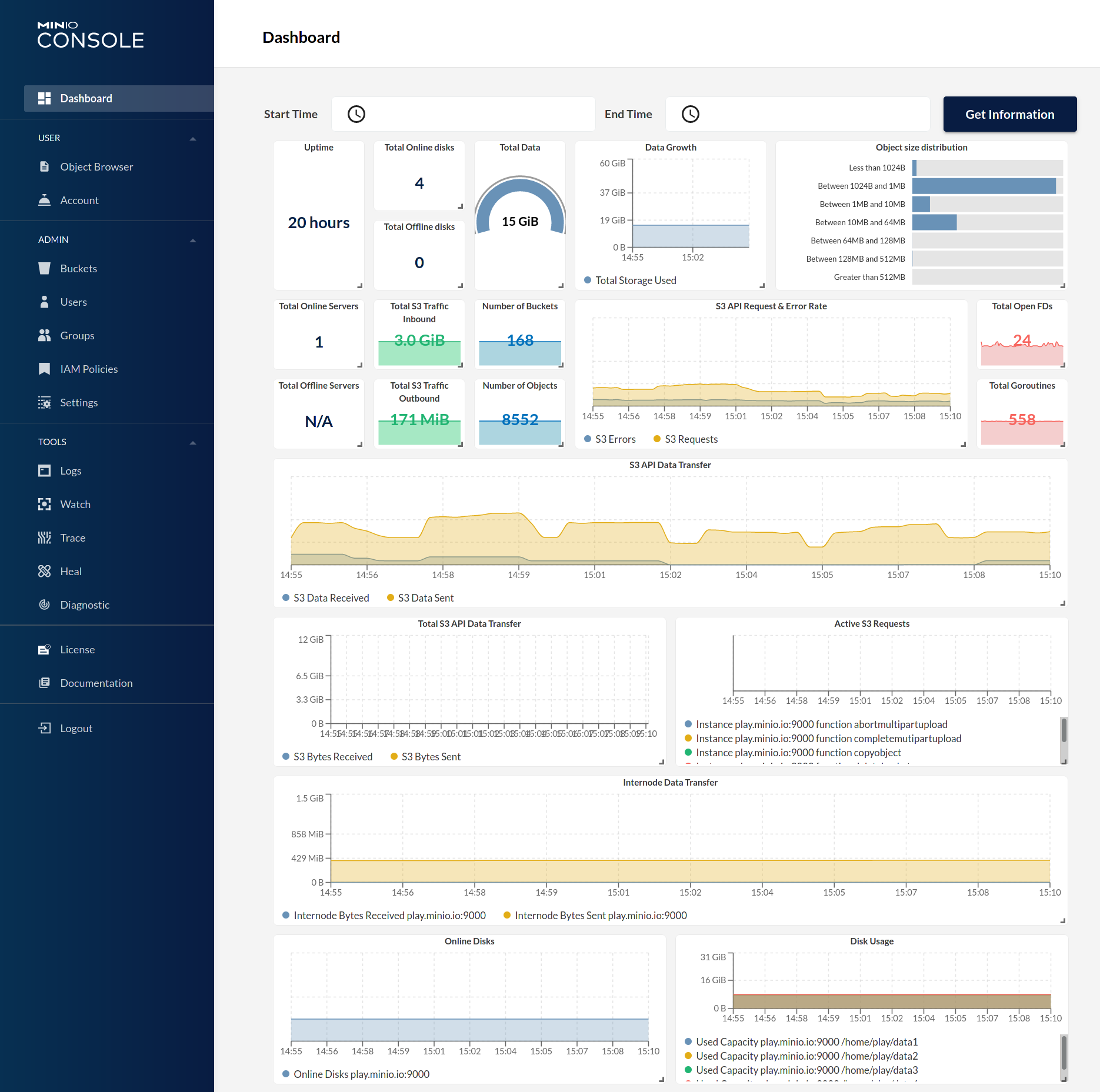 | 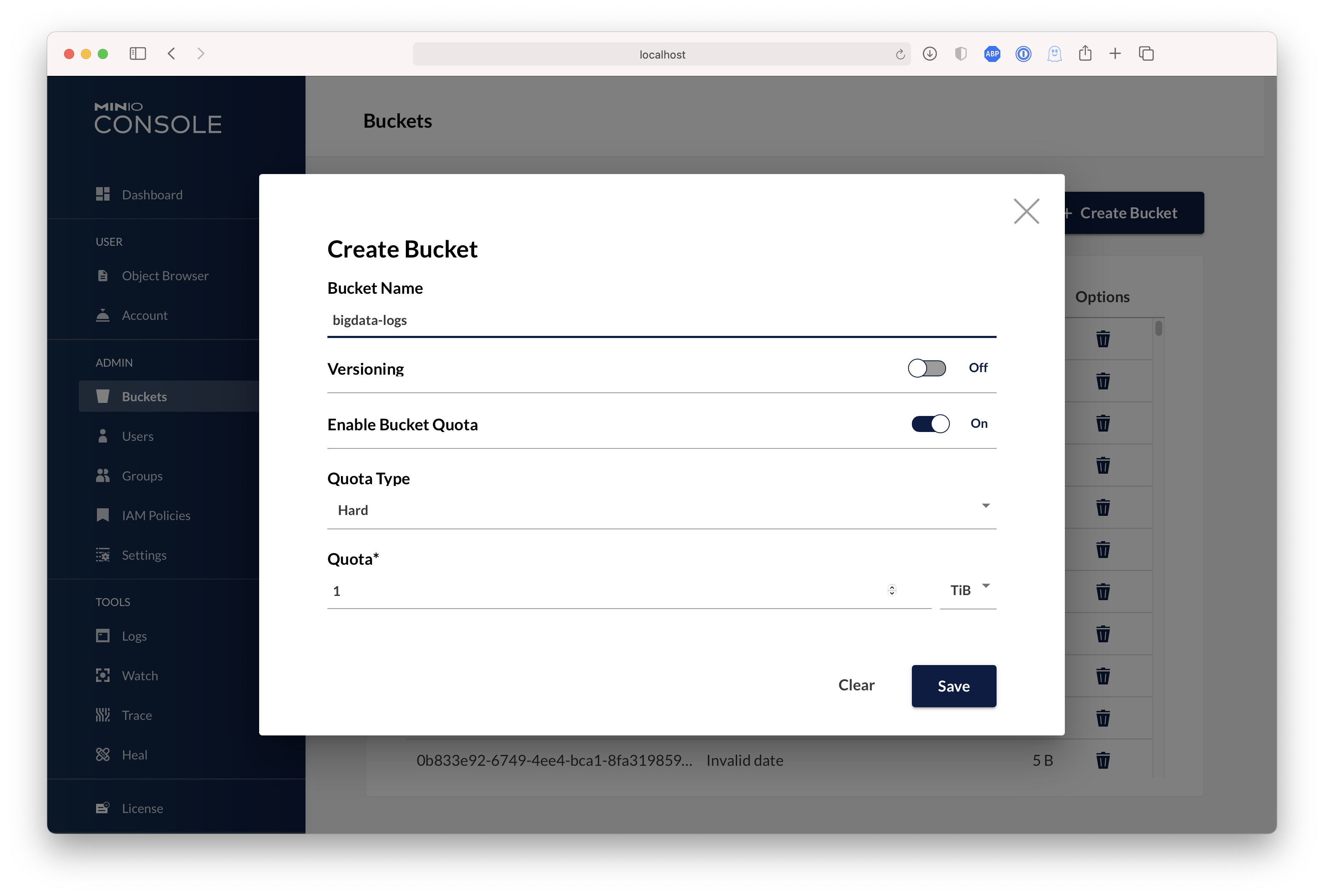 |
|
||||
|
||||
## Test using MinIO Client `mc`
|
||||
|
||||
`mc` provides a modern alternative to UNIX commands like ls, cat, cp, mirror, diff etc. It supports filesystems and Amazon S3 compatible cloud storage services. Follow the MinIO Client [Quickstart Guide](https://min.io/docs/minio/linux/reference/minio-mc.html#quickstart) for further instructions.
|
||||
|
||||
## Upgrading MinIO
|
||||
|
||||
Upgrades require zero downtime in MinIO, all upgrades are non-disruptive, all transactions on MinIO are atomic. So upgrading all the servers simultaneously is the recommended way to upgrade MinIO.
|
||||
|
||||
> NOTE: requires internet access to update directly from <https://dl.min.io>, optionally you can host any mirrors at <https://my-artifactory.example.com/minio/>
|
||||
|
||||
- For deployments that installed the MinIO server binary by hand, use [`mc admin update`](https://min.io/docs/minio/linux/reference/minio-mc-admin/mc-admin-update.html)
|
||||
|
||||
```sh
|
||||
mc admin update <minio alias, e.g., myminio>
|
||||
```
|
||||
|
||||
- For deployments without external internet access (e.g. airgapped environments), download the binary from <https://dl.min.io> and replace the existing MinIO binary let's say for example `/opt/bin/minio`, apply executable permissions `chmod +x /opt/bin/minio` and proceed to perform `mc admin service restart alias/`.
|
||||
|
||||
- For installations using Systemd MinIO service, upgrade via RPM/DEB packages **parallelly** on all servers or replace the binary lets say `/opt/bin/minio` on all nodes, apply executable permissions `chmod +x /opt/bin/minio` and process to perform `mc admin service restart alias/`.
|
||||
|
||||
### Upgrade Checklist
|
||||
|
||||
- Test all upgrades in a lower environment (DEV, QA, UAT) before applying to production. Performing blind upgrades in production environments carries significant risk.
|
||||
- Read the release notes for MinIO *before* performing any upgrade, there is no forced requirement to upgrade to latest release upon every release. Some release may not be relevant to your setup, avoid upgrading production environments unnecessarily.
|
||||
- If you plan to use `mc admin update`, MinIO process must have write access to the parent directory where the binary is present on the host system.
|
||||
- `mc admin update` is not supported and should be avoided in kubernetes/container environments, please upgrade containers by upgrading relevant container images.
|
||||
- **We do not recommend upgrading one MinIO server at a time, the product is designed to support parallel upgrades please follow our recommended guidelines.**
|
||||
|
||||
## Explore Further
|
||||
|
||||
- [MinIO Erasure Code Overview](https://min.io/docs/minio/linux/operations/concepts/erasure-coding.html)
|
||||
- [Use `mc` with MinIO Server](https://min.io/docs/minio/linux/reference/minio-mc.html)
|
||||
- [Use `minio-go` SDK with MinIO Server](https://min.io/docs/minio/linux/developers/go/minio-go.html)
|
||||
- [The MinIO documentation website](https://min.io/docs/minio/linux/index.html)
|
||||
|
||||
## Contribute to MinIO Project
|
||||
|
||||
Please follow MinIO [Contributor's Guide](https://github.com/minio/minio/blob/master/CONTRIBUTING.md)
|
||||
|
||||
## License
|
||||
|
||||
- MinIO source is licensed under the [GNU AGPLv3](https://github.com/minio/minio/blob/master/LICENSE).
|
||||
- MinIO [documentation](https://github.com/minio/minio/tree/master/docs) is licensed under [CC BY 4.0](https://creativecommons.org/licenses/by/4.0/).
|
||||
- [License Compliance](https://github.com/minio/minio/blob/master/COMPLIANCE.md)
|
||||
## 6. Contribute to Minio Project
|
||||
Please follow Minio [Contributor's Guide](https://github.com/minio/minio/blob/master/CONTRIBUTING.md)
|
||||
|
||||
42
SECURITY.md
42
SECURITY.md
@@ -1,42 +0,0 @@
|
||||
# Security Policy
|
||||
|
||||
## Supported Versions
|
||||
|
||||
We always provide security updates for the [latest release](https://github.com/minio/minio/releases/latest).
|
||||
Whenever there is a security update you just need to upgrade to the latest version.
|
||||
|
||||
## Reporting a Vulnerability
|
||||
|
||||
All security bugs in [minio/minio](https://github,com/minio/minio) (or other minio/* repositories)
|
||||
should be reported by email to security@min.io. Your email will be acknowledged within 48 hours,
|
||||
and you'll receive a more detailed response to your email within 72 hours indicating the next steps
|
||||
in handling your report.
|
||||
|
||||
Please, provide a detailed explanation of the issue. In particular, outline the type of the security
|
||||
issue (DoS, authentication bypass, information disclose, ...) and the assumptions you're making (e.g. do
|
||||
you need access credentials for a successful exploit).
|
||||
|
||||
If you have not received a reply to your email within 48 hours or you have not heard from the security team
|
||||
for the past five days please contact the security team directly:
|
||||
|
||||
- Primary security coordinator: aead@min.io
|
||||
- Secondary coordinator: harsha@min.io
|
||||
- If you receive no response: dev@min.io
|
||||
|
||||
### Disclosure Process
|
||||
|
||||
MinIO uses the following disclosure process:
|
||||
|
||||
1. Once the security report is received one member of the security team tries to verify and reproduce
|
||||
the issue and determines the impact it has.
|
||||
2. A member of the security team will respond and either confirm or reject the security report.
|
||||
If the report is rejected the response explains why.
|
||||
3. Code is audited to find any potential similar problems.
|
||||
4. Fixes are prepared for the latest release.
|
||||
5. On the date that the fixes are applied a security advisory will be published on <https://blog.min.io>.
|
||||
Please inform us in your report email whether MinIO should mention your contribution w.r.t. fixing
|
||||
the security issue. By default MinIO will **not** publish this information to protect your privacy.
|
||||
|
||||
This process can take some time, especially when coordination is required with maintainers of other projects.
|
||||
Every effort will be made to handle the bug in as timely a manner as possible, however it's important that we
|
||||
follow the process described above to ensure that disclosures are handled consistently.
|
||||
@@ -1,38 +0,0 @@
|
||||
# Vulnerability Management Policy
|
||||
|
||||
This document formally describes the process of addressing and managing a
|
||||
reported vulnerability that has been found in the MinIO server code base,
|
||||
any directly connected ecosystem component or a direct / indirect dependency
|
||||
of the code base.
|
||||
|
||||
## Scope
|
||||
|
||||
The vulnerability management policy described in this document covers the
|
||||
process of investigating, assessing and resolving a vulnerability report
|
||||
opened by a MinIO employee or an external third party.
|
||||
|
||||
Therefore, it lists pre-conditions and actions that should be performed to
|
||||
resolve and fix a reported vulnerability.
|
||||
|
||||
## Vulnerability Management Process
|
||||
|
||||
The vulnerability management process requires that the vulnerability report
|
||||
contains the following information:
|
||||
|
||||
- The project / component that contains the reported vulnerability.
|
||||
- A description of the vulnerability. In particular, the type of the
|
||||
reported vulnerability and how it might be exploited. Alternatively,
|
||||
a well-established vulnerability identifier, e.g. CVE number, can be
|
||||
used instead.
|
||||
|
||||
Based on the description mentioned above, a MinIO engineer or security team
|
||||
member investigates:
|
||||
|
||||
- Whether the reported vulnerability exists.
|
||||
- The conditions that are required such that the vulnerability can be exploited.
|
||||
- The steps required to fix the vulnerability.
|
||||
|
||||
In general, if the vulnerability exists in one of the MinIO code bases
|
||||
itself - not in a code dependency - then MinIO will, if possible, fix
|
||||
the vulnerability or implement reasonable countermeasures such that the
|
||||
vulnerability cannot be exploited anymore.
|
||||
@@ -1 +0,0 @@
|
||||
theme: jekyll-theme-minimal
|
||||
54
appveyor.yml
Normal file
54
appveyor.yml
Normal file
@@ -0,0 +1,54 @@
|
||||
# version format
|
||||
version: "{build}"
|
||||
|
||||
# Operating system (build VM template)
|
||||
os: Windows Server 2012 R2
|
||||
|
||||
# Platform.
|
||||
platform: x64
|
||||
|
||||
clone_folder: c:\gopath\src\github.com\minio\minio
|
||||
|
||||
# Environment variables
|
||||
environment:
|
||||
GOPATH: c:\gopath
|
||||
GO15VENDOREXPERIMENT: 1
|
||||
|
||||
# scripts that run after cloning repository
|
||||
install:
|
||||
- set PATH=%GOPATH%\bin;c:\go\bin;%PATH%
|
||||
- go version
|
||||
- go env
|
||||
- python --version
|
||||
|
||||
# To run your custom scripts instead of automatic MSBuild
|
||||
build_script:
|
||||
# Compile
|
||||
- appveyor AddCompilationMessage "Starting Compile"
|
||||
- cd c:\gopath\src\github.com\minio\minio
|
||||
- go run buildscripts/gen-ldflags.go > temp.txt
|
||||
- set /p BUILD_LDFLAGS=<temp.txt
|
||||
- go build -ldflags="%BUILD_LDFLAGS%" -o %GOPATH%\bin\minio.exe
|
||||
- appveyor AddCompilationMessage "Compile Success"
|
||||
|
||||
# To run your custom scripts instead of automatic tests
|
||||
test_script:
|
||||
# Unit tests
|
||||
- ps: Add-AppveyorTest "Unit Tests" -Outcome Running
|
||||
- mkdir build\coverage
|
||||
- go test -race github.com/minio/minio/cmd...
|
||||
- go test -race github.com/minio/minio/pkg...
|
||||
- go test -coverprofile=build\coverage\coverage.txt -covermode=atomic github.com/minio/minio/cmd
|
||||
- ps: Update-AppveyorTest "Unit Tests" -Outcome Passed
|
||||
|
||||
after_test:
|
||||
- go tool cover -html=build\coverage\coverage.txt -o build\coverage\coverage.html
|
||||
- ps: Push-AppveyorArtifact build\coverage\coverage.txt
|
||||
- ps: Push-AppveyorArtifact build\coverage\coverage.html
|
||||
# Upload coverage report.
|
||||
- "SET PATH=C:\\Python34;C:\\Python34\\Scripts;%PATH%"
|
||||
- pip install codecov
|
||||
- codecov -X gcov -f "build\coverage\coverage.txt"
|
||||
|
||||
# to disable deployment
|
||||
deploy: off
|
||||
84
buildscripts/build.sh
Executable file
84
buildscripts/build.sh
Executable file
@@ -0,0 +1,84 @@
|
||||
#!/bin/bash
|
||||
|
||||
_init() {
|
||||
# Save release LDFLAGS
|
||||
LDFLAGS=$(go run buildscripts/gen-ldflags.go)
|
||||
|
||||
# Extract release tag
|
||||
release_tag=$(echo $LDFLAGS | awk {'print $4'} | cut -f2 -d=)
|
||||
|
||||
# Verify release tag.
|
||||
if [ -z "$release_tag" ]; then
|
||||
echo "Release tag cannot be empty. Please check return value of \`go run buildscripts/gen-ldflags.go\`"
|
||||
exit 1;
|
||||
fi
|
||||
|
||||
# Extract release string.
|
||||
release_str=$(echo $MINIO_RELEASE | tr '[:upper:]' '[:lower:]')
|
||||
|
||||
# Verify release string.
|
||||
if [ -z "$release_str" ]; then
|
||||
echo "Release string cannot be empty. Please set \`MINIO_RELEASE\` env variable."
|
||||
exit 1;
|
||||
fi
|
||||
|
||||
# List of supported architectures
|
||||
SUPPORTED_OSARCH='linux/386 linux/amd64 linux/arm windows/386 windows/amd64 darwin/amd64 freebsd/amd64'
|
||||
|
||||
## System binaries
|
||||
CP=`which cp`
|
||||
SHASUM=`which shasum`
|
||||
SED=`which sed`
|
||||
}
|
||||
|
||||
go_build() {
|
||||
local osarch=$1
|
||||
os=$(echo $osarch | cut -f1 -d'/')
|
||||
arch=$(echo $osarch | cut -f2 -d'/')
|
||||
package=$(go list -f '{{.ImportPath}}')
|
||||
echo -n "-->"
|
||||
printf "%15s:%s\n" "${osarch}" "${package}"
|
||||
|
||||
# Release binary name
|
||||
release_bin="$release_str/$os-$arch/$(basename $package).$release_tag"
|
||||
# Release binary downloadable name
|
||||
release_real_bin="$release_str/$os-$arch/$(basename $package)"
|
||||
# Release shasum name
|
||||
release_shasum="$release_str/$os-$arch/$(basename $package).shasum"
|
||||
|
||||
# Go build to build the binary.
|
||||
GOOS=$os GOARCH=$arch go build --ldflags "${LDFLAGS}" -o $release_bin
|
||||
|
||||
# Create copy
|
||||
if [ $os == "windows" ]; then
|
||||
$CP -p $release_bin ${release_real_bin}.exe
|
||||
else
|
||||
$CP -p $release_bin $release_real_bin
|
||||
fi
|
||||
|
||||
# Calculate shasum
|
||||
shasum_str=$(${SHASUM} ${release_bin})
|
||||
echo ${shasum_str} | $SED "s/$release_str\/$os-$arch\///g" > $release_shasum
|
||||
}
|
||||
|
||||
main() {
|
||||
# Build releases.
|
||||
echo "Executing $release_str builds for OS: ${SUPPORTED_OSARCH}"
|
||||
echo "Choose an OS Arch from the below"
|
||||
for osarch in ${SUPPORTED_OSARCH}; do
|
||||
echo ${osarch}
|
||||
done
|
||||
|
||||
read -p "If you want to build for all, Just press Enter: " chosen_osarch
|
||||
if [ "$chosen_osarch" = "" ]; then
|
||||
for each_osarch in ${SUPPORTED_OSARCH}; do
|
||||
go_build ${each_osarch}
|
||||
done
|
||||
else
|
||||
go_build ${chosen_osarch}
|
||||
fi
|
||||
|
||||
}
|
||||
|
||||
# Run main.
|
||||
_init && main
|
||||
298
buildscripts/checkdeps.sh
Executable file → Normal file
298
buildscripts/checkdeps.sh
Executable file → Normal file
@@ -1,143 +1,221 @@
|
||||
#!/usr/bin/env bash
|
||||
#
|
||||
# Minio Cloud Storage, (C) 2015 Minio, Inc.
|
||||
#
|
||||
# Licensed under the Apache License, Version 2.0 (the "License");
|
||||
# you may not use this file except in compliance with the License.
|
||||
# You may obtain a copy of the License at
|
||||
#
|
||||
# http://www.apache.org/licenses/LICENSE-2.0
|
||||
#
|
||||
# Unless required by applicable law or agreed to in writing, software
|
||||
# distributed under the License is distributed on an "AS IS" BASIS,
|
||||
# WITHOUT WARRANTIES OR CONDITIONS OF ANY KIND, either express or implied.
|
||||
# See the License for the specific language governing permissions and
|
||||
# limitations under the License.
|
||||
#
|
||||
|
||||
_init() {
|
||||
|
||||
shopt -s extglob
|
||||
shopt -s extglob
|
||||
|
||||
## Minimum required versions for build dependencies
|
||||
GIT_VERSION="1.0"
|
||||
GO_VERSION="1.16"
|
||||
OSX_VERSION="10.8"
|
||||
KNAME=$(uname -s)
|
||||
ARCH=$(uname -m)
|
||||
case "${KNAME}" in
|
||||
SunOS)
|
||||
ARCH=$(isainfo -k)
|
||||
;;
|
||||
esac
|
||||
## Minimum required versions for build dependencies
|
||||
GIT_VERSION="1.0"
|
||||
GO_VERSION="1.6"
|
||||
OSX_VERSION="10.8"
|
||||
UNAME=$(uname -sm)
|
||||
|
||||
## Check all dependencies are present
|
||||
MISSING=""
|
||||
}
|
||||
|
||||
## FIXME:
|
||||
## In OSX, 'readlink -f' option does not exist, hence
|
||||
## we have our own readlink -f behavior here.
|
||||
## Once OSX has the option, below function is good enough.
|
||||
##
|
||||
## readlink() {
|
||||
## return /bin/readlink -f "$1"
|
||||
## }
|
||||
##
|
||||
readlink() {
|
||||
TARGET_FILE=$1
|
||||
TARGET_FILE=$1
|
||||
|
||||
cd $(dirname $TARGET_FILE)
|
||||
TARGET_FILE=$(basename $TARGET_FILE)
|
||||
cd `dirname $TARGET_FILE`
|
||||
TARGET_FILE=`basename $TARGET_FILE`
|
||||
|
||||
# Iterate down a (possible) chain of symlinks
|
||||
while [ -L "$TARGET_FILE" ]; do
|
||||
TARGET_FILE=$(env readlink $TARGET_FILE)
|
||||
cd $(dirname $TARGET_FILE)
|
||||
TARGET_FILE=$(basename $TARGET_FILE)
|
||||
done
|
||||
# Iterate down a (possible) chain of symlinks
|
||||
while [ -L "$TARGET_FILE" ]
|
||||
do
|
||||
TARGET_FILE=$(env readlink $TARGET_FILE)
|
||||
cd `dirname $TARGET_FILE`
|
||||
TARGET_FILE=`basename $TARGET_FILE`
|
||||
done
|
||||
|
||||
# Compute the canonicalized name by finding the physical path
|
||||
# for the directory we're in and appending the target file.
|
||||
PHYS_DIR=$(pwd -P)
|
||||
RESULT=$PHYS_DIR/$TARGET_FILE
|
||||
echo $RESULT
|
||||
# Compute the canonicalized name by finding the physical path
|
||||
# for the directory we're in and appending the target file.
|
||||
PHYS_DIR=`pwd -P`
|
||||
RESULT=$PHYS_DIR/$TARGET_FILE
|
||||
echo $RESULT
|
||||
}
|
||||
|
||||
## FIXME:
|
||||
## In OSX, 'sort -V' option does not exist, hence
|
||||
## we have our own version compare function.
|
||||
## Once OSX has the option, below function is good enough.
|
||||
##
|
||||
## check_minimum_version() {
|
||||
## versions=($(echo -e "$1\n$2" | sort -V))
|
||||
## return [ "$1" == "${versions[0]}" ]
|
||||
## }
|
||||
##
|
||||
check_minimum_version() {
|
||||
IFS='.' read -r -a varray1 <<<"$1"
|
||||
IFS='.' read -r -a varray2 <<<"$2"
|
||||
###
|
||||
#
|
||||
# Takes two arguments
|
||||
# arg1: version number in `x.x.x` format
|
||||
# arg2: version number in `x.x.x` format
|
||||
#
|
||||
# example: check_version "$version1" "$version2"
|
||||
#
|
||||
# returns:
|
||||
# 0 - Installed version is equal to required
|
||||
# 1 - Installed version is greater than required
|
||||
# 2 - Installed version is lesser than required
|
||||
# 3 - If args have length zero
|
||||
#
|
||||
####
|
||||
check_version() {
|
||||
## validate args
|
||||
[[ -z "$1" ]] && return 3
|
||||
[[ -z "$2" ]] && return 3
|
||||
|
||||
for i in "${!varray1[@]}"; do
|
||||
if [[ ${varray1[i]} -lt ${varray2[i]} ]]; then
|
||||
return 0
|
||||
elif [[ ${varray1[i]} -gt ${varray2[i]} ]]; then
|
||||
return 1
|
||||
fi
|
||||
done
|
||||
if [[ $1 == $2 ]]; then
|
||||
return 0
|
||||
fi
|
||||
|
||||
return 0
|
||||
local IFS=.
|
||||
local i ver1=($1) ver2=($2)
|
||||
# fill empty fields in ver1 with zeros
|
||||
for ((i=${#ver1[@]}; i<${#ver2[@]}; i++)); do
|
||||
ver1[i]=0
|
||||
done
|
||||
for ((i=0; i<${#ver1[@]}; i++)); do
|
||||
if [[ -z ${ver2[i]} ]]; then
|
||||
# fill empty fields in ver2 with zeros
|
||||
ver2[i]=0
|
||||
fi
|
||||
if ((10#${ver1[i]} > 10#${ver2[i]})); then
|
||||
|
||||
return 1
|
||||
fi
|
||||
if ((10#${ver1[i]} < 10#${ver2[i]})); then
|
||||
## Installed version is lesser than required - Bad condition
|
||||
return 2
|
||||
fi
|
||||
done
|
||||
return 0
|
||||
}
|
||||
|
||||
assert_is_supported_arch() {
|
||||
case "${ARCH}" in
|
||||
x86_64 | amd64 | aarch64 | ppc64le | arm* | s390x | loong64 | loongarch64)
|
||||
return
|
||||
;;
|
||||
*)
|
||||
echo "Arch '${ARCH}' is not supported. Supported Arch: [x86_64, amd64, aarch64, ppc64le, arm*, s390x, loong64, loongarch64]"
|
||||
exit 1
|
||||
;;
|
||||
esac
|
||||
check_golang_env() {
|
||||
echo ${GOROOT:?} 2>&1 >/dev/null
|
||||
if [ $? -eq 1 ]; then
|
||||
echo "ERROR"
|
||||
echo "GOROOT environment variable missing, please refer to Go installation document"
|
||||
echo "https://github.com/minio/minio/blob/master/INSTALLGO.md#install-go-13"
|
||||
exit 1
|
||||
fi
|
||||
|
||||
echo ${GOPATH:?} 2>&1 >/dev/null
|
||||
if [ $? -eq 1 ]; then
|
||||
echo "ERROR"
|
||||
echo "GOPATH environment variable missing, please refer to Go installation document"
|
||||
echo "https://github.com/minio/minio/blob/master/INSTALLGO.md#install-go-13"
|
||||
exit 1
|
||||
fi
|
||||
|
||||
local go_binary_path=$(which go)
|
||||
|
||||
if [ -z "${go_binary_path}" ] ; then
|
||||
echo "Cannot find go binary in your PATH configuration, please refer to Go installation document"
|
||||
echo "https://github.com/minio/minio/blob/master/INSTALLGO.md#install-go-13"
|
||||
exit -1
|
||||
fi
|
||||
|
||||
local new_go_binary_path=${go_binary_path}
|
||||
if [ -h "${go_binary_path}" ]; then
|
||||
new_go_binary_path=$(readlink ${go_binary_path})
|
||||
fi
|
||||
|
||||
if [[ !"$(dirname ${new_go_binary_path})" =~ *"${GOROOT%%*(/)}"* ]] ; then
|
||||
echo "The go binary found in your PATH configuration does not belong to the Go installation pointed by your GOROOT environment," \
|
||||
"please refer to Go installation document"
|
||||
echo "https://github.com/minio/minio/blob/master/INSTALLGO.md#install-go-13"
|
||||
exit -1
|
||||
fi
|
||||
}
|
||||
|
||||
assert_is_supported_os() {
|
||||
case "${KNAME}" in
|
||||
Linux | FreeBSD | OpenBSD | NetBSD | DragonFly | SunOS)
|
||||
return
|
||||
;;
|
||||
Darwin)
|
||||
osx_host_version=$(env sw_vers -productVersion)
|
||||
if ! check_minimum_version "${OSX_VERSION}" "${osx_host_version}"; then
|
||||
echo "OSX version '${osx_host_version}' is not supported. Minimum supported version: ${OSX_VERSION}"
|
||||
exit 1
|
||||
fi
|
||||
return
|
||||
;;
|
||||
*)
|
||||
echo "OS '${KNAME}' is not supported. Supported OS: [Linux, FreeBSD, OpenBSD, NetBSD, Darwin, DragonFly]"
|
||||
exit 1
|
||||
;;
|
||||
esac
|
||||
is_supported_os() {
|
||||
case ${UNAME%% *} in
|
||||
"Linux")
|
||||
os="linux"
|
||||
;;
|
||||
"FreeBSD")
|
||||
os="freebsd"
|
||||
;;
|
||||
"Darwin")
|
||||
osx_host_version=$(env sw_vers -productVersion)
|
||||
check_version "${osx_host_version}" "${OSX_VERSION}"
|
||||
[[ $? -ge 2 ]] && die "Minimum OSX version supported is ${OSX_VERSION}"
|
||||
;;
|
||||
"*")
|
||||
echo "Exiting.. unsupported operating system found"
|
||||
exit 1;
|
||||
esac
|
||||
}
|
||||
|
||||
assert_check_golang_env() {
|
||||
if ! which go >/dev/null 2>&1; then
|
||||
echo "Cannot find go binary in your PATH configuration, please refer to Go installation document at https://golang.org/doc/install"
|
||||
exit 1
|
||||
fi
|
||||
|
||||
installed_go_version=$(go version | sed 's/^.* go\([0-9.]*\).*$/\1/')
|
||||
if ! check_minimum_version "${GO_VERSION}" "${installed_go_version}"; then
|
||||
echo "Go runtime version '${installed_go_version}' is unsupported. Minimum supported version: ${GO_VERSION} to compile."
|
||||
exit 1
|
||||
fi
|
||||
is_supported_arch() {
|
||||
local supported
|
||||
case ${UNAME##* } in
|
||||
"x86_64" | "amd64")
|
||||
supported=1
|
||||
;;
|
||||
"arm"*)
|
||||
supported=1
|
||||
;;
|
||||
*)
|
||||
supported=0
|
||||
;;
|
||||
esac
|
||||
if [ $supported -eq 0 ]; then
|
||||
echo "Invalid arch: ${UNAME} not supported, please use x86_64/amd64"
|
||||
exit 1;
|
||||
fi
|
||||
}
|
||||
|
||||
assert_check_deps() {
|
||||
# support unusual Git versions such as: 2.7.4 (Apple Git-66)
|
||||
installed_git_version=$(git version | perl -ne '$_ =~ m/git version (.*?)( |$)/; print "$1\n";')
|
||||
if ! check_minimum_version "${GIT_VERSION}" "${installed_git_version}"; then
|
||||
echo "Git version '${installed_git_version}' is not supported. Minimum supported version: ${GIT_VERSION}"
|
||||
exit 1
|
||||
fi
|
||||
check_deps() {
|
||||
check_version "$(env go version 2>/dev/null | sed 's/^.* go\([0-9.]*\).*$/\1/')" "${GO_VERSION}"
|
||||
if [ $? -ge 2 ]; then
|
||||
MISSING="${MISSING} golang(${GO_VERSION})"
|
||||
fi
|
||||
|
||||
check_version "$(env git --version 2>/dev/null | sed -e 's/^.* \([0-9.\].*\).*$/\1/' -e 's/^\([0-9.\]*\).*/\1/g')" "${GIT_VERSION}"
|
||||
if [ $? -ge 2 ]; then
|
||||
MISSING="${MISSING} git"
|
||||
fi
|
||||
}
|
||||
|
||||
main() {
|
||||
## Check for supported arch
|
||||
assert_is_supported_arch
|
||||
echo -n "Check for supported arch.. "
|
||||
is_supported_arch
|
||||
|
||||
## Check for supported os
|
||||
assert_is_supported_os
|
||||
echo -n "Check for supported os.. "
|
||||
is_supported_os
|
||||
|
||||
## Check for Go environment
|
||||
assert_check_golang_env
|
||||
echo -n "Checking if proper environment variables are set.. "
|
||||
check_golang_env
|
||||
|
||||
## Check for dependencies
|
||||
assert_check_deps
|
||||
echo "Done"
|
||||
echo "Using GOPATH=${GOPATH} and GOROOT=${GOROOT}"
|
||||
|
||||
echo -n "Checking dependencies for Minio.. "
|
||||
check_deps
|
||||
|
||||
## If dependencies are missing, warn the user and abort
|
||||
if [ "x${MISSING}" != "x" ]; then
|
||||
echo "ERROR"
|
||||
echo
|
||||
echo "The following build tools are missing:"
|
||||
echo
|
||||
echo "** ${MISSING} **"
|
||||
echo
|
||||
echo "Please install them "
|
||||
echo "${MISSING}"
|
||||
echo
|
||||
echo "Follow https://docs.minio.io/docs/how-to-install-golang for further instructions"
|
||||
exit 1
|
||||
fi
|
||||
echo "Done"
|
||||
}
|
||||
|
||||
_init && main "$@"
|
||||
|
||||
40
buildscripts/checkgopath.sh
Normal file
40
buildscripts/checkgopath.sh
Normal file
@@ -0,0 +1,40 @@
|
||||
#!/usr/bin/env bash
|
||||
#
|
||||
# Minio Cloud Storage, (C) 2015, 2016 Minio, Inc.
|
||||
#
|
||||
# Licensed under the Apache License, Version 2.0 (the "License");
|
||||
# you may not use this file except in compliance with the License.
|
||||
# You may obtain a copy of the License at
|
||||
#
|
||||
# http://www.apache.org/licenses/LICENSE-2.0
|
||||
#
|
||||
# Unless required by applicable law or agreed to in writing, software
|
||||
# distributed under the License is distributed on an "AS IS" BASIS,
|
||||
# WITHOUT WARRANTIES OR CONDITIONS OF ANY KIND, either express or implied.
|
||||
# See the License for the specific language governing permissions and
|
||||
# limitations under the License.
|
||||
#
|
||||
|
||||
_init() {
|
||||
|
||||
shopt -s extglob
|
||||
|
||||
PWD=$(pwd -P)
|
||||
GOPATH=$(cd "$(go env GOPATH)" ; env pwd -P)
|
||||
}
|
||||
|
||||
main() {
|
||||
echo "Checking if project is at ${GOPATH}"
|
||||
for minio in $(echo ${GOPATH} | tr ':' ' '); do
|
||||
if [ ! -d ${minio}/src/github.com/minio/minio ]; then
|
||||
echo "Project not found in ${minio}, please follow instructions provided at https://github.com/minio/minio/blob/master/CONTRIBUTING.md#setup-your-minio-github-repository" \
|
||||
&& exit 1
|
||||
fi
|
||||
if [ "x${minio}/src/github.com/minio/minio" != "x${PWD}" ]; then
|
||||
echo "Build outside of ${minio}, two source checkouts found. Exiting." && exit 1
|
||||
fi
|
||||
done
|
||||
}
|
||||
|
||||
_init && main
|
||||
|
||||
Binary file not shown.
Binary file not shown.
Binary file not shown.
Binary file not shown.
Binary file not shown.
Binary file not shown.
Binary file not shown.
Binary file not shown.
Binary file not shown.
Binary file not shown.
Binary file not shown.
@@ -1,37 +0,0 @@
|
||||
#!/bin/bash
|
||||
|
||||
set -e
|
||||
# Enable tracing if set.
|
||||
[ -n "$BASH_XTRACEFD" ] && set -x
|
||||
|
||||
function _init() {
|
||||
## All binaries are static make sure to disable CGO.
|
||||
export CGO_ENABLED=0
|
||||
|
||||
## List of architectures and OS to test coss compilation.
|
||||
SUPPORTED_OSARCH="linux/ppc64le linux/mips64 linux/amd64 linux/arm64 linux/s390x darwin/arm64 darwin/amd64 freebsd/amd64 windows/amd64 linux/arm linux/386 netbsd/amd64 linux/mips openbsd/amd64"
|
||||
}
|
||||
|
||||
function _build() {
|
||||
local osarch=$1
|
||||
IFS=/ read -r -a arr <<<"$osarch"
|
||||
os="${arr[0]}"
|
||||
arch="${arr[1]}"
|
||||
package=$(go list -f '{{.ImportPath}}')
|
||||
printf -- "--> %15s:%s\n" "${osarch}" "${package}"
|
||||
|
||||
# go build -trimpath to build the binary.
|
||||
export GOOS=$os
|
||||
export GOARCH=$arch
|
||||
export GO111MODULE=on
|
||||
go build -trimpath -tags kqueue -o /dev/null
|
||||
}
|
||||
|
||||
function main() {
|
||||
echo "Testing builds for OS/Arch: ${SUPPORTED_OSARCH}"
|
||||
for each_osarch in ${SUPPORTED_OSARCH}; do
|
||||
_build "${each_osarch}"
|
||||
done
|
||||
}
|
||||
|
||||
_init && main "$@"
|
||||
@@ -1,124 +0,0 @@
|
||||
#!/bin/bash
|
||||
|
||||
set -x
|
||||
|
||||
export MINIO_CI_CD=1
|
||||
killall -9 minio
|
||||
|
||||
rm -rf ${HOME}/tmp/dist
|
||||
|
||||
scheme="http"
|
||||
nr_servers=4
|
||||
|
||||
addr="localhost"
|
||||
args=""
|
||||
for ((i = 0; i < $((nr_servers)); i++)); do
|
||||
args="$args $scheme://$addr:$((9100 + i))/${HOME}/tmp/dist/path1/$i"
|
||||
done
|
||||
|
||||
echo $args
|
||||
|
||||
for ((i = 0; i < $((nr_servers)); i++)); do
|
||||
(minio server --address ":$((9100 + i))" $args 2>&1 >/tmp/log$i.txt) &
|
||||
done
|
||||
|
||||
sleep 10s
|
||||
|
||||
if [ ! -f ./mc ]; then
|
||||
wget --quiet -O ./mc https://dl.minio.io/client/mc/release/linux-amd64/./mc &&
|
||||
chmod +x mc
|
||||
fi
|
||||
|
||||
set +e
|
||||
|
||||
export MC_HOST_minioadm=http://minioadmin:minioadmin@localhost:9100/
|
||||
./mc ready minioadm
|
||||
|
||||
./mc ls minioadm/
|
||||
|
||||
./mc admin config set minioadm/ api root_access=off
|
||||
|
||||
sleep 3s # let things settle a little
|
||||
|
||||
./mc ls minioadm/
|
||||
if [ $? -eq 0 ]; then
|
||||
echo "listing succeeded, 'minioadmin' was not disabled"
|
||||
exit 1
|
||||
fi
|
||||
|
||||
set -e
|
||||
|
||||
killall -9 minio
|
||||
|
||||
export MINIO_API_ROOT_ACCESS=on
|
||||
for ((i = 0; i < $((nr_servers)); i++)); do
|
||||
(minio server --address ":$((9100 + i))" $args 2>&1 >/tmp/log$i.txt) &
|
||||
done
|
||||
|
||||
set +e
|
||||
|
||||
./mc ready minioadm/
|
||||
|
||||
./mc ls minioadm/
|
||||
if [ $? -ne 0 ]; then
|
||||
echo "listing failed, 'minioadmin' should be enabled"
|
||||
exit 1
|
||||
fi
|
||||
|
||||
killall -9 minio
|
||||
|
||||
rm -rf /tmp/multisitea/
|
||||
rm -rf /tmp/multisiteb/
|
||||
|
||||
echo "Setup site-replication and then disable root credentials"
|
||||
|
||||
minio server --address 127.0.0.1:9001 "http://127.0.0.1:9001/tmp/multisitea/data/disterasure/xl{1...4}" \
|
||||
"http://127.0.0.1:9002/tmp/multisitea/data/disterasure/xl{5...8}" >/tmp/sitea_1.log 2>&1 &
|
||||
minio server --address 127.0.0.1:9002 "http://127.0.0.1:9001/tmp/multisitea/data/disterasure/xl{1...4}" \
|
||||
"http://127.0.0.1:9002/tmp/multisitea/data/disterasure/xl{5...8}" >/tmp/sitea_2.log 2>&1 &
|
||||
|
||||
minio server --address 127.0.0.1:9003 "http://127.0.0.1:9003/tmp/multisiteb/data/disterasure/xl{1...4}" \
|
||||
"http://127.0.0.1:9004/tmp/multisiteb/data/disterasure/xl{5...8}" >/tmp/siteb_1.log 2>&1 &
|
||||
minio server --address 127.0.0.1:9004 "http://127.0.0.1:9003/tmp/multisiteb/data/disterasure/xl{1...4}" \
|
||||
"http://127.0.0.1:9004/tmp/multisiteb/data/disterasure/xl{5...8}" >/tmp/siteb_2.log 2>&1 &
|
||||
|
||||
export MC_HOST_sitea=http://minioadmin:minioadmin@127.0.0.1:9001
|
||||
export MC_HOST_siteb=http://minioadmin:minioadmin@127.0.0.1:9004
|
||||
|
||||
./mc ready sitea
|
||||
./mc ready siteb
|
||||
|
||||
./mc admin replicate add sitea siteb
|
||||
|
||||
./mc admin user add sitea foobar foo12345
|
||||
|
||||
./mc admin policy attach sitea/ consoleAdmin --user=foobar
|
||||
|
||||
./mc admin user info siteb foobar
|
||||
|
||||
killall -9 minio
|
||||
|
||||
echo "turning off root access, however site replication must continue"
|
||||
export MINIO_API_ROOT_ACCESS=off
|
||||
|
||||
minio server --address 127.0.0.1:9001 "http://127.0.0.1:9001/tmp/multisitea/data/disterasure/xl{1...4}" \
|
||||
"http://127.0.0.1:9002/tmp/multisitea/data/disterasure/xl{5...8}" >/tmp/sitea_1.log 2>&1 &
|
||||
minio server --address 127.0.0.1:9002 "http://127.0.0.1:9001/tmp/multisitea/data/disterasure/xl{1...4}" \
|
||||
"http://127.0.0.1:9002/tmp/multisitea/data/disterasure/xl{5...8}" >/tmp/sitea_2.log 2>&1 &
|
||||
|
||||
minio server --address 127.0.0.1:9003 "http://127.0.0.1:9003/tmp/multisiteb/data/disterasure/xl{1...4}" \
|
||||
"http://127.0.0.1:9004/tmp/multisiteb/data/disterasure/xl{5...8}" >/tmp/siteb_1.log 2>&1 &
|
||||
minio server --address 127.0.0.1:9004 "http://127.0.0.1:9003/tmp/multisiteb/data/disterasure/xl{1...4}" \
|
||||
"http://127.0.0.1:9004/tmp/multisiteb/data/disterasure/xl{5...8}" >/tmp/siteb_2.log 2>&1 &
|
||||
|
||||
export MC_HOST_sitea=http://foobar:foo12345@127.0.0.1:9001
|
||||
export MC_HOST_siteb=http://foobar:foo12345@127.0.0.1:9004
|
||||
|
||||
./mc ready sitea
|
||||
./mc ready siteb
|
||||
|
||||
./mc admin user add sitea foobar-admin foo12345
|
||||
|
||||
sleep 2s
|
||||
|
||||
./mc admin user info siteb foobar-admin
|
||||
@@ -1,22 +1,20 @@
|
||||
//go:build ignore
|
||||
// +build ignore
|
||||
|
||||
// Copyright (c) 2015-2021 MinIO, Inc.
|
||||
//
|
||||
// This file is part of MinIO Object Storage stack
|
||||
//
|
||||
// This program is free software: you can redistribute it and/or modify
|
||||
// it under the terms of the GNU Affero General Public License as published by
|
||||
// the Free Software Foundation, either version 3 of the License, or
|
||||
// (at your option) any later version.
|
||||
//
|
||||
// This program is distributed in the hope that it will be useful
|
||||
// but WITHOUT ANY WARRANTY; without even the implied warranty of
|
||||
// MERCHANTABILITY or FITNESS FOR A PARTICULAR PURPOSE. See the
|
||||
// GNU Affero General Public License for more details.
|
||||
//
|
||||
// You should have received a copy of the GNU Affero General Public License
|
||||
// along with this program. If not, see <http://www.gnu.org/licenses/>.
|
||||
/*
|
||||
* Minio Cloud Storage, (C) 2015 Minio, Inc.
|
||||
*
|
||||
* Licensed under the Apache License, Version 2.0 (the "License");
|
||||
* you may not use this file except in compliance with the License.
|
||||
* You may obtain a copy of the License at
|
||||
*
|
||||
* http://www.apache.org/licenses/LICENSE-2.0
|
||||
*
|
||||
* Unless required by applicable law or agreed to in writing, software
|
||||
* distributed under the License is distributed on an "AS IS" BASIS,
|
||||
* WITHOUT WARRANTIES OR CONDITIONS OF ANY KIND, either express or implied.
|
||||
* See the License for the specific language governing permissions and
|
||||
* limitations under the License.
|
||||
*/
|
||||
|
||||
package main
|
||||
|
||||
@@ -24,98 +22,50 @@ import (
|
||||
"fmt"
|
||||
"os"
|
||||
"os/exec"
|
||||
"strconv"
|
||||
"strings"
|
||||
"time"
|
||||
)
|
||||
|
||||
func genLDFlags(version string) string {
|
||||
releaseTag, date := releaseTag(version)
|
||||
copyrightYear := strconv.Itoa(date.Year())
|
||||
ldflagsStr := "-s -w"
|
||||
ldflagsStr += " -X github.com/minio/minio/cmd.Version=" + version
|
||||
ldflagsStr += " -X github.com/minio/minio/cmd.CopyrightYear=" + copyrightYear
|
||||
ldflagsStr += " -X github.com/minio/minio/cmd.ReleaseTag=" + releaseTag
|
||||
var ldflagsStr string
|
||||
ldflagsStr = "-X github.com/minio/minio/cmd.Version=" + version
|
||||
ldflagsStr += " -X github.com/minio/minio/cmd.ReleaseTag=" + releaseTag(version)
|
||||
ldflagsStr += " -X github.com/minio/minio/cmd.CommitID=" + commitID()
|
||||
ldflagsStr += " -X github.com/minio/minio/cmd.ShortCommitID=" + commitID()[:12]
|
||||
ldflagsStr += " -X github.com/minio/minio/cmd.GOPATH=" + os.Getenv("GOPATH")
|
||||
ldflagsStr += " -X github.com/minio/minio/cmd.GOROOT=" + os.Getenv("GOROOT")
|
||||
return ldflagsStr
|
||||
}
|
||||
|
||||
// genReleaseTag prints release tag to the console for easy git tagging.
|
||||
func releaseTag(version string) (string, time.Time) {
|
||||
func releaseTag(version string) string {
|
||||
relPrefix := "DEVELOPMENT"
|
||||
if prefix := os.Getenv("MINIO_RELEASE"); prefix != "" {
|
||||
relPrefix = prefix
|
||||
}
|
||||
|
||||
relSuffix := ""
|
||||
if hotfix := os.Getenv("MINIO_HOTFIX"); hotfix != "" {
|
||||
relSuffix = hotfix
|
||||
}
|
||||
|
||||
relTag := strings.Replace(version, " ", "-", -1)
|
||||
relTag = strings.Replace(relTag, ":", "-", -1)
|
||||
t, err := time.Parse("2006-01-02T15-04-05Z", relTag)
|
||||
if err != nil {
|
||||
panic(err)
|
||||
}
|
||||
relTag = strings.Replace(relTag, ",", "", -1)
|
||||
relTag = relPrefix + "." + relTag
|
||||
if relSuffix != "" {
|
||||
relTag += "." + relSuffix
|
||||
}
|
||||
|
||||
return relTag, t
|
||||
return relPrefix + "." + relTag
|
||||
}
|
||||
|
||||
// commitID returns the abbreviated commit-id hash of the last commit.
|
||||
func commitID() string {
|
||||
// git log --format="%H" -n1
|
||||
// git log --format="%h" -n1
|
||||
var (
|
||||
commit []byte
|
||||
err error
|
||||
e error
|
||||
)
|
||||
cmdName := "git"
|
||||
cmdArgs := []string{"log", "--format=%H", "-n1"}
|
||||
if commit, err = exec.Command(cmdName, cmdArgs...).Output(); err != nil {
|
||||
fmt.Fprintln(os.Stderr, "Error generating git commit-id: ", err)
|
||||
if commit, e = exec.Command(cmdName, cmdArgs...).Output(); e != nil {
|
||||
fmt.Fprintln(os.Stderr, "Error generating git commit-id: ", e)
|
||||
os.Exit(1)
|
||||
}
|
||||
|
||||
return strings.TrimSpace(string(commit))
|
||||
}
|
||||
|
||||
func commitTime() time.Time {
|
||||
// git log --format=%cD -n1
|
||||
var (
|
||||
commitUnix []byte
|
||||
err error
|
||||
)
|
||||
cmdName := "git"
|
||||
cmdArgs := []string{"log", "--format=%cI", "-n1"}
|
||||
if commitUnix, err = exec.Command(cmdName, cmdArgs...).Output(); err != nil {
|
||||
fmt.Fprintln(os.Stderr, "Error generating git commit-time: ", err)
|
||||
os.Exit(1)
|
||||
}
|
||||
|
||||
t, err := time.Parse(time.RFC3339, strings.TrimSpace(string(commitUnix)))
|
||||
if err != nil {
|
||||
fmt.Fprintln(os.Stderr, "Error generating git commit-time: ", err)
|
||||
os.Exit(1)
|
||||
}
|
||||
|
||||
return t.UTC()
|
||||
}
|
||||
|
||||
func main() {
|
||||
var version string
|
||||
if len(os.Args) > 1 {
|
||||
version = os.Args[1]
|
||||
} else {
|
||||
version = commitTime().Format(time.RFC3339)
|
||||
}
|
||||
|
||||
fmt.Println(genLDFlags(version))
|
||||
fmt.Println(genLDFlags(time.Now().UTC().Format(time.RFC3339)))
|
||||
}
|
||||
|
||||
12
buildscripts/go-coverage.sh
Executable file
12
buildscripts/go-coverage.sh
Executable file
@@ -0,0 +1,12 @@
|
||||
#!/usr/bin/env bash
|
||||
|
||||
set -e
|
||||
echo "" > coverage.txt
|
||||
|
||||
for d in $(go list ./... | grep -v vendor); do
|
||||
go test -coverprofile=profile.out -covermode=atomic $d
|
||||
if [ -f profile.out ]; then
|
||||
cat profile.out >> coverage.txt
|
||||
rm profile.out
|
||||
fi
|
||||
done
|
||||
@@ -1,92 +0,0 @@
|
||||
#!/bin/bash -e
|
||||
|
||||
set -E
|
||||
set -o pipefail
|
||||
set -x
|
||||
|
||||
WORK_DIR="$PWD/.verify-$RANDOM"
|
||||
MINIO_CONFIG_DIR="$WORK_DIR/.minio"
|
||||
MINIO=("$PWD/minio" --config-dir "$MINIO_CONFIG_DIR" server)
|
||||
|
||||
if [ ! -x "$PWD/minio" ]; then
|
||||
echo "minio executable binary not found in current directory"
|
||||
exit 1
|
||||
fi
|
||||
|
||||
if [ ! -x "$PWD/minio" ]; then
|
||||
echo "minio executable binary not found in current directory"
|
||||
exit 1
|
||||
fi
|
||||
|
||||
function start_minio_4drive() {
|
||||
start_port=$1
|
||||
|
||||
export MINIO_ROOT_USER=minio
|
||||
export MINIO_ROOT_PASSWORD=minio123
|
||||
export MC_HOST_minio="http://minio:minio123@127.0.0.1:${start_port}/"
|
||||
unset MINIO_KMS_AUTO_ENCRYPTION # do not auto-encrypt objects
|
||||
export MINIO_CI_CD=1
|
||||
|
||||
mkdir ${WORK_DIR}
|
||||
C_PWD=${PWD}
|
||||
if [ ! -x "$PWD/mc" ]; then
|
||||
MC_BUILD_DIR="mc-$RANDOM"
|
||||
if ! git clone --quiet https://github.com/minio/mc "$MC_BUILD_DIR"; then
|
||||
echo "failed to download https://github.com/minio/mc"
|
||||
purge "${MC_BUILD_DIR}"
|
||||
exit 1
|
||||
fi
|
||||
|
||||
(cd "${MC_BUILD_DIR}" && go build -o "$C_PWD/mc")
|
||||
|
||||
# remove mc source.
|
||||
purge "${MC_BUILD_DIR}"
|
||||
fi
|
||||
|
||||
"${MINIO[@]}" --address ":$start_port" "${WORK_DIR}/disk{1...4}" >"${WORK_DIR}/server1.log" 2>&1 &
|
||||
pid=$!
|
||||
disown $pid
|
||||
sleep 5
|
||||
|
||||
if ! ps -p ${pid} 1>&2 >/dev/null; then
|
||||
echo "server1 log:"
|
||||
cat "${WORK_DIR}/server1.log"
|
||||
echo "FAILED"
|
||||
purge "$WORK_DIR"
|
||||
exit 1
|
||||
fi
|
||||
|
||||
"${PWD}/mc" mb --with-versioning minio/bucket
|
||||
|
||||
for i in $(seq 1 4); do
|
||||
"${PWD}/mc" cp /etc/hosts minio/bucket/testobj
|
||||
|
||||
sudo chown -R root. "${WORK_DIR}/disk${i}"
|
||||
|
||||
"${PWD}/mc" cp /etc/hosts minio/bucket/testobj
|
||||
|
||||
sudo chown -R ${USER}. "${WORK_DIR}/disk${i}"
|
||||
done
|
||||
|
||||
for vid in $("${PWD}/mc" ls --json --versions minio/bucket/testobj | jq -r .versionId); do
|
||||
"${PWD}/mc" cat --vid "${vid}" minio/bucket/testobj | md5sum
|
||||
done
|
||||
|
||||
pkill minio
|
||||
sleep 3
|
||||
}
|
||||
|
||||
function main() {
|
||||
start_port=$(shuf -i 10000-65000 -n 1)
|
||||
|
||||
start_minio_4drive ${start_port}
|
||||
}
|
||||
|
||||
function purge() {
|
||||
rm -rf "$1"
|
||||
}
|
||||
|
||||
(main "$@")
|
||||
rv=$?
|
||||
purge "$WORK_DIR"
|
||||
exit "$rv"
|
||||
@@ -1,86 +0,0 @@
|
||||
//go:build ignore
|
||||
// +build ignore
|
||||
|
||||
//
|
||||
// MinIO Object Storage (c) 2022 MinIO, Inc.
|
||||
//
|
||||
// Licensed under the Apache License, Version 2.0 (the "License");
|
||||
// you may not use this file except in compliance with the License.
|
||||
// You may obtain a copy of the License at
|
||||
//
|
||||
// http://www.apache.org/licenses/LICENSE-2.0
|
||||
//
|
||||
// Unless required by applicable law or agreed to in writing, software
|
||||
// distributed under the License is distributed on an "AS IS" BASIS,
|
||||
// WITHOUT WARRANTIES OR CONDITIONS OF ANY KIND, either express or implied.
|
||||
// See the License for the specific language governing permissions and
|
||||
// limitations under the License.
|
||||
//
|
||||
|
||||
package main
|
||||
|
||||
import (
|
||||
"context"
|
||||
"encoding/json"
|
||||
"fmt"
|
||||
"log"
|
||||
"os"
|
||||
"time"
|
||||
|
||||
"github.com/minio/madmin-go/v3"
|
||||
)
|
||||
|
||||
func main() {
|
||||
// Note: YOUR-ACCESSKEYID, YOUR-SECRETACCESSKEY are
|
||||
// dummy values, please replace them with original values.
|
||||
|
||||
// API requests are secure (HTTPS) if secure=true and insecure (HTTP) otherwise.
|
||||
// New returns an MinIO Admin client object.
|
||||
madmClnt, err := madmin.New(os.Args[1], os.Args[2], os.Args[3], false)
|
||||
if err != nil {
|
||||
log.Fatalln(err)
|
||||
}
|
||||
|
||||
opts := madmin.HealOpts{
|
||||
Recursive: true, // recursively heal all objects at 'prefix'
|
||||
Remove: true, // remove content that has lost quorum and not recoverable
|
||||
ScanMode: madmin.HealNormalScan, // by default do not do 'deep' scanning
|
||||
}
|
||||
|
||||
start, _, err := madmClnt.Heal(context.Background(), "healing-rewrite-bucket", "", opts, "", false, false)
|
||||
if err != nil {
|
||||
log.Fatalln(err)
|
||||
}
|
||||
fmt.Println("Healstart sequence ===")
|
||||
enc := json.NewEncoder(os.Stdout)
|
||||
if err = enc.Encode(&start); err != nil {
|
||||
log.Fatalln(err)
|
||||
}
|
||||
|
||||
fmt.Println()
|
||||
for {
|
||||
_, status, err := madmClnt.Heal(context.Background(), "healing-rewrite-bucket", "", opts, start.ClientToken, false, false)
|
||||
if status.Summary == "finished" {
|
||||
fmt.Println("Healstatus on items ===")
|
||||
for _, item := range status.Items {
|
||||
if err = enc.Encode(&item); err != nil {
|
||||
log.Fatalln(err)
|
||||
}
|
||||
}
|
||||
break
|
||||
}
|
||||
if status.Summary == "stopped" {
|
||||
fmt.Println("Healstatus on items ===")
|
||||
fmt.Println("Heal failed with", status.FailureDetail)
|
||||
break
|
||||
}
|
||||
|
||||
for _, item := range status.Items {
|
||||
if err = enc.Encode(&item); err != nil {
|
||||
log.Fatalln(err)
|
||||
}
|
||||
}
|
||||
|
||||
time.Sleep(time.Second)
|
||||
}
|
||||
}
|
||||
@@ -1,127 +0,0 @@
|
||||
#!/bin/bash
|
||||
|
||||
# This script is used to test the migration of IAM content from old minio
|
||||
# instance to new minio instance.
|
||||
#
|
||||
# To run it locally, start the LDAP server in github.com/minio/minio-iam-testing
|
||||
# repo (e.g. make podman-run), and then run this script.
|
||||
#
|
||||
# This script assumes that LDAP server is at:
|
||||
#
|
||||
# `localhost:389`
|
||||
#
|
||||
# if this is not the case, set the environment variable
|
||||
# `_MINIO_LDAP_TEST_SERVER`.
|
||||
|
||||
OLD_VERSION=RELEASE.2024-03-26T22-10-45Z
|
||||
OLD_BINARY_LINK=https://dl.min.io/server/minio/release/linux-amd64/archive/minio.${OLD_VERSION}
|
||||
|
||||
__init__() {
|
||||
if which curl &>/dev/null; then
|
||||
echo "curl is already installed"
|
||||
else
|
||||
echo "Installing curl:"
|
||||
sudo apt install curl -y
|
||||
fi
|
||||
|
||||
export GOPATH=/tmp/gopath
|
||||
export PATH="${PATH}":"${GOPATH}"/bin
|
||||
|
||||
if which mc &>/dev/null; then
|
||||
echo "mc is already installed"
|
||||
else
|
||||
echo "Installing mc:"
|
||||
go install github.com/minio/mc@latest
|
||||
fi
|
||||
|
||||
if [ ! -x ./minio.${OLD_VERSION} ]; then
|
||||
echo "Downloading minio.${OLD_VERSION} binary"
|
||||
curl -o minio.${OLD_VERSION} ${OLD_BINARY_LINK}
|
||||
chmod +x minio.${OLD_VERSION}
|
||||
fi
|
||||
|
||||
if [ -z "$_MINIO_LDAP_TEST_SERVER" ]; then
|
||||
export _MINIO_LDAP_TEST_SERVER=localhost:389
|
||||
echo "Using default LDAP endpoint: $_MINIO_LDAP_TEST_SERVER"
|
||||
fi
|
||||
|
||||
rm -rf /tmp/data
|
||||
}
|
||||
|
||||
create_iam_content_in_old_minio() {
|
||||
echo "Creating IAM content in old minio instance."
|
||||
|
||||
MINIO_CI_CD=1 ./minio.${OLD_VERSION} server /tmp/data/{1...4} &
|
||||
sleep 5
|
||||
|
||||
set -x
|
||||
mc alias set old-minio http://localhost:9000 minioadmin minioadmin
|
||||
mc ready old-minio
|
||||
mc idp ldap add old-minio \
|
||||
server_addr=localhost:389 \
|
||||
server_insecure=on \
|
||||
lookup_bind_dn=cn=admin,dc=min,dc=io \
|
||||
lookup_bind_password=admin \
|
||||
user_dn_search_base_dn=dc=min,dc=io \
|
||||
user_dn_search_filter="(uid=%s)" \
|
||||
group_search_base_dn=ou=swengg,dc=min,dc=io \
|
||||
group_search_filter="(&(objectclass=groupOfNames)(member=%d))"
|
||||
mc admin service restart old-minio
|
||||
|
||||
mc idp ldap policy attach old-minio readwrite --user=UID=dillon,ou=people,ou=swengg,dc=min,dc=io
|
||||
mc idp ldap policy attach old-minio readwrite --group=CN=project.c,ou=groups,ou=swengg,dc=min,dc=io
|
||||
|
||||
mc idp ldap policy entities old-minio
|
||||
|
||||
mc admin cluster iam export old-minio
|
||||
set +x
|
||||
|
||||
mc admin service stop old-minio
|
||||
}
|
||||
|
||||
import_iam_content_in_new_minio() {
|
||||
echo "Importing IAM content in new minio instance."
|
||||
# Assume current minio binary exists.
|
||||
MINIO_CI_CD=1 ./minio server /tmp/data/{1...4} &
|
||||
sleep 5
|
||||
|
||||
set -x
|
||||
mc alias set new-minio http://localhost:9000 minioadmin minioadmin
|
||||
echo "BEFORE IMPORT mappings:"
|
||||
mc ready new-minio
|
||||
mc idp ldap policy entities new-minio
|
||||
mc admin cluster iam import new-minio ./old-minio-iam-info.zip
|
||||
echo "AFTER IMPORT mappings:"
|
||||
mc idp ldap policy entities new-minio
|
||||
set +x
|
||||
|
||||
# mc admin service stop new-minio
|
||||
}
|
||||
|
||||
verify_iam_content_in_new_minio() {
|
||||
output=$(mc idp ldap policy entities new-minio --json)
|
||||
|
||||
groups=$(echo "$output" | jq -r '.result.policyMappings[] | select(.policy == "readwrite") | .groups[]')
|
||||
if [ "$groups" != "cn=project.c,ou=groups,ou=swengg,dc=min,dc=io" ]; then
|
||||
echo "Failed to verify groups: $groups"
|
||||
exit 1
|
||||
fi
|
||||
|
||||
users=$(echo "$output" | jq -r '.result.policyMappings[] | select(.policy == "readwrite") | .users[]')
|
||||
if [ "$users" != "uid=dillon,ou=people,ou=swengg,dc=min,dc=io" ]; then
|
||||
echo "Failed to verify users: $users"
|
||||
exit 1
|
||||
fi
|
||||
|
||||
mc admin service stop new-minio
|
||||
}
|
||||
|
||||
main() {
|
||||
create_iam_content_in_old_minio
|
||||
|
||||
import_iam_content_in_new_minio
|
||||
|
||||
verify_iam_content_in_new_minio
|
||||
}
|
||||
|
||||
(__init__ "$@" && main "$@")
|
||||
@@ -1,113 +0,0 @@
|
||||
#!/bin/bash
|
||||
|
||||
trap 'cleanup $LINENO' ERR
|
||||
|
||||
# shellcheck disable=SC2120
|
||||
cleanup() {
|
||||
MINIO_VERSION=dev /tmp/gopath/bin/docker-compose \
|
||||
-f "buildscripts/upgrade-tests/compose.yml" \
|
||||
down || true
|
||||
|
||||
MINIO_VERSION=dev /tmp/gopath/bin/docker-compose \
|
||||
-f "buildscripts/upgrade-tests/compose.yml" \
|
||||
rm || true
|
||||
|
||||
for volume in $(docker volume ls -q | grep upgrade); do
|
||||
docker volume rm ${volume} || true
|
||||
done
|
||||
|
||||
docker volume prune -f
|
||||
docker system prune -f || true
|
||||
docker volume prune -f || true
|
||||
docker volume rm $(docker volume ls -q -f dangling=true) || true
|
||||
}
|
||||
|
||||
verify_checksum_after_heal() {
|
||||
local sum1
|
||||
sum1=$(curl -s "$2" | sha256sum)
|
||||
mc admin heal --json -r "$1" >/dev/null # test after healing
|
||||
local sum1_heal
|
||||
sum1_heal=$(curl -s "$2" | sha256sum)
|
||||
|
||||
if [ "${sum1_heal}" != "${sum1}" ]; then
|
||||
echo "mismatch expected ${sum1_heal}, got ${sum1}"
|
||||
exit 1
|
||||
fi
|
||||
}
|
||||
|
||||
verify_checksum_mc() {
|
||||
local expected
|
||||
expected=$(mc cat "$1" | sha256sum)
|
||||
local got
|
||||
got=$(mc cat "$2" | sha256sum)
|
||||
|
||||
if [ "${expected}" != "${got}" ]; then
|
||||
echo "mismatch - expected ${expected}, got ${got}"
|
||||
exit 1
|
||||
fi
|
||||
echo "matches - ${expected}, got ${got}"
|
||||
}
|
||||
|
||||
add_alias() {
|
||||
for i in $(seq 1 4); do
|
||||
echo "... attempting to add alias $i"
|
||||
until (mc alias set minio http://127.0.0.1:9000 minioadmin minioadmin); do
|
||||
echo "...waiting... for 5secs" && sleep 5
|
||||
done
|
||||
done
|
||||
|
||||
echo "Sleeping for nginx"
|
||||
sleep 20
|
||||
}
|
||||
|
||||
__init__() {
|
||||
sudo apt install curl -y
|
||||
export GOPATH=/tmp/gopath
|
||||
export PATH=${PATH}:${GOPATH}/bin
|
||||
|
||||
go install github.com/minio/mc@latest
|
||||
|
||||
## this is needed because github actions don't have
|
||||
## docker-compose on all runners
|
||||
COMPOSE_VERSION=v2.35.1
|
||||
mkdir -p /tmp/gopath/bin/
|
||||
wget -O /tmp/gopath/bin/docker-compose https://github.com/docker/compose/releases/download/${COMPOSE_VERSION}/docker-compose-linux-x86_64
|
||||
chmod +x /tmp/gopath/bin/docker-compose
|
||||
|
||||
cleanup
|
||||
|
||||
TAG=minio/minio:dev make docker
|
||||
|
||||
MINIO_VERSION=RELEASE.2019-12-19T22-52-26Z docker-compose \
|
||||
-f "buildscripts/upgrade-tests/compose.yml" \
|
||||
up -d --build
|
||||
|
||||
add_alias
|
||||
|
||||
mc mb minio/minio-test/
|
||||
mc cp ./minio minio/minio-test/to-read/
|
||||
mc cp /etc/hosts minio/minio-test/to-read/hosts
|
||||
mc anonymous set download minio/minio-test
|
||||
|
||||
verify_checksum_mc ./minio minio/minio-test/to-read/minio
|
||||
|
||||
curl -s http://127.0.0.1:9000/minio-test/to-read/hosts | sha256sum
|
||||
|
||||
MINIO_VERSION=dev /tmp/gopath/bin/docker-compose -f "buildscripts/upgrade-tests/compose.yml" stop
|
||||
}
|
||||
|
||||
main() {
|
||||
MINIO_VERSION=dev /tmp/gopath/bin/docker-compose -f "buildscripts/upgrade-tests/compose.yml" up -d --build
|
||||
|
||||
add_alias
|
||||
|
||||
verify_checksum_after_heal minio/minio-test http://127.0.0.1:9000/minio-test/to-read/hosts
|
||||
|
||||
verify_checksum_mc ./minio minio/minio-test/to-read/minio
|
||||
|
||||
verify_checksum_mc /etc/hosts minio/minio-test/to-read/hosts
|
||||
|
||||
cleanup
|
||||
}
|
||||
|
||||
(__init__ "$@" && main "$@")
|
||||
@@ -1,126 +0,0 @@
|
||||
#!/bin/bash
|
||||
|
||||
if [ -n "$TEST_DEBUG" ]; then
|
||||
set -x
|
||||
fi
|
||||
|
||||
WORK_DIR="$PWD/.verify-$RANDOM"
|
||||
MINIO_CONFIG_DIR="$WORK_DIR/.minio"
|
||||
MINIO=("$PWD/minio" --config-dir "$MINIO_CONFIG_DIR" server)
|
||||
|
||||
if [ ! -x "$PWD/minio" ]; then
|
||||
echo "minio executable binary not found in current directory"
|
||||
exit 1
|
||||
fi
|
||||
|
||||
if [ ! -x "$PWD/minio" ]; then
|
||||
echo "minio executable binary not found in current directory"
|
||||
exit 1
|
||||
fi
|
||||
|
||||
trap 'catch $LINENO' ERR
|
||||
|
||||
function purge() {
|
||||
rm -rf "$1"
|
||||
}
|
||||
|
||||
# shellcheck disable=SC2120
|
||||
catch() {
|
||||
if [ $# -ne 0 ]; then
|
||||
echo "error on line $1"
|
||||
fi
|
||||
|
||||
echo "Cleaning up instances of MinIO"
|
||||
pkill minio || true
|
||||
pkill -9 minio || true
|
||||
purge "$WORK_DIR"
|
||||
if [ $# -ne 0 ]; then
|
||||
exit $#
|
||||
fi
|
||||
}
|
||||
|
||||
catch
|
||||
|
||||
function start_minio_10drive() {
|
||||
start_port=$1
|
||||
|
||||
export MINIO_ROOT_USER=minio
|
||||
export MINIO_ROOT_PASSWORD=minio123
|
||||
export MC_HOST_minio="http://minio:minio123@127.0.0.1:${start_port}/"
|
||||
unset MINIO_KMS_AUTO_ENCRYPTION # do not auto-encrypt objects
|
||||
export MINIO_CI_CD=1
|
||||
|
||||
mkdir ${WORK_DIR}
|
||||
C_PWD=${PWD}
|
||||
if [ ! -x "$PWD/mc" ]; then
|
||||
MC_BUILD_DIR="mc-$RANDOM"
|
||||
if ! git clone --quiet https://github.com/minio/mc "$MC_BUILD_DIR"; then
|
||||
echo "failed to download https://github.com/minio/mc"
|
||||
purge "${MC_BUILD_DIR}"
|
||||
exit 1
|
||||
fi
|
||||
|
||||
(cd "${MC_BUILD_DIR}" && go build -o "$C_PWD/mc")
|
||||
|
||||
# remove mc source.
|
||||
purge "${MC_BUILD_DIR}"
|
||||
fi
|
||||
|
||||
"${MINIO[@]}" --address ":$start_port" "${WORK_DIR}/disk{1...10}" >"${WORK_DIR}/server1.log" 2>&1 &
|
||||
pid=$!
|
||||
disown $pid
|
||||
sleep 5
|
||||
|
||||
if ! ps -p ${pid} 1>&2 >/dev/null; then
|
||||
echo "server1 log:"
|
||||
cat "${WORK_DIR}/server1.log"
|
||||
echo "FAILED"
|
||||
purge "$WORK_DIR"
|
||||
exit 1
|
||||
fi
|
||||
|
||||
"${PWD}/mc" mb --with-versioning minio/bucket
|
||||
|
||||
export AWS_ACCESS_KEY_ID=minio
|
||||
export AWS_SECRET_ACCESS_KEY=minio123
|
||||
aws --endpoint-url http://localhost:"$start_port" s3api create-multipart-upload --bucket bucket --key obj-1 >upload-id.json
|
||||
uploadId=$(jq -r '.UploadId' upload-id.json)
|
||||
|
||||
truncate -s 5MiB file-5mib
|
||||
for i in {1..2}; do
|
||||
aws --endpoint-url http://localhost:"$start_port" s3api upload-part \
|
||||
--upload-id "$uploadId" --bucket bucket --key obj-1 \
|
||||
--part-number "$i" --body ./file-5mib
|
||||
done
|
||||
for i in {1..6}; do
|
||||
find ${WORK_DIR}/disk${i}/.minio.sys/multipart/ -type f -name "part.1" -delete
|
||||
done
|
||||
cat <<EOF >parts.json
|
||||
{
|
||||
"Parts": [
|
||||
{
|
||||
"PartNumber": 1,
|
||||
"ETag": "5f363e0e58a95f06cbe9bbc662c5dfb6"
|
||||
},
|
||||
{
|
||||
"PartNumber": 2,
|
||||
"ETag": "5f363e0e58a95f06cbe9bbc662c5dfb6"
|
||||
}
|
||||
]
|
||||
}
|
||||
EOF
|
||||
err=$(aws --endpoint-url http://localhost:"$start_port" s3api complete-multipart-upload --upload-id "$uploadId" --bucket bucket --key obj-1 --multipart-upload file://./parts.json 2>&1)
|
||||
rv=$?
|
||||
if [ $rv -eq 0 ]; then
|
||||
echo "Failed to receive an error"
|
||||
exit 1
|
||||
fi
|
||||
echo "Received an error during complete-multipart as expected: $err"
|
||||
}
|
||||
|
||||
function main() {
|
||||
start_port=$(shuf -i 10000-65000 -n 1)
|
||||
start_minio_10drive ${start_port}
|
||||
}
|
||||
|
||||
main "$@"
|
||||
@@ -1,10 +0,0 @@
|
||||
#!/usr/bin/env bash
|
||||
|
||||
set -e
|
||||
|
||||
export GORACE="history_size=7"
|
||||
export MINIO_API_REQUESTS_MAX=10000
|
||||
|
||||
for d in $(go list ./...); do
|
||||
CGO_ENABLED=1 go test -v -race --timeout 100m "$d"
|
||||
done
|
||||
@@ -1,72 +0,0 @@
|
||||
#!/bin/bash -e
|
||||
|
||||
set -E
|
||||
set -o pipefail
|
||||
set -x
|
||||
set -e
|
||||
|
||||
WORK_DIR="$PWD/.verify-$RANDOM"
|
||||
MINIO_CONFIG_DIR="$WORK_DIR/.minio"
|
||||
MINIO=("$PWD/minio" --config-dir "$MINIO_CONFIG_DIR" server)
|
||||
|
||||
if [ ! -x "$PWD/minio" ]; then
|
||||
echo "minio executable binary not found in current directory"
|
||||
exit 1
|
||||
fi
|
||||
|
||||
function start_minio_5drive() {
|
||||
start_port=$1
|
||||
|
||||
export MINIO_ROOT_USER=minio
|
||||
export MINIO_ROOT_PASSWORD=minio123
|
||||
export MC_HOST_minio="http://minio:minio123@127.0.0.1:${start_port}/"
|
||||
unset MINIO_KMS_AUTO_ENCRYPTION # do not auto-encrypt objects
|
||||
export MINIO_CI_CD=1
|
||||
|
||||
MC_BUILD_DIR="mc-$RANDOM"
|
||||
if ! git clone --quiet https://github.com/minio/mc "$MC_BUILD_DIR"; then
|
||||
echo "failed to download https://github.com/minio/mc"
|
||||
purge "${MC_BUILD_DIR}"
|
||||
exit 1
|
||||
fi
|
||||
|
||||
(cd "${MC_BUILD_DIR}" && go build -o "$WORK_DIR/mc")
|
||||
|
||||
# remove mc source.
|
||||
purge "${MC_BUILD_DIR}"
|
||||
|
||||
"${WORK_DIR}/mc" cp --quiet -r "buildscripts/cicd-corpus/" "${WORK_DIR}/cicd-corpus/"
|
||||
|
||||
"${MINIO[@]}" --address ":$start_port" "${WORK_DIR}/cicd-corpus/disk{1...5}" >"${WORK_DIR}/server1.log" 2>&1 &
|
||||
pid=$!
|
||||
disown $pid
|
||||
sleep 5
|
||||
|
||||
if ! ps -p ${pid} 1>&2 >/dev/null; then
|
||||
echo "server1 log:"
|
||||
cat "${WORK_DIR}/server1.log"
|
||||
echo "FAILED"
|
||||
purge "$WORK_DIR"
|
||||
exit 1
|
||||
fi
|
||||
|
||||
"${WORK_DIR}/mc" stat minio/bucket/testobj
|
||||
|
||||
pkill minio
|
||||
sleep 3
|
||||
}
|
||||
|
||||
function main() {
|
||||
start_port=$(shuf -i 10000-65000 -n 1)
|
||||
|
||||
start_minio_5drive ${start_port}
|
||||
}
|
||||
|
||||
function purge() {
|
||||
rm -rf "$1"
|
||||
}
|
||||
|
||||
(main "$@")
|
||||
rv=$?
|
||||
purge "$WORK_DIR"
|
||||
exit "$rv"
|
||||
@@ -1,157 +0,0 @@
|
||||
#!/bin/bash -e
|
||||
|
||||
set -E
|
||||
set -o pipefail
|
||||
set -x
|
||||
|
||||
WORK_DIR="$PWD/.verify-$RANDOM"
|
||||
MINIO_CONFIG_DIR="$WORK_DIR/.minio"
|
||||
MINIO_OLD=("$PWD/minio.RELEASE.2020-10-28T08-16-50Z" --config-dir "$MINIO_CONFIG_DIR" server)
|
||||
MINIO=("$PWD/minio" --config-dir "$MINIO_CONFIG_DIR" server)
|
||||
|
||||
if [ ! -x "$PWD/minio" ]; then
|
||||
echo "minio executable binary not found in current directory"
|
||||
exit 1
|
||||
fi
|
||||
|
||||
function download_old_release() {
|
||||
if [ ! -f minio.RELEASE.2020-10-28T08-16-50Z ]; then
|
||||
curl --silent -O https://dl.minio.io/server/minio/release/linux-amd64/archive/minio.RELEASE.2020-10-28T08-16-50Z
|
||||
chmod a+x minio.RELEASE.2020-10-28T08-16-50Z
|
||||
fi
|
||||
}
|
||||
|
||||
function verify_rewrite() {
|
||||
start_port=$1
|
||||
|
||||
export MINIO_ACCESS_KEY=minio
|
||||
export MINIO_SECRET_KEY=minio123
|
||||
export MC_HOST_minio="http://minio:minio123@127.0.0.1:${start_port}/"
|
||||
unset MINIO_KMS_AUTO_ENCRYPTION # do not auto-encrypt objects
|
||||
export MINIO_CI_CD=1
|
||||
|
||||
MC_BUILD_DIR="mc-$RANDOM"
|
||||
if ! git clone --quiet https://github.com/minio/mc "$MC_BUILD_DIR"; then
|
||||
echo "failed to download https://github.com/minio/mc"
|
||||
purge "${MC_BUILD_DIR}"
|
||||
exit 1
|
||||
fi
|
||||
|
||||
(cd "${MC_BUILD_DIR}" && go build -o "$WORK_DIR/mc")
|
||||
|
||||
# remove mc source.
|
||||
purge "${MC_BUILD_DIR}"
|
||||
|
||||
"${MINIO_OLD[@]}" --address ":$start_port" "${WORK_DIR}/xl{1...16}" >"${WORK_DIR}/server1.log" 2>&1 &
|
||||
pid=$!
|
||||
disown $pid
|
||||
|
||||
"${WORK_DIR}/mc" ready minio/
|
||||
|
||||
if ! ps -p ${pid} 1>&2 >/dev/null; then
|
||||
echo "server1 log:"
|
||||
cat "${WORK_DIR}/server1.log"
|
||||
echo "FAILED"
|
||||
purge "$WORK_DIR"
|
||||
exit 1
|
||||
fi
|
||||
|
||||
"${WORK_DIR}/mc" mb minio/healing-rewrite-bucket --quiet --with-lock
|
||||
"${WORK_DIR}/mc" cp \
|
||||
buildscripts/verify-build.sh \
|
||||
minio/healing-rewrite-bucket/ \
|
||||
--disable-multipart --quiet
|
||||
|
||||
"${WORK_DIR}/mc" cp \
|
||||
buildscripts/verify-build.sh \
|
||||
minio/healing-rewrite-bucket/ \
|
||||
--disable-multipart --quiet
|
||||
|
||||
"${WORK_DIR}/mc" cp \
|
||||
buildscripts/verify-build.sh \
|
||||
minio/healing-rewrite-bucket/ \
|
||||
--disable-multipart --quiet
|
||||
|
||||
kill ${pid}
|
||||
sleep 3
|
||||
|
||||
"${MINIO[@]}" --address ":$start_port" "${WORK_DIR}/xl{1...16}" >"${WORK_DIR}/server1.log" 2>&1 &
|
||||
pid=$!
|
||||
disown $pid
|
||||
|
||||
"${WORK_DIR}/mc" ready minio/
|
||||
|
||||
if ! ps -p ${pid} 1>&2 >/dev/null; then
|
||||
echo "server1 log:"
|
||||
cat "${WORK_DIR}/server1.log"
|
||||
echo "FAILED"
|
||||
purge "$WORK_DIR"
|
||||
exit 1
|
||||
fi
|
||||
|
||||
if ! ./s3-check-md5 \
|
||||
-debug \
|
||||
-versions \
|
||||
-access-key minio \
|
||||
-secret-key minio123 \
|
||||
-endpoint "http://127.0.0.1:${start_port}/" 2>&1 | grep INTACT; then
|
||||
echo "server1 log:"
|
||||
cat "${WORK_DIR}/server1.log"
|
||||
echo "FAILED"
|
||||
mkdir -p inspects
|
||||
(
|
||||
cd inspects
|
||||
"${WORK_DIR}/mc" admin inspect minio/healing-rewrite-bucket/verify-build.sh/**
|
||||
)
|
||||
|
||||
"${WORK_DIR}/mc" mb play/inspects
|
||||
"${WORK_DIR}/mc" mirror inspects play/inspects
|
||||
|
||||
purge "$WORK_DIR"
|
||||
exit 1
|
||||
fi
|
||||
|
||||
go run ./buildscripts/heal-manual.go "127.0.0.1:${start_port}" "minio" "minio123"
|
||||
sleep 1
|
||||
|
||||
if ! ./s3-check-md5 \
|
||||
-debug \
|
||||
-versions \
|
||||
-access-key minio \
|
||||
-secret-key minio123 \
|
||||
-endpoint http://127.0.0.1:${start_port}/ 2>&1 | grep INTACT; then
|
||||
echo "server1 log:"
|
||||
cat "${WORK_DIR}/server1.log"
|
||||
echo "FAILED"
|
||||
mkdir -p inspects
|
||||
(
|
||||
cd inspects
|
||||
"${WORK_DIR}/mc" admin inspect minio/healing-rewrite-bucket/verify-build.sh/**
|
||||
)
|
||||
|
||||
"${WORK_DIR}/mc" mb play/inspects
|
||||
"${WORK_DIR}/mc" mirror inspects play/inspects
|
||||
|
||||
purge "$WORK_DIR"
|
||||
exit 1
|
||||
fi
|
||||
|
||||
kill ${pid}
|
||||
}
|
||||
|
||||
function main() {
|
||||
download_old_release
|
||||
|
||||
start_port=$(shuf -i 10000-65000 -n 1)
|
||||
|
||||
verify_rewrite ${start_port}
|
||||
}
|
||||
|
||||
function purge() {
|
||||
rm -rf "$1"
|
||||
}
|
||||
|
||||
(main "$@")
|
||||
rv=$?
|
||||
purge "$WORK_DIR"
|
||||
exit "$rv"
|
||||
@@ -1,137 +0,0 @@
|
||||
#!/bin/bash
|
||||
|
||||
if [ -n "$TEST_DEBUG" ]; then
|
||||
set -x
|
||||
fi
|
||||
|
||||
WORK_DIR="$PWD/.verify-$RANDOM"
|
||||
MINIO_CONFIG_DIR="$WORK_DIR/.minio"
|
||||
MINIO=("$PWD/minio" --config-dir "$MINIO_CONFIG_DIR" server)
|
||||
|
||||
if [ ! -x "$PWD/minio" ]; then
|
||||
echo "minio executable binary not found in current directory"
|
||||
exit 1
|
||||
fi
|
||||
|
||||
if [ ! -x "$PWD/minio" ]; then
|
||||
echo "minio executable binary not found in current directory"
|
||||
exit 1
|
||||
fi
|
||||
|
||||
trap 'catch $LINENO' ERR
|
||||
|
||||
function purge() {
|
||||
rm -rf "$1"
|
||||
}
|
||||
|
||||
# shellcheck disable=SC2120
|
||||
catch() {
|
||||
if [ $# -ne 0 ]; then
|
||||
echo "error on line $1"
|
||||
fi
|
||||
|
||||
echo "Cleaning up instances of MinIO"
|
||||
pkill minio || true
|
||||
pkill -9 minio || true
|
||||
purge "$WORK_DIR"
|
||||
if [ $# -ne 0 ]; then
|
||||
exit $#
|
||||
fi
|
||||
}
|
||||
|
||||
catch
|
||||
|
||||
function gen_put_request() {
|
||||
hdr_sleep=$1
|
||||
body_sleep=$2
|
||||
|
||||
echo "PUT /testbucket/testobject HTTP/1.1"
|
||||
sleep $hdr_sleep
|
||||
echo "Host: foo-header"
|
||||
echo "User-Agent: curl/8.2.1"
|
||||
echo "Accept: */*"
|
||||
echo "Content-Length: 30"
|
||||
echo ""
|
||||
|
||||
sleep $body_sleep
|
||||
echo "random line 0"
|
||||
echo "random line 1"
|
||||
echo ""
|
||||
echo ""
|
||||
}
|
||||
|
||||
function send_put_object_request() {
|
||||
hdr_timeout=$1
|
||||
body_timeout=$2
|
||||
|
||||
start=$(date +%s)
|
||||
timeout 5m bash -c "gen_put_request $hdr_timeout $body_timeout | netcat 127.0.0.1 $start_port | read" || return -1
|
||||
[ $(($(date +%s) - start)) -gt $((srv_hdr_timeout + srv_idle_timeout + 1)) ] && return -1
|
||||
return 0
|
||||
}
|
||||
|
||||
function test_minio_with_timeout() {
|
||||
start_port=$1
|
||||
|
||||
export MINIO_ROOT_USER=minio
|
||||
export MINIO_ROOT_PASSWORD=minio123
|
||||
export MC_HOST_minio="http://minio:minio123@127.0.0.1:${start_port}/"
|
||||
export MINIO_CI_CD=1
|
||||
|
||||
mkdir ${WORK_DIR}
|
||||
C_PWD=${PWD}
|
||||
if [ ! -x "$PWD/mc" ]; then
|
||||
MC_BUILD_DIR="mc-$RANDOM"
|
||||
if ! git clone --quiet https://github.com/minio/mc "$MC_BUILD_DIR"; then
|
||||
echo "failed to download https://github.com/minio/mc"
|
||||
purge "${MC_BUILD_DIR}"
|
||||
exit 1
|
||||
fi
|
||||
|
||||
(cd "${MC_BUILD_DIR}" && go build -o "$C_PWD/mc")
|
||||
|
||||
# remove mc source.
|
||||
purge "${MC_BUILD_DIR}"
|
||||
fi
|
||||
|
||||
"${MINIO[@]}" --address ":$start_port" --read-header-timeout ${srv_hdr_timeout}s --idle-timeout ${srv_idle_timeout}s "${WORK_DIR}/disk/" >"${WORK_DIR}/server1.log" 2>&1 &
|
||||
pid=$!
|
||||
disown $pid
|
||||
sleep 1
|
||||
|
||||
if ! ps -p ${pid} 1>&2 >/dev/null; then
|
||||
echo "server1 log:"
|
||||
cat "${WORK_DIR}/server1.log"
|
||||
echo "FAILED"
|
||||
purge "$WORK_DIR"
|
||||
exit 1
|
||||
fi
|
||||
|
||||
set -e
|
||||
|
||||
"${PWD}/mc" mb minio/testbucket
|
||||
"${PWD}/mc" anonymous set public minio/testbucket
|
||||
|
||||
# slow header writing
|
||||
send_put_object_request 20 0 && exit -1
|
||||
"${PWD}/mc" stat minio/testbucket/testobject && exit -1
|
||||
|
||||
# quick header write and slow bodywrite
|
||||
send_put_object_request 0 40 && exit -1
|
||||
"${PWD}/mc" stat minio/testbucket/testobject && exit -1
|
||||
|
||||
# quick header and body write
|
||||
send_put_object_request 1 1 || exit -1
|
||||
"${PWD}/mc" stat minio/testbucket/testobject || exit -1
|
||||
}
|
||||
|
||||
function main() {
|
||||
export start_port=$(shuf -i 10000-65000 -n 1)
|
||||
export srv_hdr_timeout=5
|
||||
export srv_idle_timeout=5
|
||||
export -f gen_put_request
|
||||
|
||||
test_minio_with_timeout ${start_port}
|
||||
}
|
||||
|
||||
main "$@"
|
||||
@@ -1,74 +0,0 @@
|
||||
# Settings and configurations that are common for all containers
|
||||
x-minio-common: &minio-common
|
||||
image: minio/minio:${MINIO_VERSION}
|
||||
command: server http://minio{1...4}/data{1...3}
|
||||
env_file:
|
||||
- ./minio.env
|
||||
expose:
|
||||
- "9000"
|
||||
- "9001"
|
||||
|
||||
# starts 4 docker containers running minio server instances.
|
||||
# using nginx reverse proxy, load balancing, you can access
|
||||
# it through port 9000.
|
||||
services:
|
||||
minio1:
|
||||
<<: *minio-common
|
||||
hostname: minio1
|
||||
volumes:
|
||||
- data1-1:/data1
|
||||
- data1-2:/data2
|
||||
- data1-3:/data3
|
||||
|
||||
minio2:
|
||||
<<: *minio-common
|
||||
hostname: minio2
|
||||
volumes:
|
||||
- data2-1:/data1
|
||||
- data2-2:/data2
|
||||
- data2-3:/data3
|
||||
|
||||
minio3:
|
||||
<<: *minio-common
|
||||
hostname: minio3
|
||||
volumes:
|
||||
- data3-1:/data1
|
||||
- data3-2:/data2
|
||||
- data3-3:/data3
|
||||
|
||||
minio4:
|
||||
<<: *minio-common
|
||||
hostname: minio4
|
||||
volumes:
|
||||
- data4-1:/data1
|
||||
- data4-2:/data2
|
||||
- data4-3:/data3
|
||||
|
||||
nginx:
|
||||
image: nginx:1.19.2-alpine
|
||||
volumes:
|
||||
- ./nginx.conf:/etc/nginx/nginx.conf:ro
|
||||
ports:
|
||||
- "9000:9000"
|
||||
- "9001:9001"
|
||||
depends_on:
|
||||
- minio1
|
||||
- minio2
|
||||
- minio3
|
||||
- minio4
|
||||
|
||||
## By default this config uses default local driver,
|
||||
## For custom volumes replace with volume driver configuration.
|
||||
volumes:
|
||||
data1-1:
|
||||
data1-2:
|
||||
data1-3:
|
||||
data2-1:
|
||||
data2-2:
|
||||
data2-3:
|
||||
data3-1:
|
||||
data3-2:
|
||||
data3-3:
|
||||
data4-1:
|
||||
data4-2:
|
||||
data4-3:
|
||||
@@ -1,3 +0,0 @@
|
||||
MINIO_ACCESS_KEY=minioadmin
|
||||
MINIO_SECRET_KEY=minioadmin
|
||||
MINIO_BROWSER=off
|
||||
@@ -1,68 +0,0 @@
|
||||
user nginx;
|
||||
worker_processes auto;
|
||||
|
||||
error_log /var/log/nginx/error.log warn;
|
||||
pid /var/run/nginx.pid;
|
||||
|
||||
|
||||
events {
|
||||
worker_connections 1024;
|
||||
}
|
||||
|
||||
|
||||
http {
|
||||
include /etc/nginx/mime.types;
|
||||
default_type application/octet-stream;
|
||||
|
||||
log_format main '$remote_addr - $remote_user [$time_local] "$request" '
|
||||
'$status $body_bytes_sent "$http_referer" '
|
||||
'"$http_user_agent" "$http_x_forwarded_for"';
|
||||
|
||||
access_log /var/log/nginx/access.log main;
|
||||
|
||||
sendfile on;
|
||||
#tcp_nopush on;
|
||||
|
||||
keepalive_timeout 65;
|
||||
|
||||
#gzip on;
|
||||
|
||||
# include /etc/nginx/conf.d/*.conf;
|
||||
|
||||
upstream minio {
|
||||
server minio1:9000;
|
||||
server minio2:9000;
|
||||
server minio3:9000;
|
||||
server minio4:9000;
|
||||
}
|
||||
|
||||
# main minio
|
||||
server {
|
||||
listen 9000;
|
||||
listen [::]:9000;
|
||||
server_name localhost;
|
||||
|
||||
# To allow special characters in headers
|
||||
ignore_invalid_headers off;
|
||||
# Allow any size file to be uploaded.
|
||||
# Set to a value such as 1000m; to restrict file size to a specific value
|
||||
client_max_body_size 0;
|
||||
# To disable buffering
|
||||
proxy_buffering off;
|
||||
|
||||
location / {
|
||||
proxy_set_header Host $http_host;
|
||||
proxy_set_header X-Real-IP $remote_addr;
|
||||
proxy_set_header X-Forwarded-For $proxy_add_x_forwarded_for;
|
||||
proxy_set_header X-Forwarded-Proto $scheme;
|
||||
|
||||
proxy_connect_timeout 300;
|
||||
# Default is HTTP/1, keepalive is only enabled in HTTP/1.1
|
||||
proxy_http_version 1.1;
|
||||
proxy_set_header Connection "";
|
||||
chunked_transfer_encoding off;
|
||||
|
||||
proxy_pass http://minio;
|
||||
}
|
||||
}
|
||||
}
|
||||
@@ -1,298 +0,0 @@
|
||||
#!/bin/bash
|
||||
#
|
||||
|
||||
set -e
|
||||
set -E
|
||||
set -o pipefail
|
||||
|
||||
if [ ! -x "$PWD/minio" ]; then
|
||||
echo "minio executable binary not found in current directory"
|
||||
exit 1
|
||||
fi
|
||||
|
||||
WORK_DIR="$PWD/.verify-$RANDOM"
|
||||
|
||||
export MINT_MODE=core
|
||||
export MINT_DATA_DIR="$WORK_DIR/data"
|
||||
export SERVER_ENDPOINT="127.0.0.1:9000"
|
||||
export MC_HOST_verify="http://minio:minio123@${SERVER_ENDPOINT}/"
|
||||
export MC_HOST_verify_ipv6="http://minio:minio123@[::1]:9000/"
|
||||
export ACCESS_KEY="minio"
|
||||
export SECRET_KEY="minio123"
|
||||
export ENABLE_HTTPS=0
|
||||
export GO111MODULE=on
|
||||
export GOGC=25
|
||||
export ENABLE_ADMIN=1
|
||||
export MINIO_CI_CD=1
|
||||
|
||||
MINIO_CONFIG_DIR="$WORK_DIR/.minio"
|
||||
MINIO=("$PWD/minio" --config-dir "$MINIO_CONFIG_DIR")
|
||||
|
||||
FILE_1_MB="$MINT_DATA_DIR/datafile-1-MB"
|
||||
FILE_65_MB="$MINT_DATA_DIR/datafile-65-MB"
|
||||
|
||||
FUNCTIONAL_TESTS="$WORK_DIR/functional-tests.sh"
|
||||
|
||||
function start_minio_fs() {
|
||||
export MINIO_ROOT_USER=$ACCESS_KEY
|
||||
export MINIO_ROOT_PASSWORD=$SECRET_KEY
|
||||
"${MINIO[@]}" server "${WORK_DIR}/fs-disk" >"$WORK_DIR/fs-minio.log" 2>&1 &
|
||||
|
||||
"${WORK_DIR}/mc" ready verify
|
||||
}
|
||||
|
||||
function start_minio_erasure() {
|
||||
"${MINIO[@]}" server "${WORK_DIR}/erasure-disk1" "${WORK_DIR}/erasure-disk2" "${WORK_DIR}/erasure-disk3" "${WORK_DIR}/erasure-disk4" >"$WORK_DIR/erasure-minio.log" 2>&1 &
|
||||
|
||||
"${WORK_DIR}/mc" ready verify
|
||||
}
|
||||
|
||||
function start_minio_erasure_sets() {
|
||||
export MINIO_ENDPOINTS="${WORK_DIR}/erasure-disk-sets{1...32}"
|
||||
"${MINIO[@]}" server >"$WORK_DIR/erasure-minio-sets.log" 2>&1 &
|
||||
|
||||
"${WORK_DIR}/mc" ready verify
|
||||
}
|
||||
|
||||
function start_minio_pool_erasure_sets() {
|
||||
export MINIO_ROOT_USER=$ACCESS_KEY
|
||||
export MINIO_ROOT_PASSWORD=$SECRET_KEY
|
||||
export MINIO_ENDPOINTS="http://127.0.0.1:9000${WORK_DIR}/pool-disk-sets{1...4} http://127.0.0.1:9001${WORK_DIR}/pool-disk-sets{5...8}"
|
||||
"${MINIO[@]}" server --address ":9000" >"$WORK_DIR/pool-minio-9000.log" 2>&1 &
|
||||
"${MINIO[@]}" server --address ":9001" >"$WORK_DIR/pool-minio-9001.log" 2>&1 &
|
||||
|
||||
"${WORK_DIR}/mc" ready verify
|
||||
}
|
||||
|
||||
function start_minio_pool_erasure_sets_ipv6() {
|
||||
export MINIO_ROOT_USER=$ACCESS_KEY
|
||||
export MINIO_ROOT_PASSWORD=$SECRET_KEY
|
||||
export MINIO_ENDPOINTS="http://[::1]:9000${WORK_DIR}/pool-disk-sets-ipv6{1...4} http://[::1]:9001${WORK_DIR}/pool-disk-sets-ipv6{5...8}"
|
||||
"${MINIO[@]}" server --address="[::1]:9000" >"$WORK_DIR/pool-minio-ipv6-9000.log" 2>&1 &
|
||||
"${MINIO[@]}" server --address="[::1]:9001" >"$WORK_DIR/pool-minio-ipv6-9001.log" 2>&1 &
|
||||
|
||||
"${WORK_DIR}/mc" ready verify_ipv6
|
||||
}
|
||||
|
||||
function start_minio_dist_erasure() {
|
||||
export MINIO_ROOT_USER=$ACCESS_KEY
|
||||
export MINIO_ROOT_PASSWORD=$SECRET_KEY
|
||||
export MINIO_ENDPOINTS="http://127.0.0.1:9000${WORK_DIR}/dist-disk1 http://127.0.0.1:9001${WORK_DIR}/dist-disk2 http://127.0.0.1:9002${WORK_DIR}/dist-disk3 http://127.0.0.1:9003${WORK_DIR}/dist-disk4"
|
||||
for i in $(seq 0 3); do
|
||||
"${MINIO[@]}" server --address ":900${i}" >"$WORK_DIR/dist-minio-900${i}.log" 2>&1 &
|
||||
done
|
||||
|
||||
"${WORK_DIR}/mc" ready verify
|
||||
}
|
||||
|
||||
function run_test_fs() {
|
||||
start_minio_fs
|
||||
|
||||
(cd "$WORK_DIR" && "$FUNCTIONAL_TESTS")
|
||||
rv=$?
|
||||
|
||||
pkill minio
|
||||
sleep 3
|
||||
|
||||
if [ "$rv" -ne 0 ]; then
|
||||
cat "$WORK_DIR/fs-minio.log"
|
||||
fi
|
||||
rm -f "$WORK_DIR/fs-minio.log"
|
||||
|
||||
return "$rv"
|
||||
}
|
||||
|
||||
function run_test_erasure_sets() {
|
||||
start_minio_erasure_sets
|
||||
|
||||
(cd "$WORK_DIR" && "$FUNCTIONAL_TESTS")
|
||||
rv=$?
|
||||
|
||||
pkill minio
|
||||
sleep 3
|
||||
|
||||
if [ "$rv" -ne 0 ]; then
|
||||
cat "$WORK_DIR/erasure-minio-sets.log"
|
||||
fi
|
||||
rm -f "$WORK_DIR/erasure-minio-sets.log"
|
||||
|
||||
return "$rv"
|
||||
}
|
||||
|
||||
function run_test_pool_erasure_sets() {
|
||||
start_minio_pool_erasure_sets
|
||||
|
||||
(cd "$WORK_DIR" && "$FUNCTIONAL_TESTS")
|
||||
rv=$?
|
||||
|
||||
pkill minio
|
||||
sleep 3
|
||||
|
||||
if [ "$rv" -ne 0 ]; then
|
||||
for i in $(seq 0 1); do
|
||||
echo "server$i log:"
|
||||
cat "$WORK_DIR/pool-minio-900$i.log"
|
||||
done
|
||||
fi
|
||||
|
||||
for i in $(seq 0 1); do
|
||||
rm -f "$WORK_DIR/pool-minio-900$i.log"
|
||||
done
|
||||
|
||||
return "$rv"
|
||||
}
|
||||
|
||||
function run_test_pool_erasure_sets_ipv6() {
|
||||
start_minio_pool_erasure_sets_ipv6
|
||||
|
||||
export SERVER_ENDPOINT="[::1]:9000"
|
||||
|
||||
(cd "$WORK_DIR" && "$FUNCTIONAL_TESTS")
|
||||
rv=$?
|
||||
|
||||
pkill minio
|
||||
sleep 3
|
||||
|
||||
if [ "$rv" -ne 0 ]; then
|
||||
for i in $(seq 0 1); do
|
||||
echo "server$i log:"
|
||||
cat "$WORK_DIR/pool-minio-ipv6-900$i.log"
|
||||
done
|
||||
fi
|
||||
|
||||
for i in $(seq 0 1); do
|
||||
rm -f "$WORK_DIR/pool-minio-ipv6-900$i.log"
|
||||
done
|
||||
|
||||
return "$rv"
|
||||
}
|
||||
|
||||
function run_test_erasure() {
|
||||
start_minio_erasure
|
||||
|
||||
(cd "$WORK_DIR" && "$FUNCTIONAL_TESTS")
|
||||
rv=$?
|
||||
|
||||
pkill minio
|
||||
sleep 3
|
||||
|
||||
if [ "$rv" -ne 0 ]; then
|
||||
cat "$WORK_DIR/erasure-minio.log"
|
||||
fi
|
||||
rm -f "$WORK_DIR/erasure-minio.log"
|
||||
|
||||
return "$rv"
|
||||
}
|
||||
|
||||
function run_test_dist_erasure() {
|
||||
start_minio_dist_erasure
|
||||
|
||||
(cd "$WORK_DIR" && "$FUNCTIONAL_TESTS")
|
||||
rv=$?
|
||||
|
||||
pkill minio
|
||||
sleep 3
|
||||
|
||||
if [ "$rv" -ne 0 ]; then
|
||||
echo "server1 log:"
|
||||
cat "$WORK_DIR/dist-minio-9000.log"
|
||||
echo "server2 log:"
|
||||
cat "$WORK_DIR/dist-minio-9001.log"
|
||||
echo "server3 log:"
|
||||
cat "$WORK_DIR/dist-minio-9002.log"
|
||||
echo "server4 log:"
|
||||
cat "$WORK_DIR/dist-minio-9003.log"
|
||||
fi
|
||||
|
||||
rm -f "$WORK_DIR/dist-minio-9000.log" "$WORK_DIR/dist-minio-9001.log" "$WORK_DIR/dist-minio-9002.log" "$WORK_DIR/dist-minio-9003.log"
|
||||
|
||||
return "$rv"
|
||||
}
|
||||
|
||||
function purge() {
|
||||
rm -rf "$1"
|
||||
}
|
||||
|
||||
function __init__() {
|
||||
echo "Initializing environment"
|
||||
mkdir -p "$WORK_DIR"
|
||||
mkdir -p "$MINIO_CONFIG_DIR"
|
||||
mkdir -p "$MINT_DATA_DIR"
|
||||
|
||||
MC_BUILD_DIR="mc-$RANDOM"
|
||||
if ! git clone --quiet https://github.com/minio/mc "$MC_BUILD_DIR"; then
|
||||
echo "failed to download https://github.com/minio/mc"
|
||||
purge "${MC_BUILD_DIR}"
|
||||
exit 1
|
||||
fi
|
||||
|
||||
(cd "${MC_BUILD_DIR}" && go build -o "${WORK_DIR}/mc")
|
||||
|
||||
# remove mc source.
|
||||
purge "${MC_BUILD_DIR}"
|
||||
|
||||
shred -n 1 -s 1M - 1>"$FILE_1_MB" 2>/dev/null
|
||||
shred -n 1 -s 65M - 1>"$FILE_65_MB" 2>/dev/null
|
||||
|
||||
## version is purposefully set to '3' for minio to migrate configuration file
|
||||
echo '{"version": "3", "credential": {"accessKey": "minio", "secretKey": "minio123"}, "region": "us-east-1"}' >"$MINIO_CONFIG_DIR/config.json"
|
||||
|
||||
if ! wget -q -O "$FUNCTIONAL_TESTS" https://raw.githubusercontent.com/minio/mc/master/functional-tests.sh; then
|
||||
echo "failed to download https://raw.githubusercontent.com/minio/mc/master/functional-tests.sh"
|
||||
exit 1
|
||||
fi
|
||||
|
||||
sed -i 's|-sS|-sSg|g' "$FUNCTIONAL_TESTS"
|
||||
chmod a+x "$FUNCTIONAL_TESTS"
|
||||
}
|
||||
|
||||
function main() {
|
||||
echo "Testing in FS setup"
|
||||
if ! run_test_fs; then
|
||||
echo "FAILED"
|
||||
purge "$WORK_DIR"
|
||||
exit 1
|
||||
fi
|
||||
|
||||
echo "Testing in Erasure setup"
|
||||
if ! run_test_erasure; then
|
||||
echo "FAILED"
|
||||
purge "$WORK_DIR"
|
||||
exit 1
|
||||
fi
|
||||
|
||||
echo "Testing in Distributed Erasure setup"
|
||||
if ! run_test_dist_erasure; then
|
||||
echo "FAILED"
|
||||
purge "$WORK_DIR"
|
||||
exit 1
|
||||
fi
|
||||
|
||||
echo "Testing in Erasure setup as sets"
|
||||
if ! run_test_erasure_sets; then
|
||||
echo "FAILED"
|
||||
purge "$WORK_DIR"
|
||||
exit 1
|
||||
fi
|
||||
|
||||
echo "Testing in Distributed Eraure expanded setup"
|
||||
if ! run_test_pool_erasure_sets; then
|
||||
echo "FAILED"
|
||||
purge "$WORK_DIR"
|
||||
exit 1
|
||||
fi
|
||||
|
||||
echo "Testing in Distributed Erasure expanded setup with ipv6"
|
||||
if ! run_test_pool_erasure_sets_ipv6; then
|
||||
echo "FAILED"
|
||||
purge "$WORK_DIR"
|
||||
exit 1
|
||||
fi
|
||||
|
||||
purge "$WORK_DIR"
|
||||
}
|
||||
|
||||
(__init__ "$@" && main "$@")
|
||||
rv=$?
|
||||
purge "$WORK_DIR"
|
||||
exit "$rv"
|
||||
@@ -1,151 +0,0 @@
|
||||
#!/bin/bash -e
|
||||
#
|
||||
|
||||
set -E
|
||||
set -o pipefail
|
||||
|
||||
if [ ! -x "$PWD/minio" ]; then
|
||||
echo "minio executable binary not found in current directory"
|
||||
exit 1
|
||||
fi
|
||||
|
||||
WORK_DIR="$PWD/.verify-$RANDOM"
|
||||
MINIO_CONFIG_DIR="$WORK_DIR/.minio"
|
||||
MINIO=("$PWD/minio" --config-dir "$MINIO_CONFIG_DIR" server)
|
||||
|
||||
function start_minio_3_node() {
|
||||
export MINIO_ROOT_USER=minio
|
||||
export MINIO_ROOT_PASSWORD=minio123
|
||||
export MINIO_ERASURE_SET_DRIVE_COUNT=6
|
||||
export MINIO_CI_CD=1
|
||||
|
||||
start_port=$1
|
||||
args=""
|
||||
for i in $(seq 1 3); do
|
||||
args="$args http://127.0.0.1:$((start_port + i))${WORK_DIR}/$i/1/ http://127.0.0.1:$((start_port + i))${WORK_DIR}/$i/2/ http://127.0.0.1:$((start_port + i))${WORK_DIR}/$i/3/ http://127.0.0.1:$((start_port + i))${WORK_DIR}/$i/4/ http://127.0.0.1:$((start_port + i))${WORK_DIR}/$i/5/ http://127.0.0.1:$((start_port + i))${WORK_DIR}/$i/6/"
|
||||
done
|
||||
|
||||
"${MINIO[@]}" --address ":$((start_port + 1))" $args >"${WORK_DIR}/dist-minio-server1.log" 2>&1 &
|
||||
pid1=$!
|
||||
disown ${pid1}
|
||||
|
||||
"${MINIO[@]}" --address ":$((start_port + 2))" $args >"${WORK_DIR}/dist-minio-server2.log" 2>&1 &
|
||||
pid2=$!
|
||||
disown $pid2
|
||||
|
||||
"${MINIO[@]}" --address ":$((start_port + 3))" $args >"${WORK_DIR}/dist-minio-server3.log" 2>&1 &
|
||||
pid3=$!
|
||||
disown $pid3
|
||||
|
||||
export MC_HOST_myminio="http://minio:minio123@127.0.0.1:$((start_port + 1))"
|
||||
|
||||
timeout 15m /tmp/mc ready myminio || fail
|
||||
|
||||
# Wait for all drives to be online and formatted
|
||||
while [ $(/tmp/mc admin info --json myminio | jq '.info.servers[].drives[].state | select(. != "ok")' | wc -l) -gt 0 ]; do sleep 1; done
|
||||
# Wait for all drives to be healed
|
||||
while [ $(/tmp/mc admin info --json myminio | jq '.info.servers[].drives[].healing | select(. != null) | select(. == true)' | wc -l) -gt 0 ]; do sleep 1; done
|
||||
|
||||
# Wait for Status: in MinIO output
|
||||
while true; do
|
||||
rv=$(check_online)
|
||||
if [ "$rv" != "1" ]; then
|
||||
# success
|
||||
break
|
||||
fi
|
||||
|
||||
# Check if we should retry
|
||||
retry=$((retry + 1))
|
||||
if [ $retry -le 20 ]; then
|
||||
sleep 5
|
||||
continue
|
||||
fi
|
||||
|
||||
# Failure
|
||||
fail
|
||||
done
|
||||
|
||||
if ! ps -p $pid1 1>&2 >/dev/null; then
|
||||
echo "minio-server-1 is not running." && fail
|
||||
fi
|
||||
|
||||
if ! ps -p $pid2 1>&2 >/dev/null; then
|
||||
echo "minio-server-2 is not running." && fail
|
||||
fi
|
||||
|
||||
if ! ps -p $pid3 1>&2 >/dev/null; then
|
||||
echo "minio-server-3 is not running." && fail
|
||||
fi
|
||||
|
||||
if ! pkill minio; then
|
||||
fail
|
||||
fi
|
||||
|
||||
sleep 1
|
||||
if pgrep minio; then
|
||||
# forcibly killing, to proceed further properly.
|
||||
if ! pkill -9 minio; then
|
||||
echo "no minio process running anymore, proceed."
|
||||
fi
|
||||
fi
|
||||
}
|
||||
|
||||
function fail() {
|
||||
for i in $(seq 1 3); do
|
||||
echo "server$i log:"
|
||||
cat "${WORK_DIR}/dist-minio-server$i.log"
|
||||
done
|
||||
echo "FAILED"
|
||||
purge "$WORK_DIR"
|
||||
exit 1
|
||||
}
|
||||
|
||||
function check_online() {
|
||||
if ! grep -q 'API:' ${WORK_DIR}/dist-minio-*.log; then
|
||||
echo "1"
|
||||
fi
|
||||
}
|
||||
|
||||
function purge() {
|
||||
echo rm -rf "$1"
|
||||
}
|
||||
|
||||
function __init__() {
|
||||
echo "Initializing environment"
|
||||
mkdir -p "$WORK_DIR"
|
||||
mkdir -p "$MINIO_CONFIG_DIR"
|
||||
|
||||
## version is purposefully set to '3' for minio to migrate configuration file
|
||||
echo '{"version": "3", "credential": {"accessKey": "minio", "secretKey": "minio123"}, "region": "us-east-1"}' >"$MINIO_CONFIG_DIR/config.json"
|
||||
|
||||
if [ ! -f /tmp/mc ]; then
|
||||
wget --quiet -O /tmp/mc https://dl.minio.io/client/mc/release/linux-amd64/mc &&
|
||||
chmod +x /tmp/mc
|
||||
fi
|
||||
}
|
||||
|
||||
function perform_test() {
|
||||
start_minio_3_node $2
|
||||
|
||||
echo "Testing Distributed Erasure setup healing of drives"
|
||||
echo "Remove the contents of the disks belonging to '${1}' erasure set"
|
||||
|
||||
rm -rf ${WORK_DIR}/${1}/*/
|
||||
|
||||
set -x
|
||||
start_minio_3_node $2
|
||||
}
|
||||
|
||||
function main() {
|
||||
# use same ports for all tests
|
||||
start_port=$(shuf -i 10000-65000 -n 1)
|
||||
|
||||
perform_test "2" ${start_port}
|
||||
perform_test "1" ${start_port}
|
||||
perform_test "3" ${start_port}
|
||||
}
|
||||
|
||||
(__init__ "$@" && main "$@")
|
||||
rv=$?
|
||||
purge "$WORK_DIR"
|
||||
exit "$rv"
|
||||
Some files were not shown because too many files have changed in this diff Show More
Reference in New Issue
Block a user